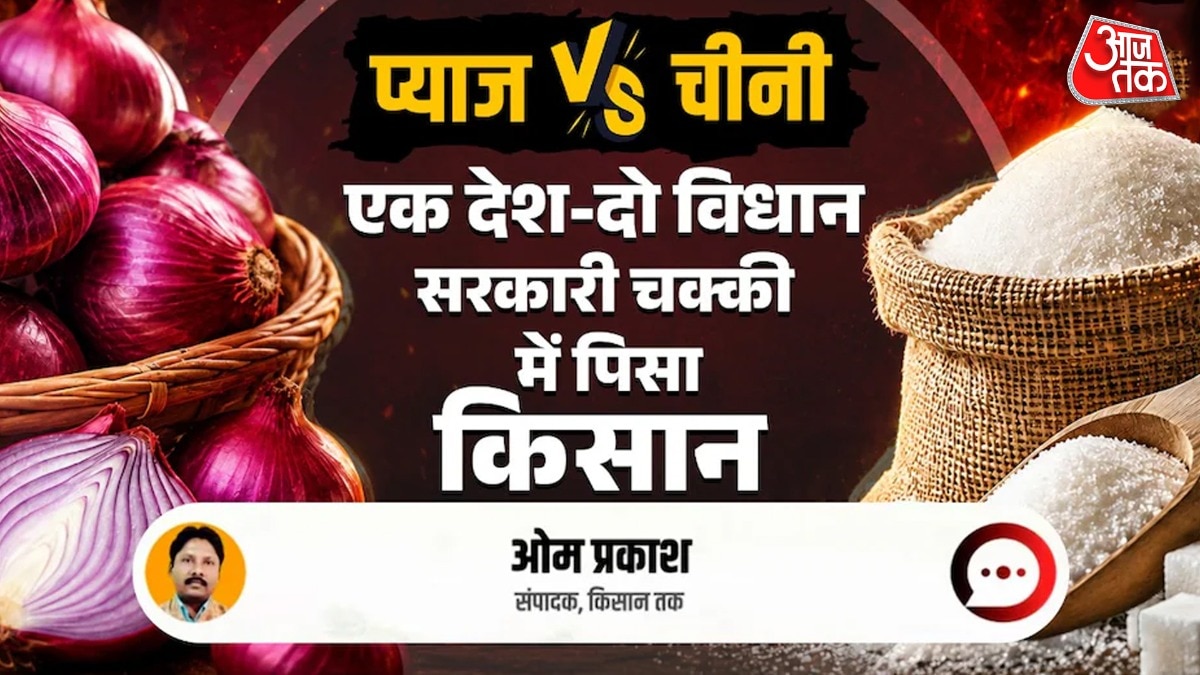
While the government uses buffer stocks to slash onion prices, its approach to skyrocketing sugar costs remains passive. This deep dive explores the political and economic reasons behind this policy gap.
- The government is selling onions at nearly half the market price using buffer stocks.
- No similar aggressive intervention is seen for rising sugar prices.
- Political influence of the sugar lobby vs. the unorganized onion farming sector drives the disparity.
In the battle against food inflation, the Indian government's strategy appears to be inconsistent. The recent volatility in the prices of Onion and Sugar has raised critical questions regarding the equity of administrative interventions. While the government has launched the 'Kanda Express' to stabilize onion supplies, the sugar sector experiences a much more muted regulatory response despite significant price hikes.
Currently, onion prices in open markets have surged to between ₹60-70 per kg. To counter this, NAFED has been releasing stock from the buffer to consumers at approximately ₹35 per kg. This direct intervention aims to provide immediate relief to households. However, when sugar prices escalate from ₹45 to ₹70 per kg, the government relies on administrative measures like release quotas rather than direct price-cutting via buffer stocks.
Why This Matters
BozokMedia analysis shows that this policy divergence is deeply rooted in the socio-political landscape of India. The sugar industry is one of the most organized and politically influential sectors, with significant ties to lawmakers in major producing states like Maharashtra and Uttar Pradesh. Conversely, onion farmers are largely small-scale and unorganized, lacking a powerful collective voice to influence central policy decisions.
Effective inflation management requires a uniform framework that prioritizes consumer stability without compromising the long-term viability of the farming community.
This situation highlights the fundamental tension between India's agricultural and industrial economies. While industrial players enjoy pricing freedom based on brand and cost, farmers remain at the mercy of export bans, duty changes, and sudden government interventions, creating a landscape of extreme uncertainty for the primary producer.
| Factor | Onion | Sugar |
|---|---|---|
| Govt Intervention | High (Direct Buffer Sales) | Moderate (Quota/Limits) |
| Political Leverage | Low (Unorganized Farmers) | High (Organized Industry) |
| Consumer Relief | Direct & Immediate | Indirect & Delayed |
Frequently Asked Questions
1. How is the government controlling onion prices?
By releasing onions from NAFED buffer stocks at prices significantly lower than the prevailing market rate.
2. Why doesn't the government do the same for sugar?
The sugar industry is highly organized and politically connected, leading to policies that balance consumer needs with industrial profitability.