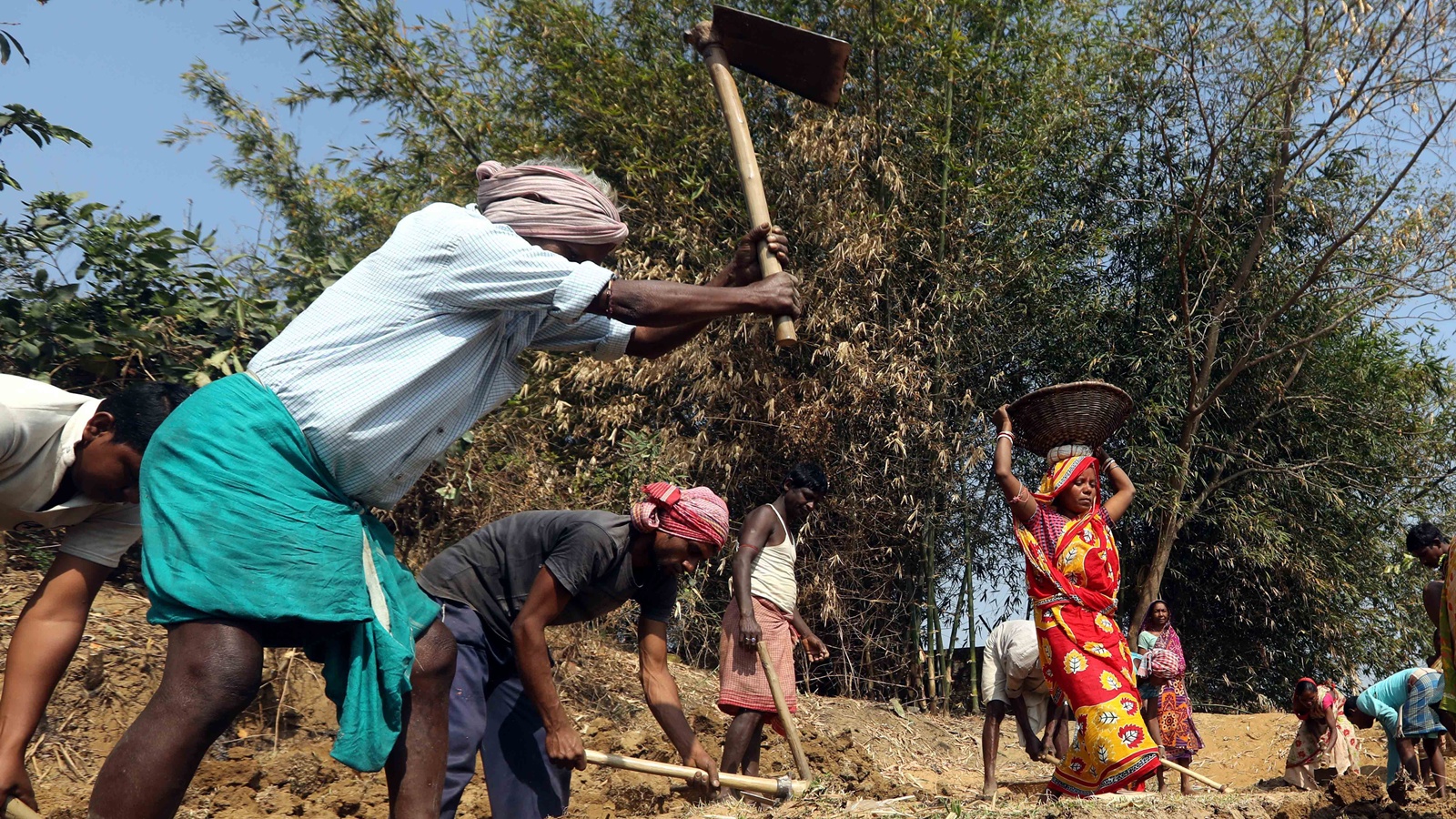
As employment under the new VB-G RAM-G scheme dips, experts argue that India's rural population is shifting from seeking manual wage labor to demanding professional opportunities in high-growth sectors.
- Employment generation under the VB-G RAM-G mission has seen a nearly 50% drop.
- Wage guarantees provide immediate relief but fail to build long-term career paths.
- Sectors like food processing and renewable energy are key to unlocking rural potential.
Recent reports indicate a significant 50% decline in employment generated under the Viksit Bharat-Guarantee for Rozgar and Ajeevika Mission (Gramin), or VB-G RAM-G. Launched as a successor to the long-standing MGNREGA, this scheme carries a massive budget of ₹95,692 crore and promises 125 days of guaranteed manual labor with tech-enabled payments. However, this initial slump raises a fundamental question: Is the wage-guarantee model still the right instrument for India in 2026?
Historically, state-sponsored public works were essential when the private sector could not absorb surplus agricultural labor. While this safety net remains vital for the most vulnerable, the socio-economic landscape of rural India has undergone a tectonic shift. With a digital economy penetrating deep into villages, rural users now comprise the majority of India's 950 million active internet users.
Why This Matters
BozokMedia analysis shows that the rural market is no longer a passive recipient of government aid. With rural FMCG demand growing at four times the rate of urban demand, the rural economy is becoming a powerhouse of consumption. The current generation of rural youth is more educated and digitally connected than ever before, making them less willing to settle for unskilled manual labor when better prospects are within reach.
Wages are a short-term transaction that buys immediate relief; jobs provide the nation with a productive future workforce.
To achieve the vision of Viksit Bharat, the policy focus must pivot from manual labor to sector-specific growth. The food processing sector, for instance, is poised to double by 2030. Similarly, the transition to renewable energy could generate over 44 lakh jobs by the end of the decade. Strengthening clusters of SMEs in textiles, farm equipment, and healthcare devices offers a more scalable and dignified employment model than traditional public works.
Ultimately, the goal should be to convert local resources and local labor into sustainable livelihoods. Moving forward, the architecture of rural employment must prioritize capital investment, skilling, and market linkages over mere wage distribution.
Frequently Asked Questions
1. What is the difference between wage guarantees and job creation?
Wage guarantees provide temporary, unskilled manual labor, whereas job creation focuses on building sustainable careers in productive sectors.
2. Which sectors offer the most potential for rural employment?
Food processing, renewable energy, agri-logistics, and small-scale manufacturing are the most promising sectors.