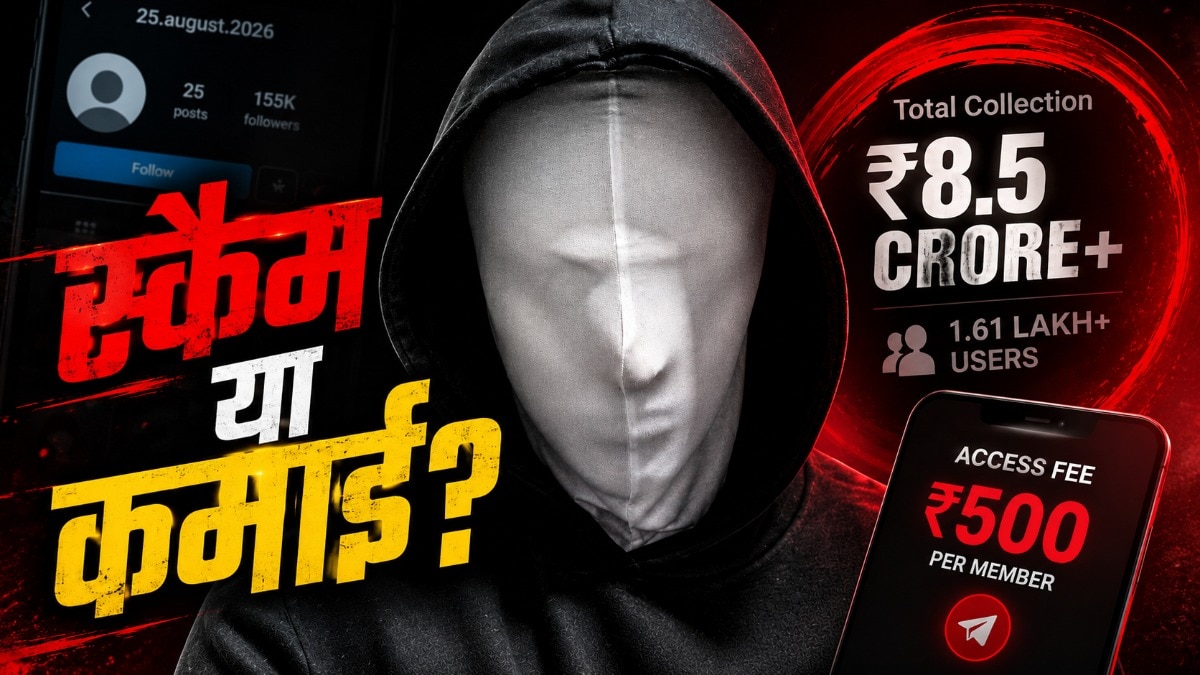
A mysterious individual has managed to collect a staggering ₹8.5 crore by leveraging the power of suspense around the date of August 25. The incident has ignited a massive debate regarding legality and consumer psychology.
- ₹8.5 crore collected under the guise of 'suspense'.
- Mass participation with small individual contributions of ₹500.
- Intense debate on whether this is a business model or a scam.
In a startling turn of events that has gripped the digital landscape, an individual has successfully amassed approximately ₹8.5 crore by utilizing a high-stakes 'suspense' campaign. Centered around the date of August 25, the movement relied heavily on public curiosity, raising significant questions about the ethics of such fundraising methods.
The scale of participation was unprecedented. Interestingly, the vast majority of contributors provided small amounts, typically ₹500. While the individual contribution seemed negligible, the sheer volume of participants turned these small amounts into a massive fortune for the organizer. This phenomenon highlights the potent power of viral marketing and psychological triggers in the modern era.
Why This Matters
BozokMedia analysis shows that this incident serves as a critical case study in the intersection of crowd-funding and psychological manipulation. When massive sums of money are moved based on nothing more than 'anticipation' without a defined product or service, it creates a vacuum that can be exploited for fraudulent purposes, posing a risk to retail investors and casual contributors alike.
The line between viral marketing and financial exploitation is becoming increasingly thin in the digital economy.
Looking at the historical context of financial anomalies, we have seen various 'speculative bubbles' driven by hype rather than intrinsic value. This current event mirrors those patterns, where the 'fear of missing out' (FOMO) drives collective action. The global community is now watching to see if the 'suspense' leads to a legitimate revelation or if it was merely a sophisticated wealth-extraction scheme.
Legal experts suggest that such activities may soon come under the scrutiny of financial regulators to ensure that 'mystery-based' fundraising does not become a loophole for unregulated capital collection.
Frequently Asked Questions
Question 1: Is this collection considered a scam?
Answer: While it is being debated online, legal authorities have yet to officially classify it as a scam, though investigations into the legitimacy of the funds are warranted.
Question 2: Why did so many people contribute?
Answer: The low entry barrier of ₹500 combined with intense social media hype made it easy for people to participate out of pure curiosity.