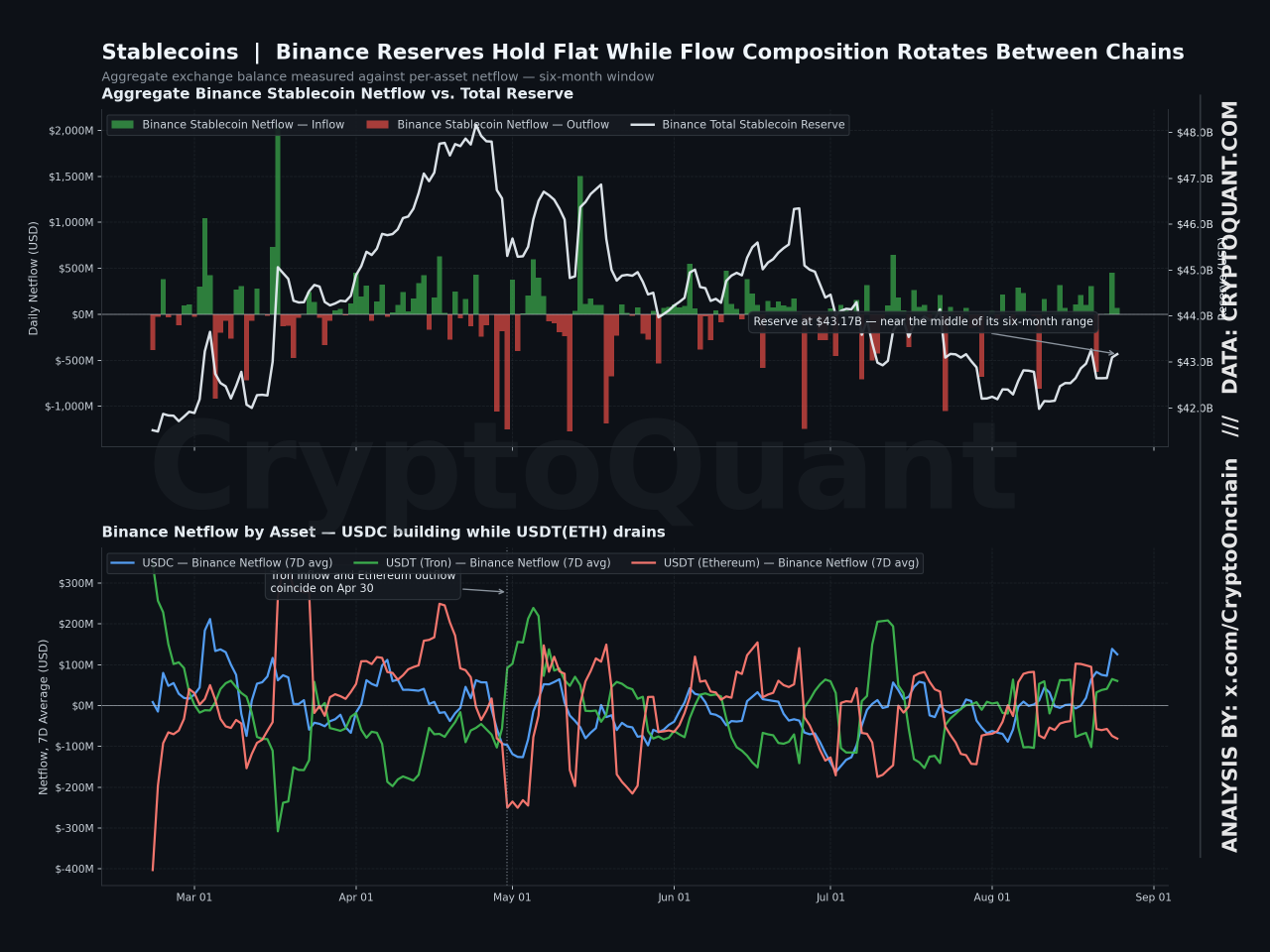
According to the latest CryptoQuant report, a massive rotation among stablecoin denominations is underway on Binance, even as aggregate reserves remain flat. This trend highlights tactical shifts by crypto traders amidst changing regulatory landscapes and exchange incentives.
- Aggregate stablecoin reserves on Binance remain flat, indicating no major net capital inflow or outflow from the exchange.
- Traders are actively rotating assets between different stablecoins, shifting from traditional options to promoted ones.
- Binance's zero-fee trading promotions and evolving global regulatory frameworks are the primary drivers of this denomination rotation.
A significant structural shift is occurring within the world's largest cryptocurrency exchange. According to recent on-chain data provided by analytics platform CryptoQuant, while the aggregate stablecoin reserves on Binance have held flat, there is a notable rotation occurring among different stablecoin denominations. This indicates that while the total volume of digital dollars on the platform remains stable, the composition of these assets is changing rapidly.
This phenomenon comes at a critical time for the global cryptocurrency market. With regulatory bodies worldwide, particularly in the European Union with the implementation of the Markets in Crypto-Assets (MiCA) regulation, tightening rules around stablecoins, both exchanges and traders are forced to re-evaluate their stablecoin preferences for safety, compliance, and cost-efficiency.
Why This Matters
BozokMedia analysis shows that this denomination rotation is not merely a technical adjustment but a key indicator of market sentiment. When aggregate reserves hold flat, it suggests a lack of new retail or institutional capital entering the market. Instead, existing market participants are reshuffling their portfolios. This often precedes periods of consolidation or anticipation of major macroeconomic events.
The rotation of stablecoins on Binance, despite flat aggregate reserves, shows that capital is not leaving the ecosystem; rather, smart money is optimizing for cost and compliance in a tightening regulatory environment.
Historical Context and Drivers of Rotation
Historically, Binance heavily relied on BUSD (Binance USD) as its primary trading pair base. However, following regulatory crackdowns in the United States that forced the halt of BUSD minting, Binance had to pivot. The exchange began heavily promoting alternative stablecoins, most notably FDUSD (First Digital USD) and TUSD.
Currently, Binance’s zero-fee trading promotions for FDUSD pairs are acting as a massive magnet, drawing liquidity away from industry leader USDT (Tether). Additionally, institutional preferences are shifting toward highly regulated options like USDC (USD Coin). The table below outlines the positioning of these major stablecoins on Binance:
| Stablecoin | Issuer | Primary Use on Binance | Market Cap Status |
|---|---|---|---|
| USDT | Tether | Global Liquidity & Trading Pairs | Dominant Leader |
| FDUSD | First Digital | Zero-Fee Trading Promotions | Rising Sector |
| USDC | Circle | Regulatory Compliance & US Markets | Stable Reserve |
Frequently Asked Questions
Q1: What does flat aggregate stablecoin reserves on Binance mean?
A1: It means that the total dollar value of all stablecoins held on the exchange is remaining steady, indicating that capital is neither entering nor leaving the exchange in significant net amounts.
Q2: What is driving the rotation between different stablecoin denominations?
A2: The primary drivers are Binance's zero-fee trading promotions for specific stablecoins like FDUSD, combined with shifting regulatory compliance requirements globally, such as Europe's MiCA framework.