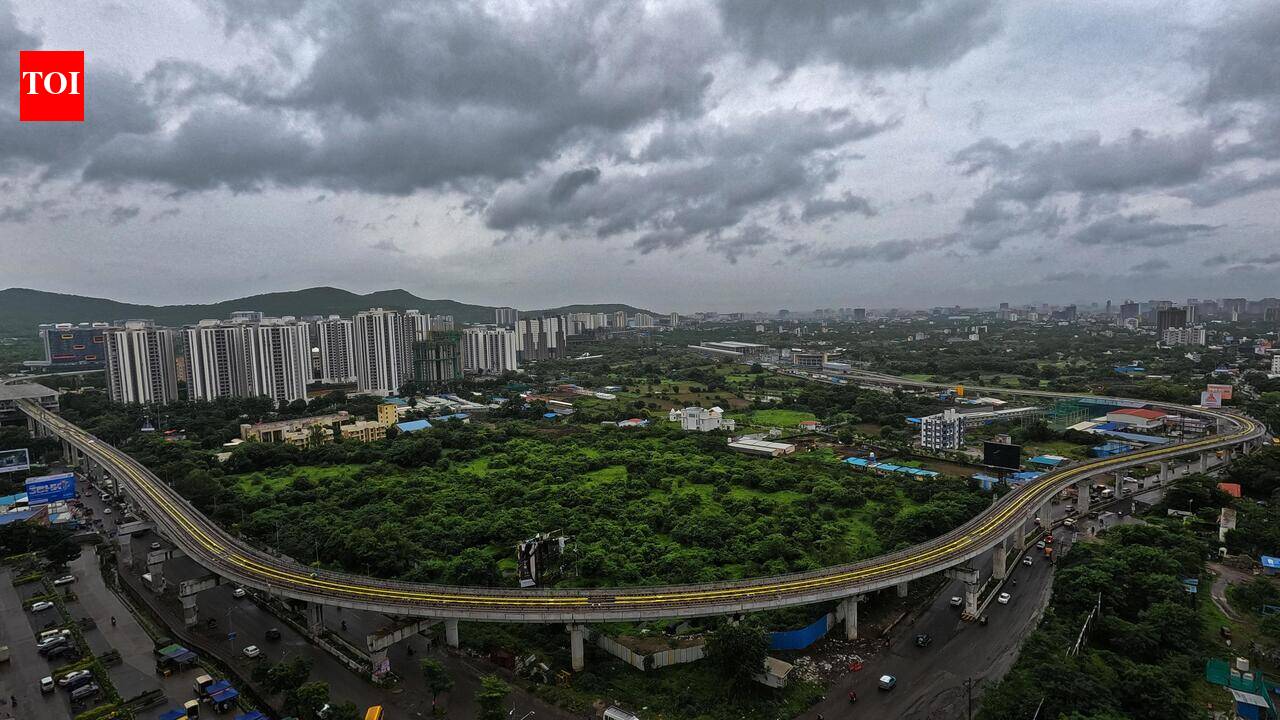
In a major move to boost connectivity, MIDC and PITCMRL have asked five major IT firms in Hinjewadi to construct dedicated foot overbridges linking their campuses directly to Metro stations.
- Five major IT firms in Hinjewadi have been tasked with building foot overbridges (FOBs) to Metro stations.
- The project aims to serve approximately 90,000 employees across identified campuses.
- MIDC will provide the land, while the IT firms will bear the full construction costs.
- This initiative will significantly reduce pedestrian-related road accidents and traffic congestion.
Pune: In a strategic move to enhance urban mobility, the Maharashtra Industrial Development Corporation (MIDC) and Pune IT City Metro Rail Limited (PITCMRL) have directed five major IT firms in the Hinjewadi IT Park to construct dedicated foot overbridges (FOBs). These bridges will directly link corporate campuses to Metro stations, coinciding with the expected partial opening of the Metro corridor next month.
The initiative is designed to prioritize pedestrian safety and mitigate traffic congestion. By providing direct access, the project aims to prevent thousands of employees from navigating busy, high-traffic roads during peak office hours. Officials noted that nearly 90,000 employees work across the five campuses identified for this infrastructure project.
Financial and Structural Framework
Under the proposed collaborative model, the MIDC will provide the necessary land required for the bridge pillars, while the respective IT firms will be responsible for the entire construction expenditure. RG Totla, Executive Engineer at MIDC, confirmed that one technology firm and a developer-operated business park have already expressed their willingness to proceed, with formal approvals already being issued.
The first phase of approved projects will connect offices in Hinjewadi Phase 2 to the MIDC Circle, Hinjewadi Circle 1, and Hinjewadi Circle 2 Metro stations. These campuses collectively employ around 55,000 professionals.
Why This Matters
BozokMedia analysis shows that this model of 'Corporate-funded Public Connectivity' is a game-changer for rapidly growing tech hubs. By shifting the financial burden of last-mile connectivity from the taxpayer to the large-scale beneficiaries (the corporations), cities can expand infrastructure more rapidly without straining municipal budgets.
Direct pedestrian connectivity between corporate hubs and mass transit is the cornerstone of a sustainable, accident-free smart city.
Furthermore, authorities have approached three additional firms to develop similar links to stations in Maan, Shree Shiv Chhatrapati Shivaji Maharaj Chowk, Hinjewadi, and Hinjewadi Circle 1. These campuses host another 32,000 employees. Discussions are currently ongoing, with officials expecting a positive response from these stakeholders.
Local commuters have expressed immense relief regarding the proposal. Sameer Kulkarni, a Hinjewadi resident, highlighted that the roads beneath the Metro corridor have become narrower and more hazardous due to ongoing construction. Direct access will provide a much-needed safety buffer for thousands of daily commuters.
Frequently Asked Questions
Question 1: Who is paying for the construction of these bridges?
Answer: The construction costs will be borne entirely by the participating IT firms, while MIDC provides the land.
Question 2: Which Metro stations will be covered under this project?
Answer: Initial stations include MIDC Circle, Hinjewadi Circle 1, and Hinjewadi Circle 2, with more to follow.