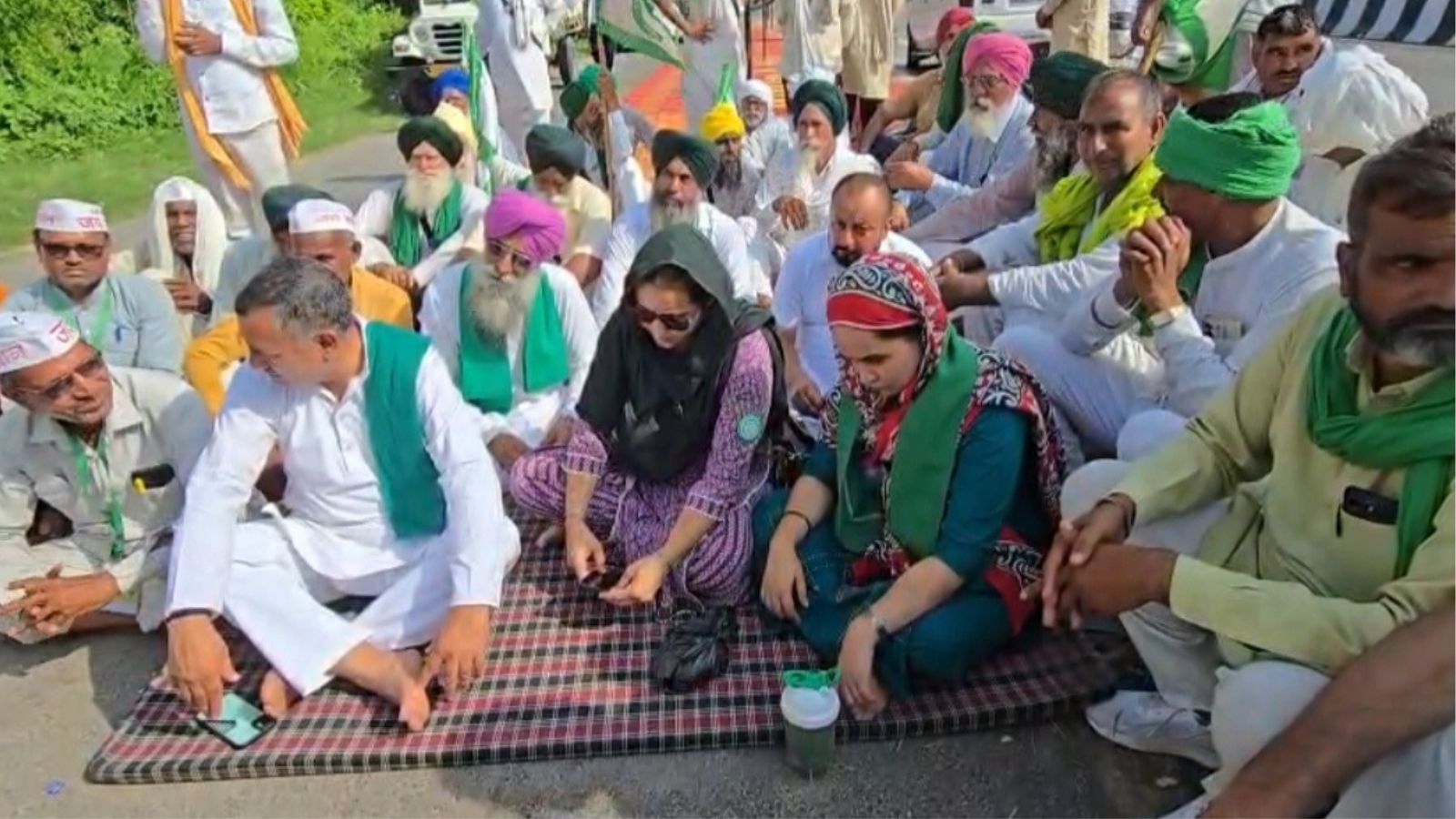
Led by the Samyukta Kisan Morcha, farmers have commenced a week-long protest on the Mohali-Chandigarh border, demanding legal MSP guarantees and debt relief.
- The protest is led by the Samyukta Kisan Morcha (SKM) with support from 32 farmer organizations.
- Core demands include legally guaranteed MSP based on the Swaminathan Commission and full loan waivers.
- The sit-in is located near Sectors 48-49 on the Airport Road, Chandigarh.
- Farmers are pushing for crop diversification and urgent groundwater conservation measures.
The Mohali-Chandigarh border has transformed into a massive protest site as farmers began their seven-day sit-in on Tuesday. The atmosphere is marked by the presence of hundreds of tractor-trolleys serving as temporary shelters and roadside langars (community kitchens) providing food to the protesters. The agitation, scheduled from September 1 to 7, is a significant mobilization of the agrarian community in Punjab.
The protest is being spearheaded by the Samyukta Kisan Morcha (SKM) and prominent leader Balbir Singh Rajewal. Supported by 32 different farmer unions, the demonstration has seen a massive influx of protesters from various parts of Punjab, settling near the Airport Road in the Chandigarh sectors allotted for the protest.
Core Demands and Economic Imperatives
The farmers' manifesto is comprehensive, focusing on long-standing grievances. The primary demand is a legally guaranteed Minimum Support Price (MSP) for all crops, following the recommendations of the M.S. Swaminathan Commission. Furthermore, they are seeking a complete waiver of loans for farmers and farm laborers, and an increase in sugarcane prices to ₹500 per quintal. They have also voiced opposition to the Electricity Bill, 2025, and the Seed Bill, 2025.
The demand for legal MSP is not just about price; it is about providing a safety net for the backbone of India's food security.
Environmental Concerns and Crop Diversification
A critical component of this protest is the environmental crisis in Punjab. BKU (Dakonda) leader Boota Singh Burjgill highlighted the severe groundwater crisis, urging the government to repair dilapidated canal networks to ensure efficient water distribution. Simultaneously, leaders from BKU (Rajewal) emphasized that farmers are willing to move away from the water-intensive paddy cycle, provided the government guarantees the procurement of alternative crops like maize, pulses, and vegetables at MSP.
Why This Matters
BozokMedia analysis shows that this protest is a direct challenge to the current agricultural policy framework. By demanding a review of river water agreements and the restoration of Punjab's representation on the Bhakra Beas Management Board (BBMB), the farmers are signaling that the agrarian crisis is deeply intertwined with regional political and environmental rights.
Frequently Asked Questions
Question 1: What are the primary reasons for this protest?
Answer: The farmers are demanding legal MSP guarantees, loan waivers, and better water management policies.
Question 2: How is the protest affecting local traffic?
Answer: Mohali police have advised commuters to avoid the Mohali-Chandigarh route and use alternative roads due to the blockade.