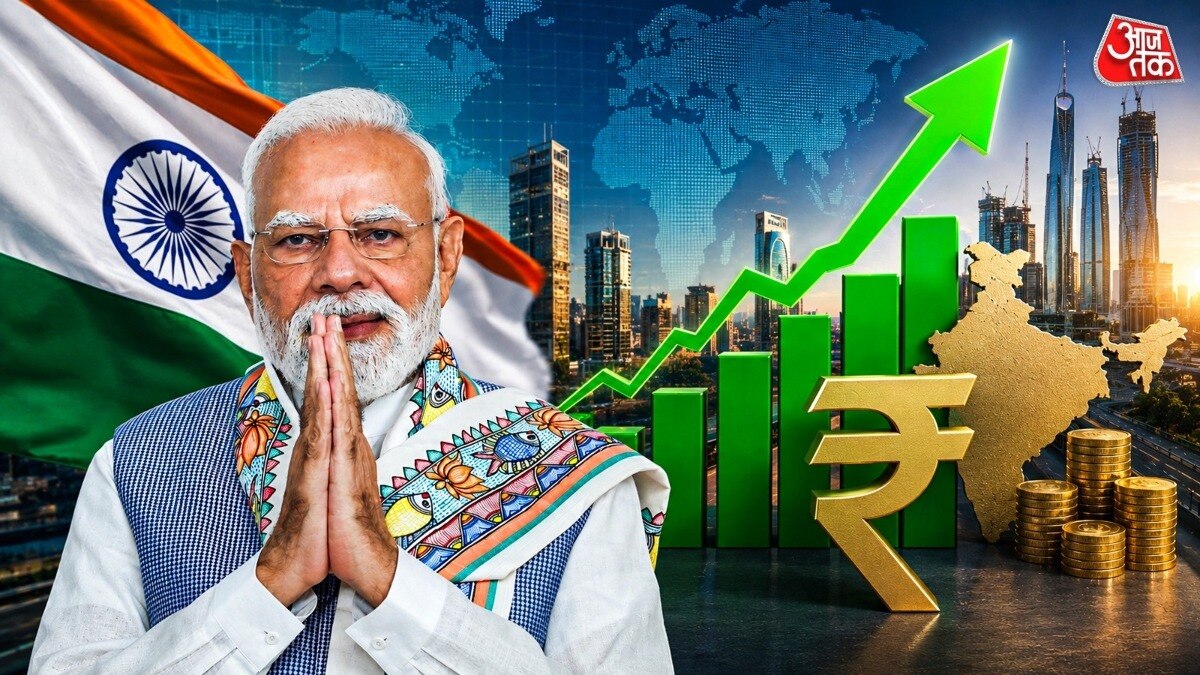
India recorded a robust 7.8% GDP growth in the first quarter, exceeding expectations. However, PM Modi's advisor Sanjeev Sanyal warns of global uncertainty, crude oil volatility, and El Niño as critical challenges.
- India's Q1 GDP growth hit 7.8%, showcasing resilient economic momentum.
- Sanjeev Sanyal identified global uncertainty, oil prices, and El Niño as primary risks.
- Growth is driven by diverse sectors including manufacturing, finance, and construction.
- The economic foundation is broad, supported by both public and private investment.
India's economy has delivered a stunning 7.8% GDP growth rate in the first quarter, outperforming most market expectations. This surge highlights the resilience of the Indian economic engine, even amidst a backdrop of global volatility. The growth is not isolated to a single sector but is a result of broad-based momentum across manufacturing, financial services, and the construction industry.
Sanjeev Sanyal, a member of the Prime Minister's Economic Advisory Council (EAC-PM), noted that the current growth is bolstered by strong public and government investment, alongside increasing participation from private enterprises. He remarked that while 7.8% is exceptionally strong, maintaining a growth rate around 7% in the coming quarters would still be considered highly satisfactory.
Why This Matters
BozokMedia analysis shows that India is emerging as a bright spot in the global economy. While major economies struggle with stagnation, India's diversified growth drivers—ranging from domestic consumption to infrastructure spending—provide a cushion against external shocks. However, the margin for error remains slim due to external variables.
The 7.8% growth provides a solid foundation, but geopolitical tensions and climate-induced risks could test our economic resilience.
Geopolitical Uncertainty and Trade Risks: Sanyal highlighted the volatility in West Asia, particularly conflicts involving Iran, as a significant risk. West Asia is a vital export destination for India and a major source of remittances from the Indian diaspora, making regional stability crucial for the domestic economy.
Crude Oil and Energy Security: As a major energy importer, India remains sensitive to fluctuations in global oil prices. Sanyal pointed out that India has proactively diversified its supply chains by sourcing oil from Russia, the USA, and Venezuela to mitigate the impact of sudden price spikes and supply disruptions.
The El Niño Factor: The emergence of El Niño poses a potential threat to India's monsoon patterns, which could impact agricultural productivity. While Sanyal noted that the current situation does not yet mirror the severe droughts seen in parts of Europe, the agricultural sector remains a key area of concern for inflation and rural demand.
Frequently Asked Questions
1. Is the 7.8% GDP growth sustainable?
While the current momentum is strong, experts suggest the growth might stabilize around 7% due to global headwinds.
2. How does El Niño affect the Indian economy?
El Niño can disrupt monsoon patterns, potentially affecting crop yields, food inflation, and rural income levels.