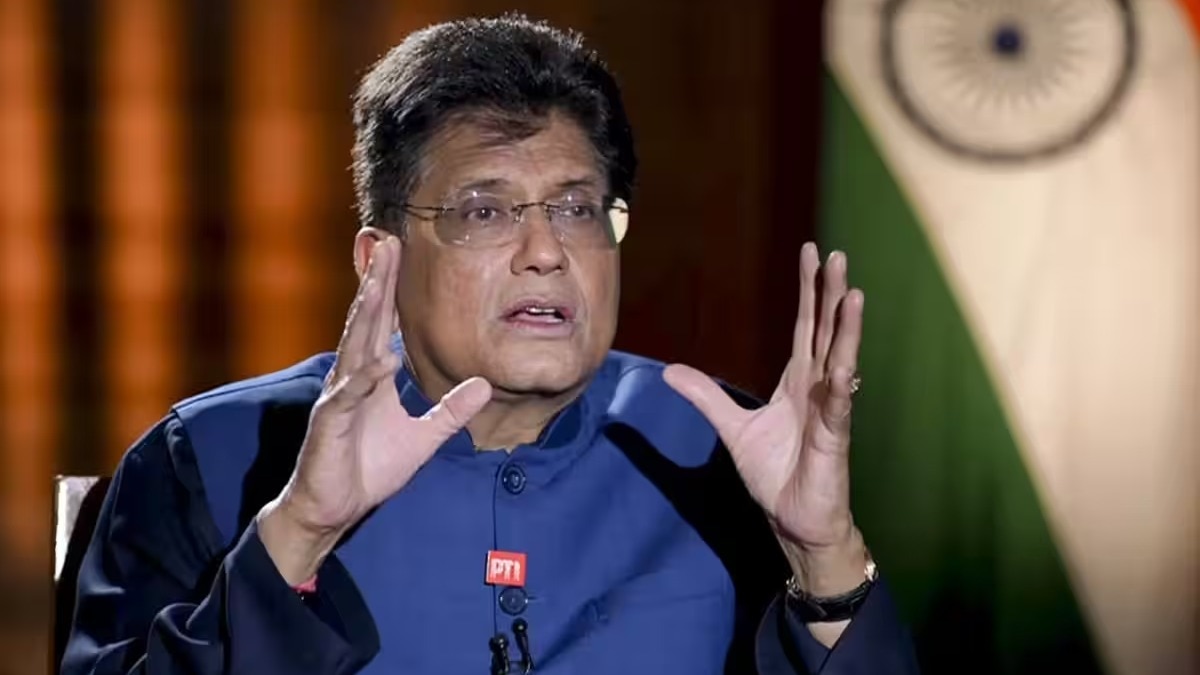
Union Minister Piyush Goyal has stated that the final details of the proposed India-US Bilateral Trade Agreement (BTA) will only be released once India secures preferential tariff rates competitive with rival nations.
- India is demanding better tariff rates compared to competitors like Vietnam, Bangladesh, and Thailand.
- Minister Piyush Goyal assured that sensitive sectors like farmers, MSMEs, and the auto industry are fully protected.
- Piyush Goyal is scheduled to visit the US in late September for high-level trade talks.
New Delhi: The final blueprint of the proposed Bilateral Trade Agreement (BTA) between India and the United States remains under wraps. Union Minister of Commerce and Industry, Piyush Goyal, has clarified that the definitive text of the agreement will not be made public until India secures preferential tariff rates that are more competitive than those enjoyed by its regional rivals in the US market.
The Indian government aims to ensure that Indian exports gain a significant pricing advantage in the United States. Currently, countries such as Vietnam, Bangladesh, Thailand, Cambodia, and Malaysia enjoy competitive access, and India seeks to bridge this gap to boost its export competitiveness.
Why This Matters
BozokMedia analysis shows that this strategic hesitation is a calculated move by India to maximize its leverage in a shifting global trade landscape. By refusing to finalize the deal without specific tariff concessions, India is signaling that it will no longer accept secondary status in bilateral economic frameworks.
India's position is firm: We seek trade expansion, but not at the expense of our national economic sensitivities.
Addressing concerns regarding the lack of transparency, Goyal dismissed rumors suggesting hidden concessions. He emphasized that the negotiations have been conducted with extreme caution to protect farmers, fishermen, MSMEs, laborers, handloom, handicrafts, and the automotive sector. He specifically noted that the auto sector has been discussed extensively to reach the highest possible level of agreement.
Expanding India's Trade Footprint
India's network of Free Trade Agreements (FTAs) is expanding rapidly. The country is currently linked to nine major economic blocs through various agreements, covering a combined GDP of approximately $60 trillion. India has already implemented successful pacts with the UK, Mauritius, Oman, UAE, and Australia, with a New Zealand pact expected soon.
| Region/Country | Status | Strategic Impact |
|---|---|---|
| United States | Negotiations Ongoing (BTA Phase 1) | Massive Export Potential |
| European Union (EU) | Proposed/In Discussion | Access to a Huge Market |
| Australia/UAE | Implemented | Established Trade Routes |
| New Zealand | Expected Soon | Agri & Service Sector Boost |
The next major milestone is set for late September, when Piyush Goyal travels to the United States. During the G20 Trade Ministerial meeting in Milwaukee, Goyal is expected to hold bilateral discussions with the US Trade Representative (USTR), which could prove decisive for the future of the BTA.
Frequently Asked Questions
1. What is India's primary demand from the US?
India is seeking preferential tariff rates that allow its products to compete more effectively against goods from countries like Vietnam and Bangladesh.
2. Are Indian small businesses safe in this deal?
Yes, the Minister has explicitly stated that MSMEs and the handicraft sectors are being protected during negotiations.