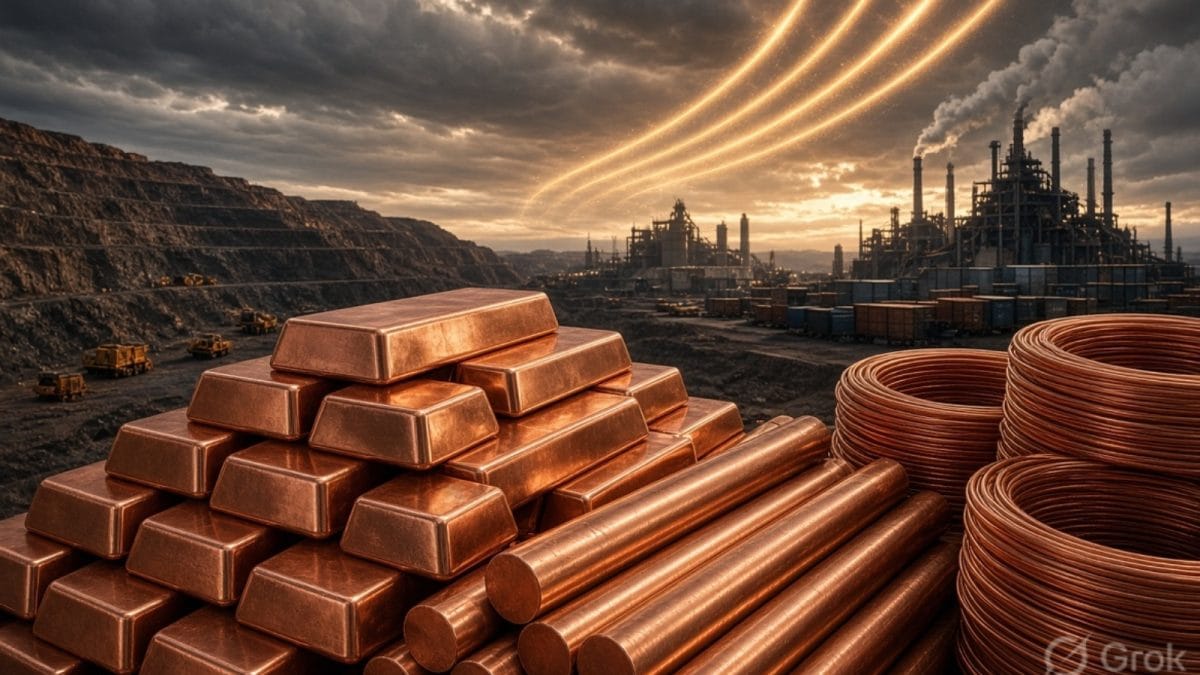
Copper prices are hitting record highs driven by supply shortages and massive demand from data centers and renewable energy sectors. Experts warn of a potential supply crunch.
- Copper prices on the London Metal Exchange (LME) hit a record high of $14,617 per tonne.
- Surging demand from data centers, power grids, and renewable energy is creating a supply-demand gap.
- Anticipated US tariffs on refined metal imports are driving panic buying.
- Inventory levels at the Shanghai Futures Exchange (SHFE) have dropped to post-2024 lows.
In the global commodities market, Copper—often hailed as the 'king of industrial metals'—is making history. Driven by acute supply concerns and fears regarding potential US tariffs on refined metal imports, copper prices are skyrocketing. This rally has seen the metal hit record highs for consecutive sessions, signaling a profound shift in the global industrial landscape.
Supply Deficit and Demand Drivers
The London Metal Exchange (LME) reported that copper reached a staggering $14,617 per tonne, marking its fourth consecutive day of gains. This surge is not merely speculative; it is rooted in the structural demands of the modern era. The rapid expansion of data centers, the transition to renewable energy, and the massive overhaul of global power grids have created an unprecedented appetite for copper.
Why This Matters
BozokMedia analysis shows that the copper rally is a direct consequence of the global energy transition. As nations pivot away from fossil fuels toward electrification, copper has transformed from a simple industrial commodity into a strategic asset essential for technological sovereignty.
The current copper market is entering a critical phase of 'backwardation,' reflecting an immediate and severe shortage in physical supply.
The fear of impending US tariffs has triggered a rush to secure refined copper, leading to a depletion of stocks in LME warehouses. This market condition, known as 'backwardation,' indicates that immediate delivery is priced much higher than future delivery, a classic sign of supply desperation.
The China Factor and Mining Challenges
As the world's largest consumer of copper, China is playing a pivotal role in this price action. Despite recent economic fluctuations, the Chinese manufacturing sector is entering its peak production season. Consequently, inventories at the Shanghai Futures Exchange (SHFE) have plummeted to their lowest levels since 2024.
Historical Background
Historically, copper has been a bellwether for global economic health. However, the current crisis is compounded by operational issues in major global mining projects. Experts warn that if production does not recover in the second half of the year, the world could witness its first annual decline in copper production since 2017.
| Metal | Price Movement |
|---|---|
| Copper | +17% (Yearly) |
| Zinc | +1.1% |
| Aluminum | +0.1% |
Frequently Asked Questions
1. Why are copper prices rising so rapidly?
The rise is driven by a combination of supply shortages from mines and massive demand from the tech and green energy sectors.
2. How do US tariffs affect copper?
Potential tariffs create uncertainty, prompting traders to stockpile metal before the new costs are implemented, further driving up prices.