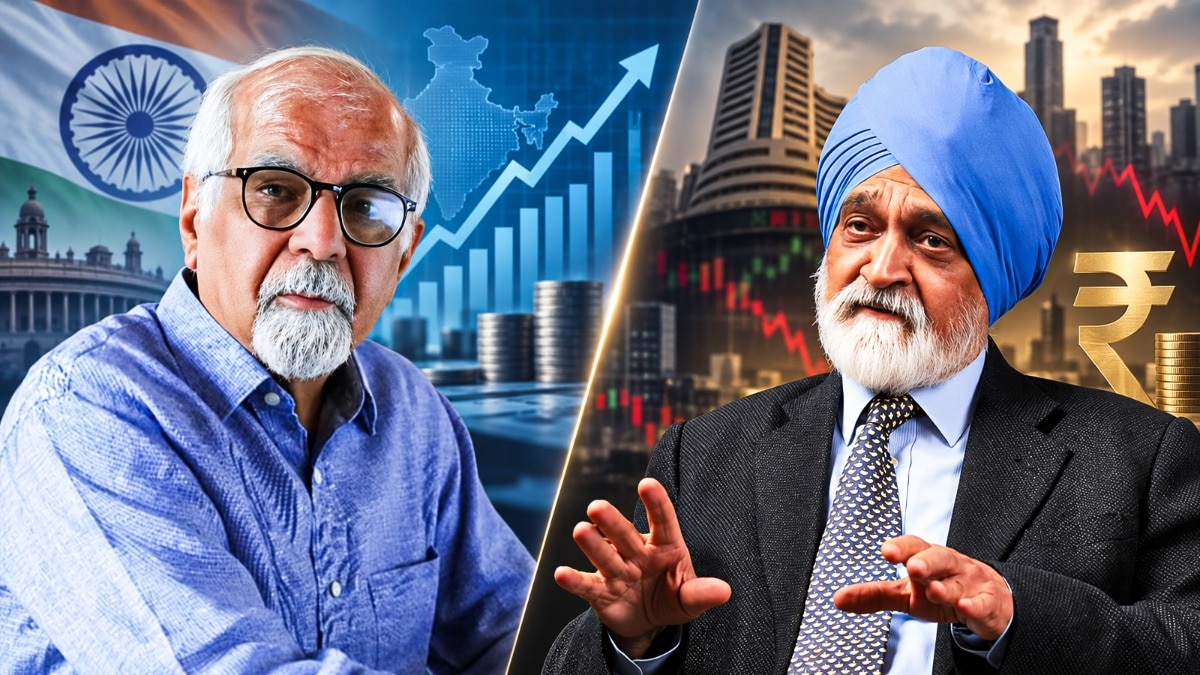
While India recorded a robust 7.8% GDP growth in Q1 FY27, leading economists Surjit Bhalla and Montek Singh Ahluwalia warn that this trajectory is not enough to achieve the 'Viksit Bharat 2047' vision.
- India posted a better-than-expected 7.8% GDP growth in Q1 of FY 2026-27.
- Economists Surjit Bhalla and Montek Singh Ahluwalia argue current growth is insufficient for the 2047 developed nation goal.
- A sustained double-digit growth rate is required for long-term transformation.
- Concerns were raised regarding 'K-shaped recovery' and the employment gap.
India's economy demonstrated significant resilience by posting a 7.8% GDP growth rate in the first quarter of the 2026-27 financial year, surpassing many global expectations despite prevailing headwinds. However, this statistical success has sparked a profound debate among the nation's leading economic minds regarding the feasibility of the Viksit Bharat 2047 vision.
Prominent economists Surjit Bhalla, former IMF Executive Director, and Montek Singh Ahluwalia, former Deputy Chairman of the Planning Commission, have expressed skepticism. While they acknowledged the strength of the recent numbers, they collectively argued that a few quarters of high growth cannot substitute for a long-term, high-speed economic trajectory required to transform India into a developed economy.
Why This Matters
BozokMedia analysis shows that the gap between current growth rates and the requirements for 'developed status' is substantial. To achieve the Prime Minister's vision of a developed India by the centenary of independence, the country must transition from middle-income status to high-income status, which necessitates much higher per-capita income growth than what is currently being projected.
'If you ask whether we are on track to achieve our long-term objective of Viksit Bharat, the short answer is — not yet.' - Montek Singh Ahluwalia
Surjit Bhalla noted that while India's investment-to-GDP ratio has improved to approximately 34%, the fundamental requirement remains sustained double-digit growth. He emphasized that developed-nation status is ultimately measured in dollar terms, and India's current growth pace may fall short of that global benchmark.
Furthermore, Montek Singh Ahluwalia highlighted the risk of a 'K-shaped recovery'. This phenomenon suggests that while the formal sectors and large corporations are thriving, significant portions of the population—including small businesses, informal workers, and low-income households—are being left behind, preventing broad-based economic development.
The Employment and Structural Challenge
A critical component of the debate is the quality of growth. Economists warned that GDP numbers do not inherently reflect job creation. There is a growing concern that the industries driving future growth, such as AI infrastructure and data centers, are highly capital-intensive and may not generate the massive scale of employment needed to absorb India's growing workforce.
Frequently Asked Questions
1. Is the 7.8% GDP growth rate a sign of economic manipulation?
No. Leading economists, including Neelkanth Mishra of the World Bank, have rejected claims of political manipulation, focusing instead on the sustainability of the growth.
2. What is the core requirement for Viksit Bharat 2047?
The core requirement is sustained, high-speed growth that translates into higher per-capita income and broad-based development across all sectors of society.
