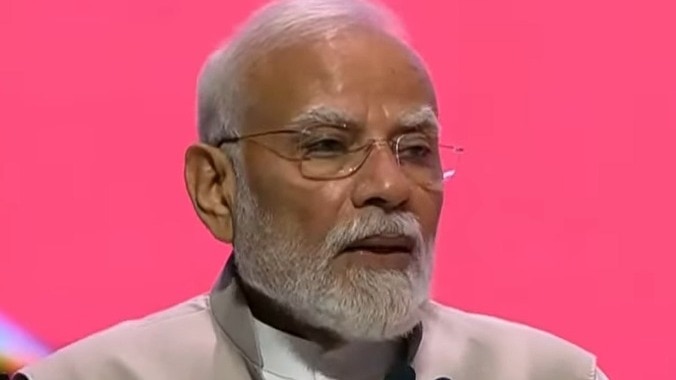
Addressing the Global Fintech Fest 2026, PM Narendra Modi called for a strategic shift from digital payments to advanced financial services like credit, insurance, and pensions, powered by Agentic AI and Quantum technology.
- Fintech evolution must expand from simple payments to credit, savings, and insurance.
- Agentic AI, tokenization, and quantum technology are identified as the next growth drivers.
- Four pillars for growth: Top-notch cybersecurity, ethical data standards, regulatory synergy, and a consumer protection index.
- Global UPI integration aims to reduce remittance costs for the Indian diaspora.
Addressing the Global Fintech Fest 2026 in Mumbai, Prime Minister Narendra Modi lauded the phenomenal success of India's fintech journey but emphasized that the narrative cannot stop at digital payments. He urged the industry to pivot toward a more comprehensive financial ecosystem encompassing credit, savings, pensions, and insurance.
A central theme of the Prime Minister's address was the democratization of credit. He illustrated this with the example of a small-scale woman entrepreneur whose daily digital transaction history could serve as a proxy for creditworthiness. By leveraging this data, fintech firms can create bespoke credit models for micro-businesses that are often overlooked by traditional banking institutions.
Why This Matters
BozokMedia analysis suggests that India is transitioning from a 'payment-led' digital economy to a 'credit-led' financial powerhouse. By shifting the focus to non-payment transactions, India is not just improving financial inclusion but is positioning itself as a global standard-setter for the 'Digital Public Infrastructure' (DPI) model.
"UPI is not just a tech story; it is a civilisational story that has brought millions of unbanked Indians into the formal economy."
The Prime Minister also highlighted the strategic importance of exporting UPI's success. By connecting UPI with trade partners and countries with high Indian populations, the government aims to slash transaction costs for remittances, ensuring that more money reaches the families of overseas Indians faster and more securely.
Looking toward the horizon of 2026, PM Modi pointed to Agentic AI, tokenization, and quantum technology as the new frontiers. He challenged the industry to translate these theoretical possibilities into tangible real-world impact. To support this, he proposed a 'Fintech Consumer Protection Index' to bring transparency and trust to the sector.
Historical Background: The journey began in earnest a decade ago, with UPI celebrating 10 years on August 25. From a time when digital banking seemed like a futuristic dream, India has reached a scale where over 2,400 crore transactions were recorded in August alone, with the capacity to handle 50 lakh transactions in just 10 minutes.
| Fintech Phase | Primary Focus | Core Technology |
|---|---|---|
| Phase 1 (2016-2025) | Digital Payments & Scale | UPI, QR Codes, Mobile Wallets |
| Phase 2 (2026+) | Credit, Insurance & Wealth | Agentic AI, Quantum Tech, Tokenization |
Frequently Asked Questions
1. What are the four priorities PM Modi listed for the fintech sector?
The priorities include top-tier cybersecurity, ethical data protection, a strong regulator-industry innovation ecosystem, and a consumer protection index.
2. How will Agentic AI change the financial landscape?
Agentic AI will allow for autonomous financial agents that can manage portfolios, assess credit risk in real-time, and provide hyper-personalized financial planning.

