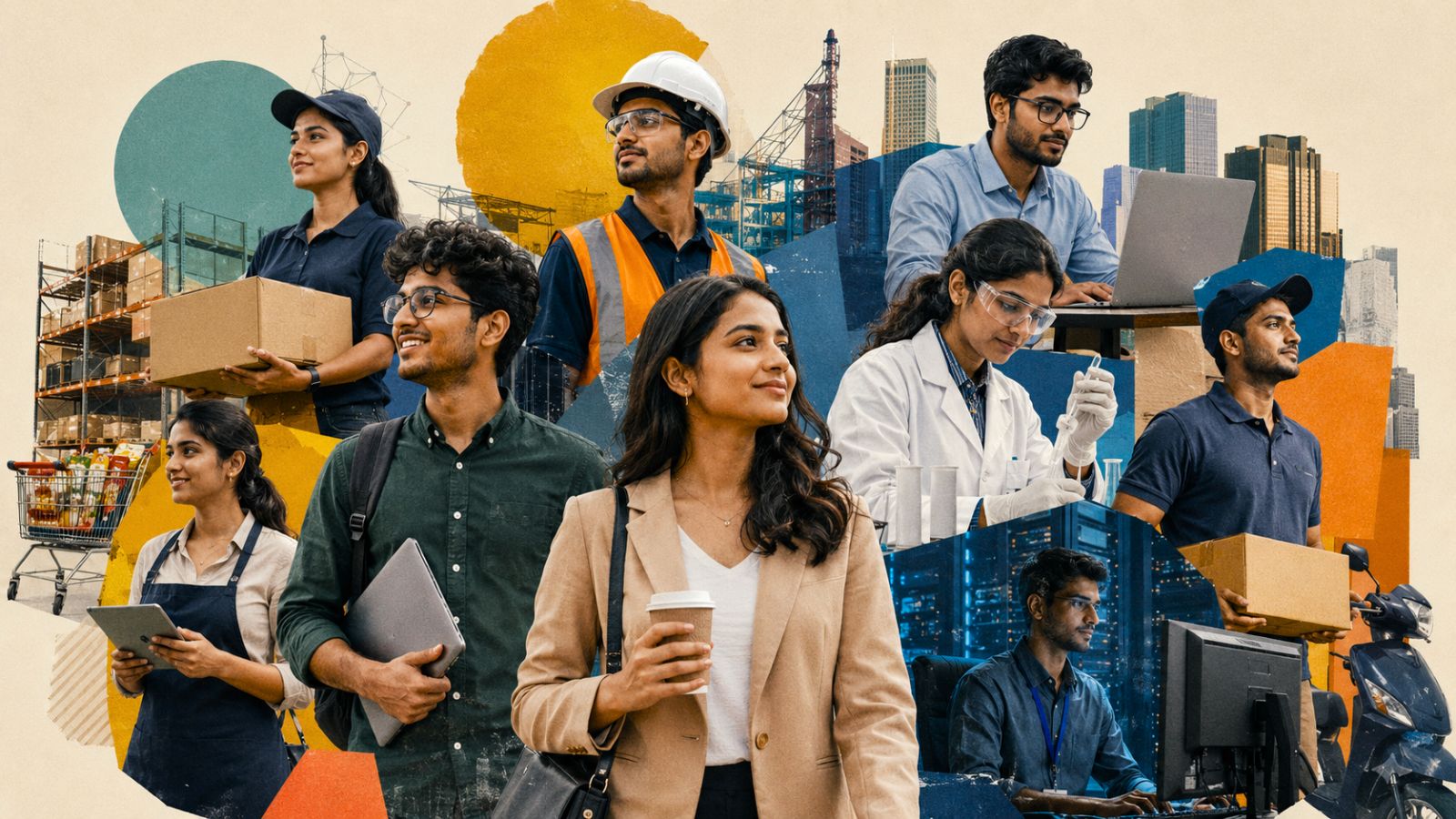
As advanced nations face critical labor shortages due to ageing populations, India's massive pool of 450 million young people presents a strategic opportunity to lead global economic growth.
- Advanced economies are facing structural labor shortages due to declining fertility and ageing workforces.
- India possesses a strategic reservoir of 450 million people aged 18-35.
- The concept of 'Brain Drain' is evolving into 'Brain Circulation' through remittances and skill exchange.
- Circular mobility is proposed as a politically sustainable alternative to permanent migration.
The global economy is currently navigating a profound demographic transition. Across advanced economies, a combination of declining fertility rates and ageing populations is creating structural labor shortages that threaten to curtail overall economic growth. From healthcare systems struggling to find nurses to infrastructure projects lacking skilled technicians, the demand for human capital is at an all-time high.
India finds itself in a unique position of strength. Historically, nations have used natural resources—like oil in the Gulf or rare earth minerals in China—to exert geopolitical influence. India’s most potent strategic resource, however, is its raw talent. With approximately 450 million citizens aged between 18 and 35, India holds the world's largest reservoir of young human capital, characterized by digital literacy and global aspirations.
Why This Matters
BozokMedia analysis shows that this is not merely a labor export opportunity but a pillar of economic diplomacy. By transforming raw talent into certified, globally employable professionals, India can enhance its soft power and secure massive financial inflows. The surge in remittances to $110.47 billion in FY 2025-26 underscores the immense economic potential of this talent mobility.
"Global skills mobility must now be viewed not simply as migration policy, but as a strategic pillar of economic diplomacy and international cooperation."
However, the path forward is complicated by the shrinking political appetite for immigration in the West. The rise of anti-immigration parties across Europe suggests that traditional migration models are failing. The solution lies in 'Circular Mobility'—temporary, socially accretive movements of labor. Models used in Singapore and Hong Kong prove that temporariness, rather than restriction, makes large-scale mobility politically viable.
To capitalize on this, India must move beyond fragmented recruitment. The focus must shift toward trusted institutions, ethical frameworks, and the harmonization of professional standards to ensure Indian workers are not just available, but preferred.
| Feature | Traditional Migration (Brain Drain) | Circular Mobility (Brain Circulation) |
|---|---|---|
| Duration | Permanent/Long-term | Temporary/Fixed-term |
| Economic Impact | Loss of Talent | Flow of Skills and Capital |
| Political Viability | Low (High Resistance) | High (Demand-driven) |
Frequently Asked Questions
1. What is the difference between 'Brain Drain' and 'Brain Circulation'?
Brain Drain refers to the permanent loss of skilled professionals to other countries, whereas Brain Circulation involves professionals gaining global experience and wealth before contributing back to their home economy.
2. Why is Circular Mobility better than permanent migration?
Circular mobility is more politically sustainable in host countries because it addresses immediate labor shortages without creating permanent demographic shifts, reducing the friction associated with immigration.