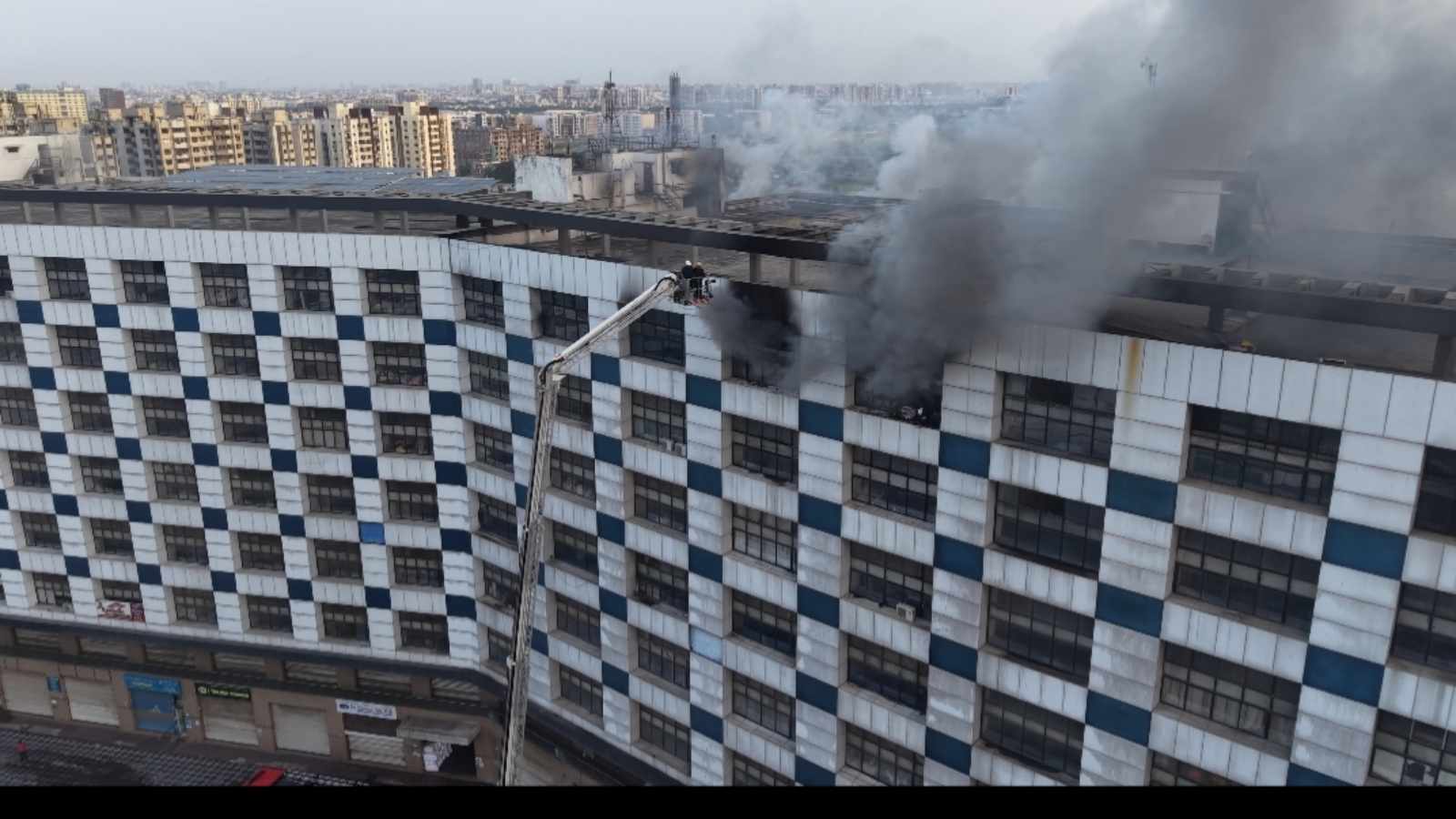
A catastrophic fire at the Shyam Sangini textile market in Surat has destroyed vast quantities of finished fabrics intended for the Diwali festive season. While no casualties were reported, the financial blow to traders is expected to be immense.
- Massive blaze broke out at Shyam Sangini textile market, affecting the 5th and 6th floors.
- Finished textile goods destined for national delivery during Diwali were completely incinerated.
- Over 150 firefighters battled the flames for 12 hours to bring the situation under control.
In a devastating blow to the textile industry of Gujarat, a massive fire erupted at the Shyam Sangini Textile Market in Surat during the midnight hours of Tuesday. The blaze, which raged well into Wednesday afternoon, targeted the upper floors of the multi-storey complex, turning high-value finished fabrics into ashes just as traders were preparing for the peak Diwali and Navratri rush.
According to Basant Pareekh, the Chief Fire Officer of the Surat Municipal Corporation (SMC), the fire originated in a passage area on the sixth floor. The presence of synthetic fabrics, plastic packaging, and cardboard boxes acted as fuel, allowing the fire to spread rapidly across the entire floor and eventually penetrate the fifth floor. The intensity of the heat was so severe that firefighting teams initially struggled with low visibility due to thick smoke filling the corridors.
Why This Matters
BozokMedia analysis shows that this incident highlights a critical vulnerability in urban trading hubs: the practice of storing combustible finished goods in common passages. Despite the market having a renewed fire NOC, the sheer volume of synthetic materials created a 'tinderbox' effect. Since Surat serves as the primary hub for synthetic sarees and dress materials for states like UP, Bihar, and West Bengal, this disruption could lead to supply shortages and price hikes during the festive season.
The reliance on synthetic fibers in Surat's textile hub creates a high-risk environment where fire spreads exponentially faster than in traditional cotton markets.
The operational challenge was immense, requiring over 150 firemen from various SMC zones. To combat the smoke trap, teams were forced to break exterior glass windows to ventilate the building, which finally allowed firefighting guns to reach the heart of the blaze. While the fire is now under control, cooling operations continue to ensure no rekindling occurs.
Anoop Jalan, president of the Shyam Sangini Textile Market, expressed the desperation of traders who attempted to rescue account books and records but were blocked by the hazardous conditions. The financial impact is expected to be staggering, given that the market consists of 284 large blocks, each spanning approximately 2,000 square feet.
Historical Background
Surat is globally recognized as the 'Textile Hub of India,' hosting nearly 75,000 trading shops. The city's economy is heavily dependent on the daily movement of 250-300 truckloads of fabric. Historically, the city has faced several market fires due to congested layouts and the highly flammable nature of synthetic textiles, leading to repeated calls for stricter adherence to safety protocols in commercial complexes.
| Feature | Incident Detail |
|---|---|
| Location | Shyam Sangini Textile Market, Surat |
| Affected Areas | 5th and 6th Floors |
| Response Force | 150+ SMC Firefighters |
| Primary Cause | Synthetic materials & plastic packaging |
Frequently Asked Questions
Were there any casualties in the fire?
No human casualties were reported, although one fireman was hospitalized due to injuries sustained during the operation.
What caused the fire to spread so quickly?
The fire spread rapidly due to the high concentration of synthetic fabrics, plastic bags, and cardboard boxes stored in the passage areas.