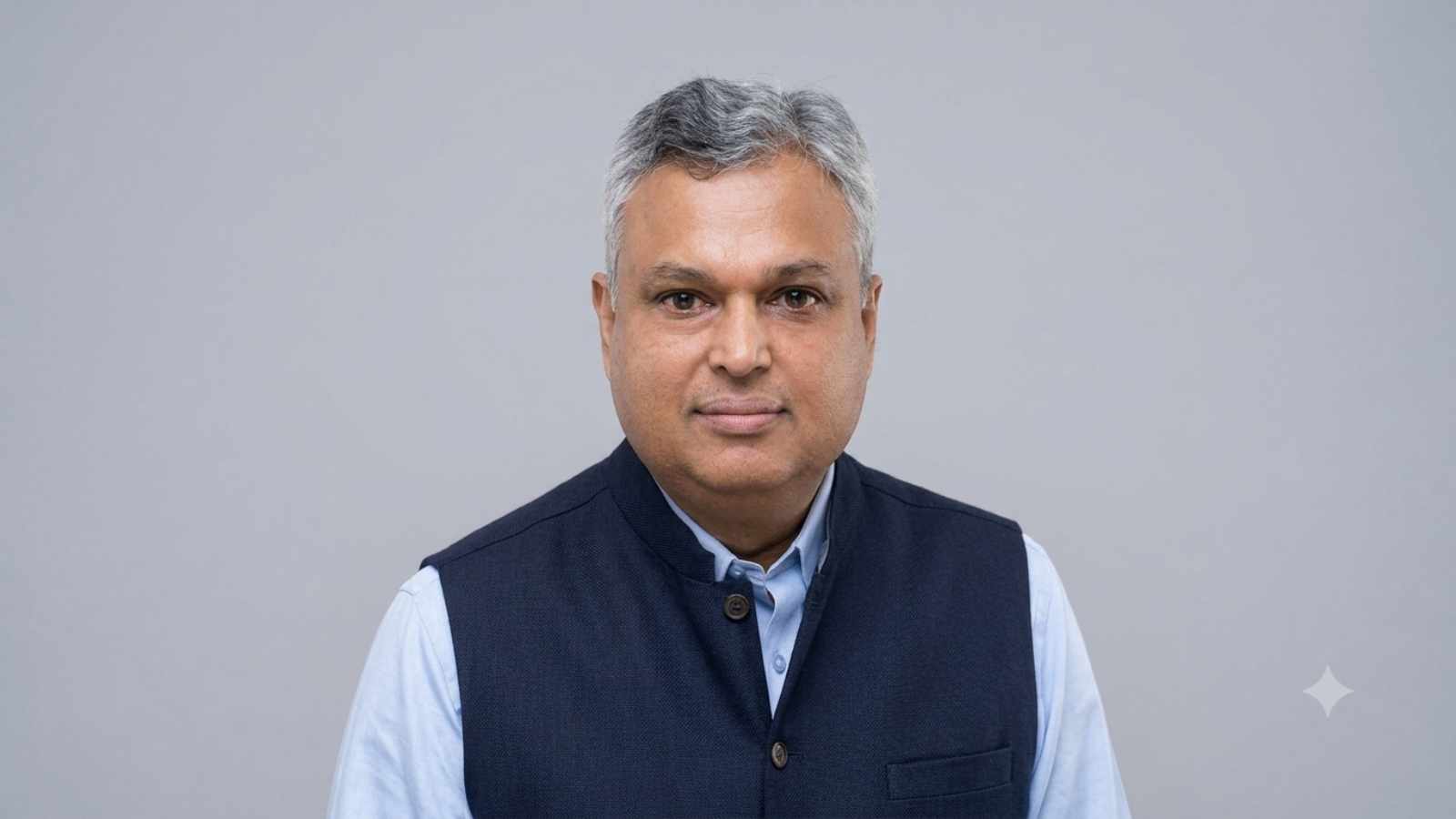
MoSPI Secretary Saurabh Garg has dismissed the ongoing debate over India's new GDP series as unnecessary, asserting that the 7.8% growth rate for Q1 2026-27 is backed by robust digital data and empirical surveys.
- Secretary Saurabh Garg clarified that GDP revisions are due to better data, not 'overestimation'.
- The 7.8% growth print for April-June 2026 exceeded economist expectations, sparking the debate.
- Integration of GST, e-Vahan, and PFMS has revolutionized data availability for MoSPI.
- The new series (Base Year 2022-23) is more comprehensive than previous iterations.
The Ministry of Statistics and Programme Implementation (MoSPI) Secretary, Saurabh Garg, has expressed surprise over the renewed criticism of the new GDP series, which was released six months ago. In a detailed interaction, Garg termed the ongoing furore 'unwarranted,' suggesting that the backlash may be a reaction to the 7.8% growth figure for the first quarter of 2026-27, which significantly outperformed market expectations.
Addressing the claim that previous numbers were 'overestimates,' Garg argued that GDP is inherently an estimation based on the best available data at the time. He emphasized that the downward revision of old numbers is not a sign of systematic bias but a result of transitioning to more accurate indicators. As data sources evolve, the estimates naturally become more refined.
Why This Matters
BozokMedia analysis shows that this friction highlights a gap between traditional economic forecasting and the new era of high-frequency digital data. The shift from proxy-based estimates to empirical surveys means that the 'felt' economy may differ from the 'aggregated' economy, but the latter is now more grounded in hard evidence than ever before.
Garg highlighted the transformative role of digitization in Indian statistics. The inclusion of GST, Periodic Labour Force Survey (PLFS), and the Annual Survey of Unincorporated Sector Enterprises (ASUSE) has provided a clearer picture of the informal economy. Furthermore, digital platforms like e-Vahan have provided real-time insights into consumption and production patterns.
The transition to a digital-first data architecture eliminates the reliance on proxies, making India's GDP tracking more transparent and empirical.
Responding to criticisms from former Finance Secretary Subhash Chandra Garg and former CEA Arvind Subramanian, the MoSPI Secretary maintained that the government has made the best use of available digital tools. He dismissed the notion that the informal economy is being ignored, pointing out that ASUSE figures are now integrated into quarterly estimates.
Regarding transparency, Secretary Garg noted that the technical details, including the Producer Price Index (PPI) and the new Index of Industrial Production (IIP), were made public months ago. The upcoming 'Sources and Methods' document will simply serve as a comprehensive compilation of the three methodology booklets already released.
Frequently Asked Questions
Q1: Why is the new GDP series considered superior to the old one?
A: It utilizes a wider set of indicators, including real-time digital data and direct empirical surveys of the informal sector, reducing reliance on proxies.
Q2: What caused the recent controversy regarding the 7.8% growth rate?
A: The figure was significantly higher than what most economists had predicted, leading some to question the underlying methodology.