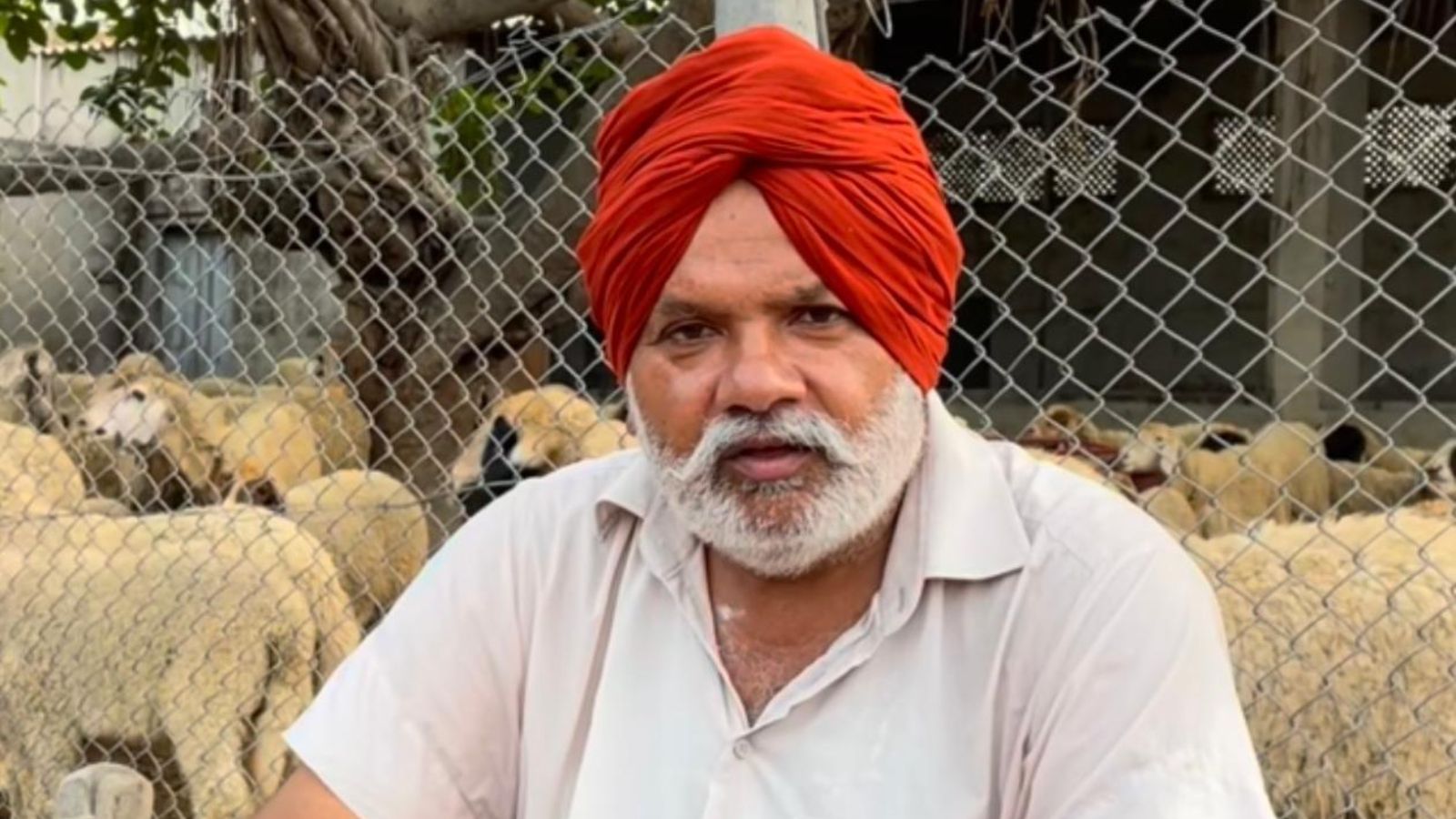
Harbhinder Singh Sandhu, a farmer from Fazilka, Punjab, overcame a staggering debt of Rs 6 crore by diversifying into agroforestry and commercial sheep farming, building one of the region's largest livestock enterprises.
- Recovered from a Rs 6 crore debt to earn an annual revenue of Rs 50-60 lakh.
- Integrated a hybrid model of agroforestry and high-quality sheep breeding.
- Successfully engaged the next generation of educated professionals in agriculture.
The journey of Harbhinder Singh Sandhu from Khippanwali village in Fazilka is a masterclass in resilience. After earning a BSc in Agriculture from Punjab Agricultural University (PAU), Ludhiana, Sandhu entered the farming sector in 1994. However, his early years were marked by a series of catastrophic failures that would have broken most people.
The downfall began when waterlogging destroyed his family's kinnow orchards. Transitioning to sugarcane provided high yields, but the systemic failure of sugar mills to make timely payments left him with a crushing debt of Rs 5-6 crore. A subsequent shift to Bt cotton ended in disaster when a severe whitefly attack in 2015 decimated his crops. Even a venture into dairy farming with Neeli-Ravi buffaloes was crippled by the COVID-19 pandemic.
Why This Matters
BozokMedia analysis shows that Sandhu's success is not merely about livestock, but about 'Risk Hedging'. By moving away from monoculture—where one pest or one policy shift can wipe out a farmer—he created a multi-layered revenue stream that ensures financial stability regardless of market volatility.
In 2018, Sandhu pivoted toward agroforestry, expanding from 5 acres to 30 acres over six years. By 2021, he ventured into commercial sheep farming after visiting the Central Institute for Research on Goats (CIRG) in Mathura. Starting with just eight semi-adult sheep, he meticulously scaled his operation through reinvestment and scientific breeding.
"Education does not take you away from farming; it helps you understand the business better and scale it professionally."
Today, his ARU Sheep Farm houses nearly 1,000 animals, including premium breeds like Punjab Kajla, Yamunapari, and Patanwari. The farm operates on a professional model, selling breeding packages (e.g., 10+1 herds) ranging from Rs 3.5 lakh to Rs 7 lakh. Some high-weight males sell for over Rs 1 lakh each, contributing to an annual income of Rs 50-60 lakh.
Perhaps the most inspiring aspect is the involvement of his children. Despite being a lawyer, a dietician, and a medical student, they dedicate their early mornings to the farm. In a state where youth are increasingly migrating abroad, the Sandhu children view farming not as a chore, but as a high-status, respectable business.
| Farming Phase | Major Setback | Current Diversified Model |
|---|---|---|
| Kinnow/Sugarcane | Waterlogging & Payment Delays | Agroforestry (30 Acres) |
| Bt Cotton | Whitefly Attack (2015) | High-Value Breeding Stock |
| Dairy Farming | COVID-19 Disruptions | 1,000+ Sheep Population |
Frequently Asked Questions
1. How did Harbhinder Singh Sandhu clear his debt?
He cleared his debts by diversifying his income sources, specifically shifting from high-risk monoculture to a combination of agroforestry and commercial sheep breeding.
The farm focuses on quality lineage records, professional breeding packages, and the integration of scientific methods learned from research institutes like CIRG.