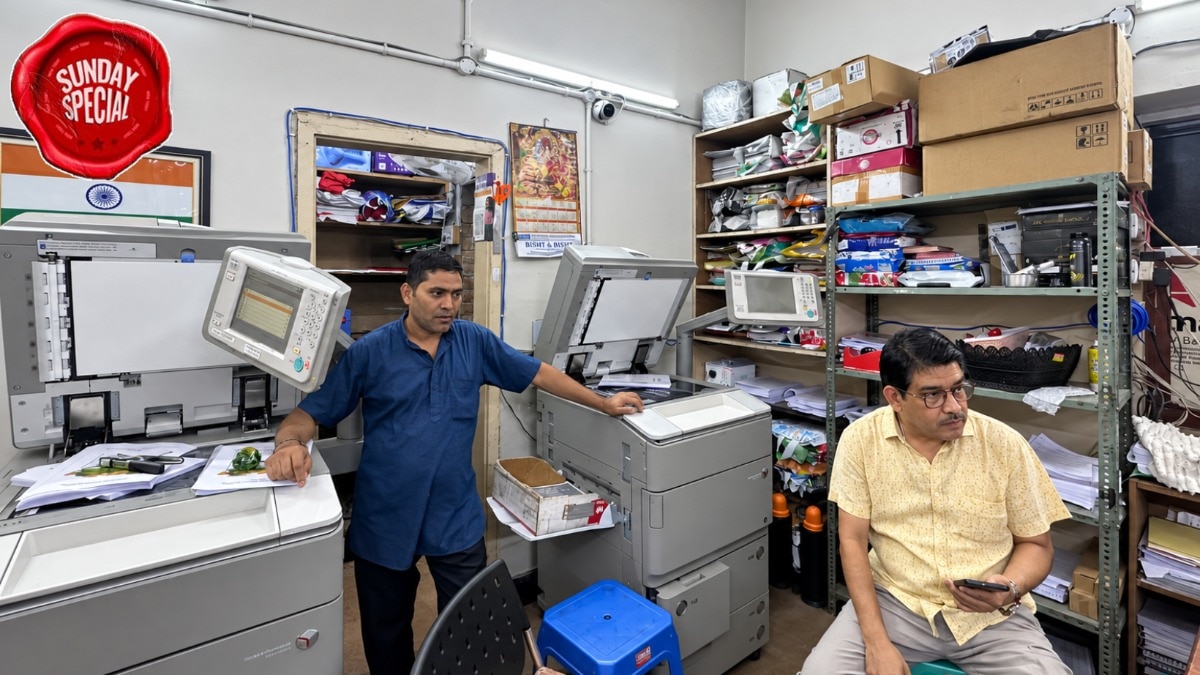
In a landmark legal battle, a humble photocopy shop owner took on three of the world's largest publishing houses and emerged victorious, reshaping the landscape of copyright law.
- A small-scale entrepreneur challenged three massive global publishing corporations.
- The case centered on the tension between intellectual property rights and access to information.
- The court's ruling sets a significant precedent for 'Fair Use' doctrines.
In a remarkable display of courage and legal perseverance, a local photocopy shop owner has achieved what many thought was impossible: defeating three of the world's most powerful publishing conglomerates in a high-stakes legal battle. This story has sent shockwaves through the global publishing industry.
The conflict arose when the international publishers sought to restrict the reproduction of their materials, claiming that the photocopy business directly infringed upon their Intellectual Property Rights. For a small business owner, the legal costs and the sheer scale of the opposition seemed insurmountable, yet the fight for survival began.
Why This Matters
BozokMedia analysis shows that this case is a watershed moment for the intersection of technology, education, and law. It highlights the critical need to balance the commercial interests of content creators with the fundamental right of the public to access affordable educational resources.
This victory serves as a powerful reminder that the rule of law is a great equalizer, capable of protecting the smallest individual against the mightiest of corporations.
Historically, copyright litigation has been heavily skewed in favor of large corporations with endless legal resources. However, this case pivoted on the concept of Fair Use—the principle that certain uses of copyrighted material are permissible without permission for purposes such as criticism, news reporting, teaching, and research.
The court's decision to side with the small business owner underscores the importance of information accessibility. By recognizing the role of photocopy services in facilitating education, the judiciary has provided a shield for millions of small entrepreneurs worldwide who operate in the informational ecosystem.
Frequently Asked Questions
Question 1: What was the core of the legal dispute?
Answer: The dispute was whether photocopying copyrighted material for educational purposes constitutes copyright infringement.
Question 2: How does this affect the publishing industry?
Answer: It forces global publishers to rethink their enforcement strategies regarding small-scale educational services.