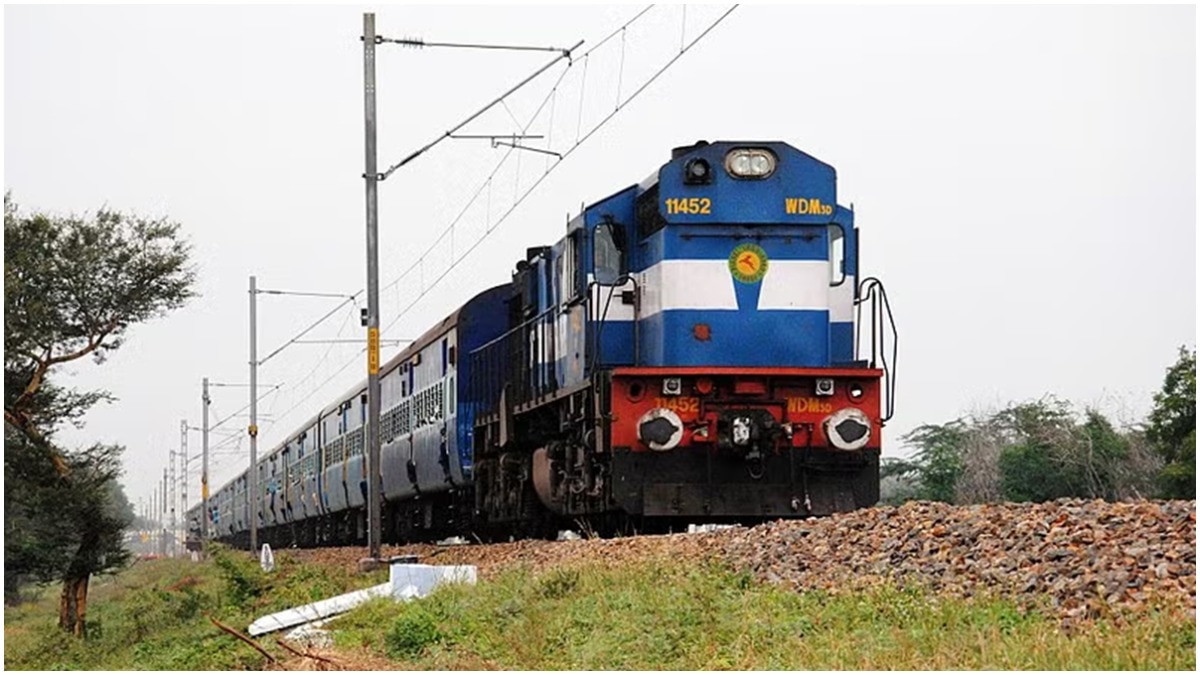
Indian Railways is gearing up to upgrade the New Delhi-Mumbai route to support speeds of up to 160 kmph. This major infrastructure overhaul aims to slash travel time from 16 hours to just 12 hours.
- Target speed of 160 kmph for the New Delhi-Mumbai corridor.
- Travel time reduction from ~16 hours to approximately 12 hours.
- Major upgrades underway in the Palwal-Mathura section.
- Implementation of advanced SCADA systems for real-time power monitoring.
The commute between India's political capital, New Delhi, and its financial hub, Mumbai, is set for a massive transformation. Indian Railways is actively working on upgrading the 1,427 km route to accommodate train speeds of up to 160 kilometers per hour. The ultimate goal is to reduce the current travel duration, which ranges between 15 to 17 hours, to a swift 12 hours.
Under the ambitious 'Mission Raftar' initiative, comprehensive upgrades are being executed across various segments. Recent developments from the Agra division highlight that the new 2x25 kV Chhata Traction Substation (TSS) was successfully commissioned on September 7. This is a critical component in preparing the Palwal-Mathura section for high-speed operations.
Why This Matters
BozokMedia analysis shows that this infrastructure upgrade is vital for enhancing national connectivity and economic efficiency. By drastically reducing travel time between two of India's most significant urban centers, the railways will facilitate faster movement of people and boost inter-city commerce.
The transition to 160 kmph speeds represents a paradigm shift in Indian rail technology and operational efficiency.
The technical overhaul involves upgrading an 84 Route Kilometer (RKM) section, spanning 336 Track Kilometers (TKM). This includes the installation of high-capacity Overhead Equipment (OHE), super masts, and Auxiliary Earth Conductors (AEC). Furthermore, the signaling and telecommunication systems are being modernized to ensure safety at higher velocities.
To support the increased power demands of high-speed trains, the railway is strengthening its electricity supply network. Several switching posts, including Kosikalan and Mathura, are already operational, while final testing is underway at Vrindavan and Kotwan. The SCADA (Supervisory Control and Data Acquisition) system will play a pivotal role, allowing the Agra Control Hub to monitor and manage the traction power network remotely with high precision.
Current vs. Future Travel (Estimated)
| Train Name | Current Duration (Approx) | Future Target (at 160 Kmph) |
|---|---|---|
| Pune AC Duronto | 15 hrs 24 mins | ~12 hours |
| Tejas Rajdhani | 15 hrs 40 mins | ~12 hours |
| August Kranti Rajdhani | 16 hrs 50 mins | ~12 hours |
In addition to tracks and power, yard remodeling is a key focus. The Mathura and Bhuteshwar yards are undergoing significant restructuring, including the construction of new Up lines and fourth lines. The railway aims to complete these critical infrastructure works by September 30, 2026, ensuring a seamless high-speed corridor for passengers.
Frequently Asked Questions
1. What is the new target speed for the Delhi-Mumbai route?
The target speed for trains on this route is being increased to 160 kmph.
2. How much time will be saved on this journey?
Travelers can expect to save nearly 4 hours, reducing the journey from around 16 hours to 12 hours.