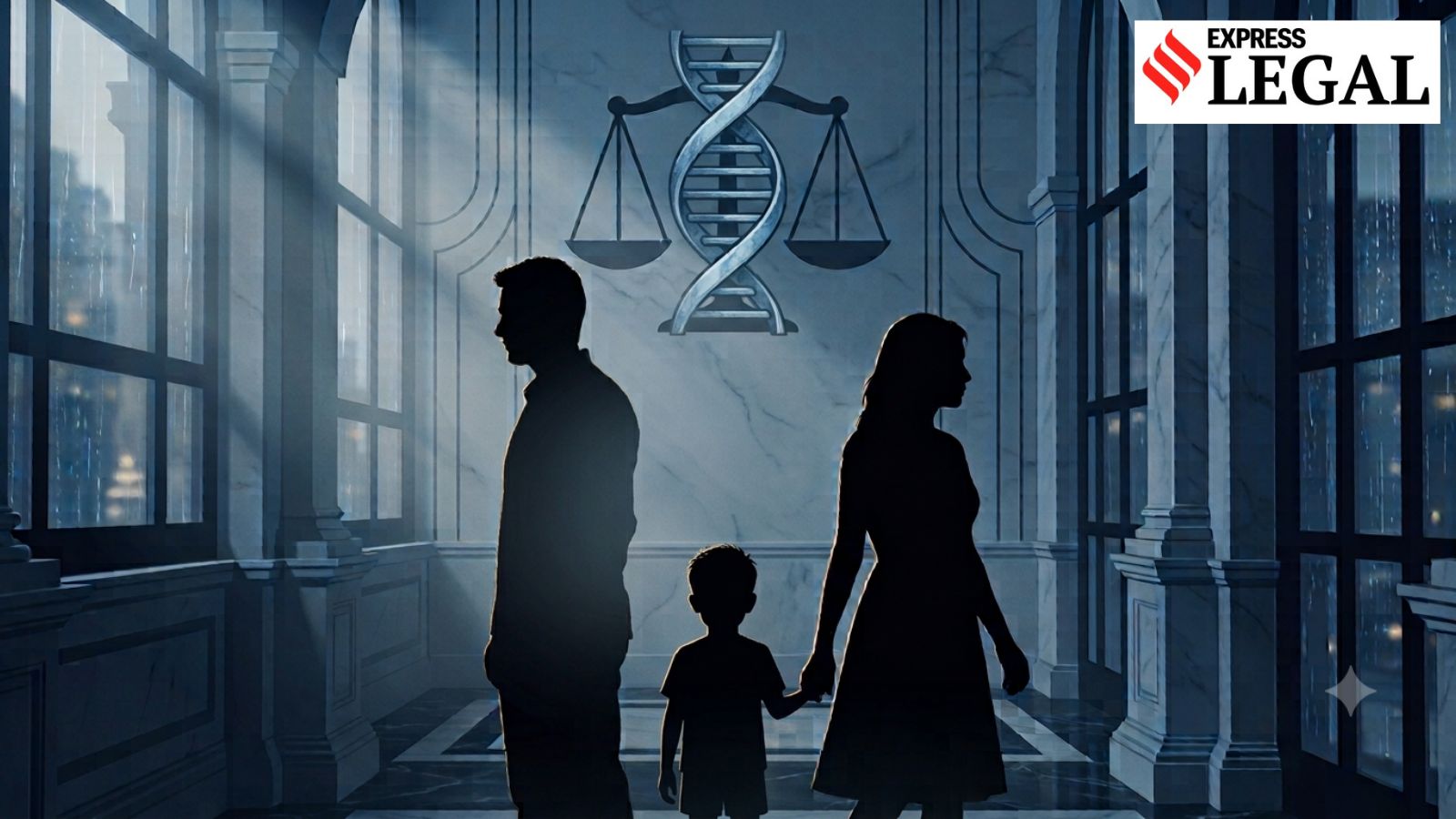
The Madras High Court has set aside a lower court's order for a DNA test in a bigamy case, stating that the child's paternity has no bearing on charges of concealing a previous marriage. The court emphasized that DNA profiling should not be used routinely.
Key Takeaways
- Madras High Court overturned a DNA testing order involving a man, his wife, and their minor child.
- The court ruled that child paternity is irrelevant to charges under IPC Sections 494 and 495.
- Judiciary emphasized that DNA testing must be an 'eminent need' and not a routine procedure.
- The core issue in bigamy is the concealment of the first marriage, not the biological parentage of subsequent children.
The Madras High Court has delivered a significant judgment by setting aside an order directing a man, his wife, and their minor child to undergo DNA testing. The case involved allegations of bigamy, where the complainant alleged that the accused had concealed his first marriage before marrying her. Justice Mohammed Shaffiq ruled that the biological paternity of the child holds no legal weight in determining whether the accused committed the offense of marrying again while concealing a former spouse.
Case Background
The legal battle traces back to a marriage solemnized in Madurai on January 24, 2011. The complainant alleged that the man fraudulently induced her into marriage by hiding his existing marital status. Following a private complaint and an FIR in 2018, the matter proceeded to trial. During cross-examination, the man suggested he was not the biological father of the child, leading the prosecution to seek a DNA test to conclusively establish paternity. The trial court had initially granted this plea.
Why This Matters
BozokMedia analysis shows that this ruling reinforces the protection of constitutional safeguards against intrusive forensic procedures. By distinguishing between the offense of bigamy and the issue of paternity, the court has prevented the misuse of scientific testing to settle collateral disputes. Under IPC Sections 494 and 495, the prosecution must prove the existence of a prior marriage and its intentional concealment, not the biological lineage of children born from the second union.
DNA testing should only be ordered in exceptional cases where it is indispensable to resolve the core dispute.
The High Court noted that DNA testing is not a routine tool for the prosecution. Citing Supreme Court precedents, the court held that before ordering such a test, there must be an 'eminent need' and it must be shown that the result is directly in issue. In this instance, paternity was deemed a secondary, collateral issue that did not justify compulsory DNA profiling.
Frequently Asked Questions
1. What are Sections 494 and 495 of the IPC?
Section 494 deals with marrying again during the lifetime of a spouse, while Section 495 is an aggravated form involving the concealment of the first marriage.
2. Why did the court refuse the DNA test?
The court found that proving the child's father is not a requirement to prove that a person lied about being unmarried.