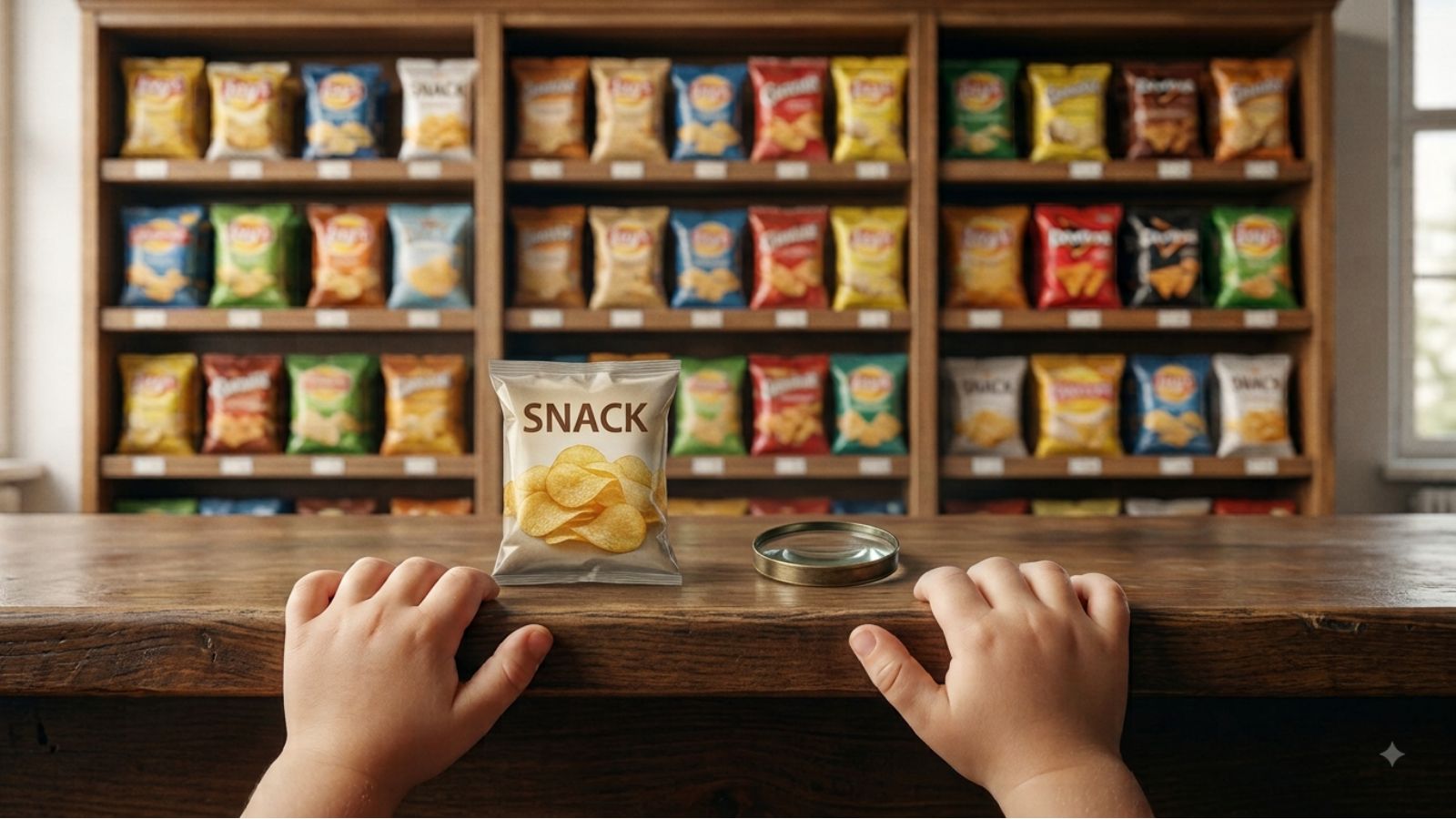
The Supreme Court has pulled up the FSSAI for failing to introduce Front-of-Pack Warning Labels (FOPWL) on packaged foods, expressing deep concern over children's addiction to unhealthy snacks.
Key Takeaways
- Supreme Court criticized FSSAI for not mandating warning labels on sugar, salt, and fats.
- The Court warned the government to decide within two weeks or face judicial orders.
- Concerns were raised regarding the rising addiction of children to unhealthy snacks.
- The Centre cited potential impact on traditional food MSMEs like 'Namkeen'.
New Delhi: In a stern rebuke, the Supreme Court of India on Thursday pulled up the Food Safety and Standards Authority of India (FSSAI) for its delay in introducing Front-of-Pack Warning Labels (FOPWL). These labels are designed to clearly indicate high levels of sugar, salt, and saturated fats in packaged food products.
A bench led by Justice J.B. Pardiwala expressed frustration over the lack of progress, questioning whether the authorities were "taking the court for a toss." The bench emphasized that the proceedings were in the public interest and urged the government to prioritize the health of young children, who are increasingly becoming addicted to processed, unhealthy snacks.
Why This Matters
BozokMedia analysis shows that this legal battle represents a pivotal moment in India's public health history. The implementation of FOPWL could shift the entire landscape of the FMCG sector, forcing manufacturers to reformulate products to avoid the stigma of "unhealthy" warning symbols.
"The court is making it clear: public health and the well-being of the next generation cannot be sacrificed at the altar of industry pressure."
During the hearing, Additional Solicitor General Brijender Chahar, representing the Centre, argued that strict labeling could inadvertently label traditional Indian foods, such as Namkeen, as unhealthy. He suggested that blindly following international formats might harm micro, small, and medium enterprises (MSMEs). However, the bench countered that awareness is essential and that India must act like a developed nation by protecting its citizens' health.
Historical Background
The litigation was initiated by a Kerala-based non-profit, 3S and Our Health Society. Earlier this year, in February, the Supreme Court had already directed the Centre to consider these labeling requirements, prompting the current scrutiny of FSSAI's reluctance.
Frequently Asked Questions
1. What is the purpose of FOPWL?
It provides consumers with immediate, easy-to-understand information about the nutritional risks in packaged food.
2. Why is the government hesitant?
The government argues that it might negatively impact traditional food sectors and small-scale manufacturers.