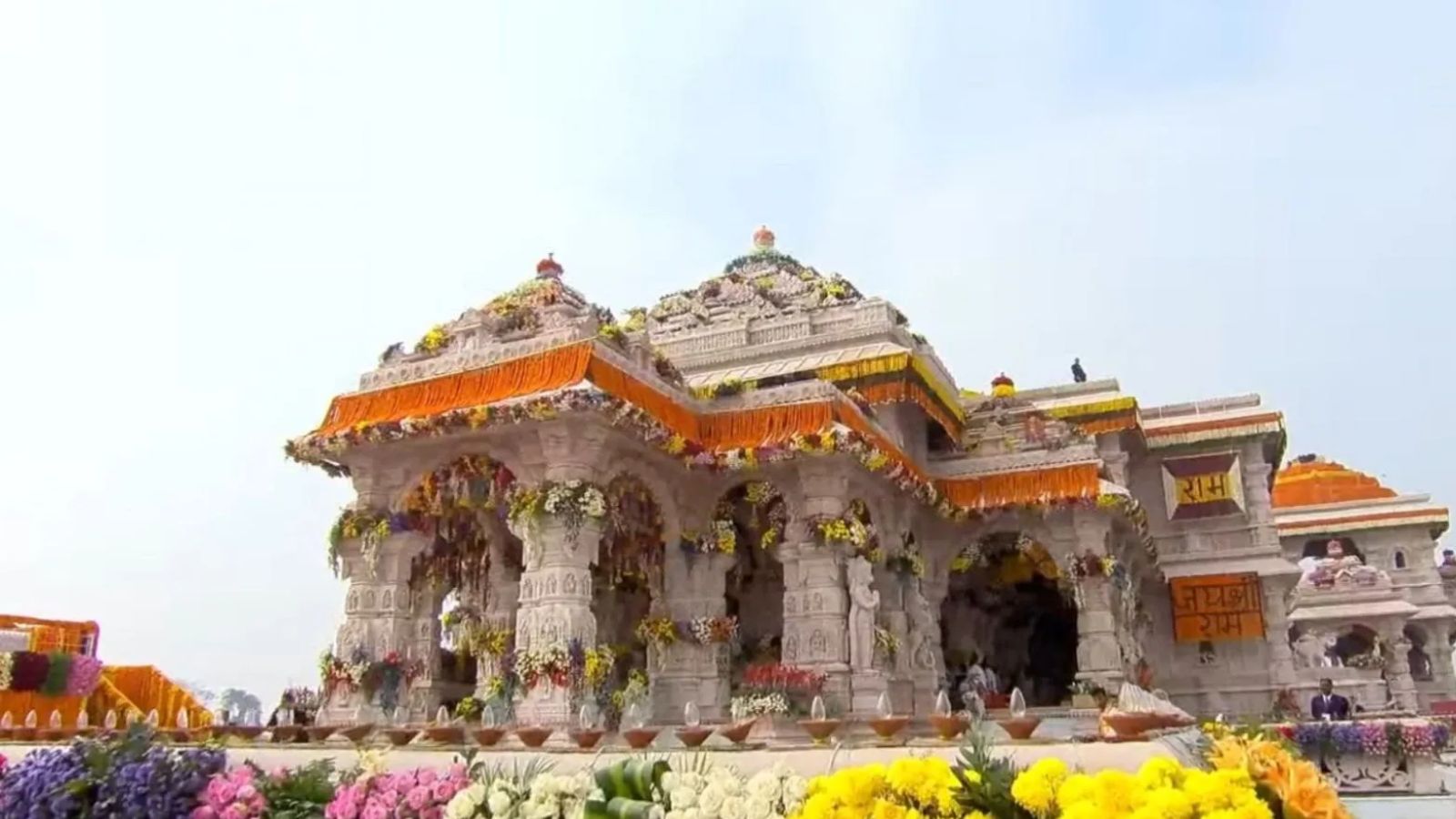
The Supreme Court of India is weighing the implementation of strict guidelines for managing donations at the Ayodhya Ram Mandir following allegations of fund embezzlement. The court has directed the SIT to bring the probe to a logical conclusion.
- SC is considering mandatory transparency rules for Ram Mandir donations.
- A forensic auditor has been integrated into the Special Investigation Team (SIT).
- The SIT has been granted three additional weeks to conclude the probe.
- Public-spirited citizens can now submit suggestions to the Solicitor General.
New Delhi: In a significant move to ensure financial integrity at one of the world's most prominent shrines, the Supreme Court on Monday indicated that it may issue specific orders to ensure transparency in the maintenance of donations at the Ram Mandir in Ayodhya. This comes amid a probe into alleged embezzlement of funds.
During the proceedings, a three-judge bench led by Chief Justice of India (CJI) Surya Kant remarked that certain reforms are necessary. "We are also considering this fact – that how the donation amount should be maintained, what kind of transparency is needed," the CJI stated orally while hearing petitions seeking a thorough investigation into the financial discrepancies.
SIT Progress and Forensic Audit
The court has placed immense reliance on the Special Investigation Team (SIT) constituted to probe the matter. Solicitor General Tushar Mehta informed the bench that, as per the court's directive, a forensic auditor has been added to the team to trace the flow of funds and identify potential leakages.
The investigation is currently being led by the UP Inspector General of Police. The Solicitor General noted that a status report has already been drawn up, which the court has ordered to be filed in its Registry. The SIT has requested and been granted an additional three weeks to finalize the investigation.
Why This Matters
BozokMedia analysis shows that this judicial intervention is critical because the Ram Mandir is not just a religious site but a symbol of national sentiment. Any perceived financial mismanagement could erode public trust. By establishing a transparent framework for donations, the Supreme Court is setting a precedent for how large-scale religious trusts in India should manage public contributions.
"The integration of forensic auditing in a religious trust probe signals a shift toward absolute financial accountability in faith-based institutions."
Addressing a request to dissolve the managing Trust, the CJI clarified that the SIT is independent and accountable solely to the court, not the Trust. Furthermore, the court has opened a window for 'bona fide public-spirited persons' to provide suggestions to the Solicitor General's office, which will then be forwarded to the SIT for investigation.
Frequently Asked Questions
1. Will the Ram Mandir Trust be dissolved?
The Supreme Court has not dissolved the Trust, asserting that the SIT's independence ensures a fair probe regardless of the Trust's existence.
2. How can the public contribute to the investigation?
Bona fide individuals can send their suggestions regarding the investigation to the office of the Solicitor General.