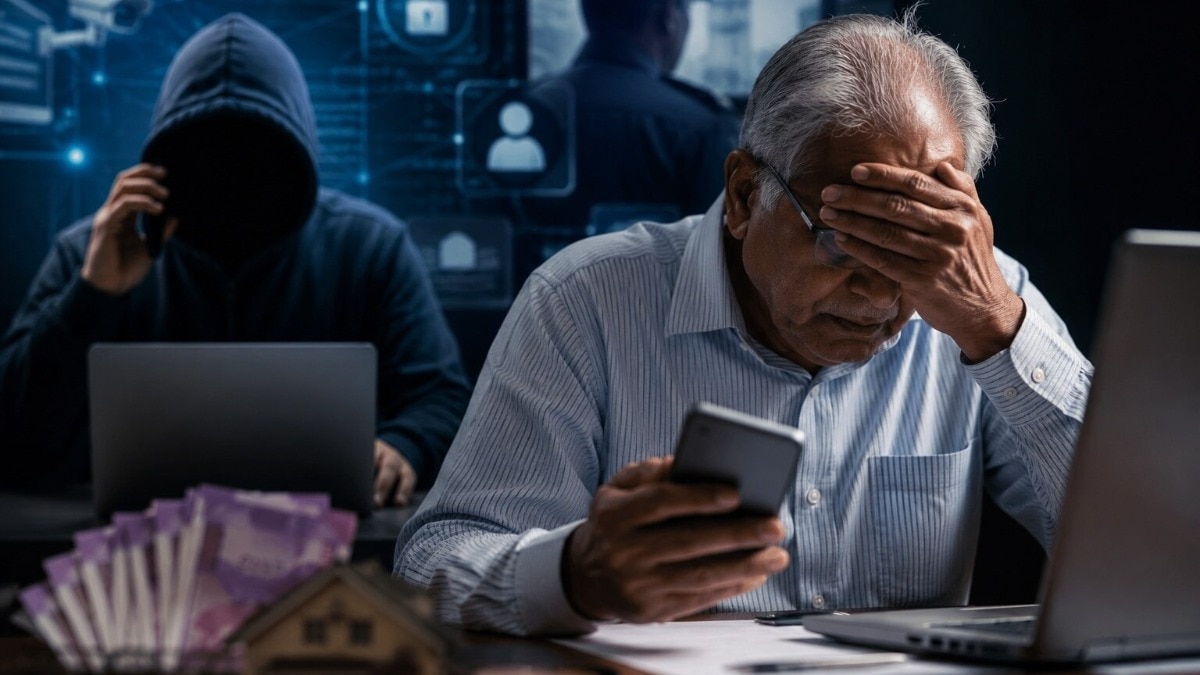
Cyber fraudsters posed as ATS, NIA, and CBI officials to keep a retired FCI employee and his wife under 'digital arrest' for 18 days, eventually stealing ₹42.09 lakh through terror-related threats.
- Retired FCI employee and spouse defrauded of ₹42.09 lakh.
- Victims kept under 'digital arrest' via WhatsApp video calls for 18 days.
- Fraudsters used threats of Pulwama terror attack and money laundering charges.
In a chilling instance of cyber fraud in the Lalbagh area of Lucknow, a 70-year-old retired FCI employee, Ansar Jamal Abbasi, and his wife were systematically defrauded of approximately ₹42.09 lakh. The perpetrators employed a sophisticated psychological tactic known as 'digital arrest,' keeping the couple in a state of constant fear for nearly three weeks.
The ordeal began on July 23, when the victims received a WhatsApp call from individuals claiming to be high-ranking officials from security agencies. The scammers alleged that terrorists arrested in connection with the Pulwama attack had named a person called 'Manish Goyal,' who was reportedly in possession of a SIM card and bank statements registered in the victim's name. The couple was threatened with immediate imprisonment under anti-terror laws.
Exploiting the victims' age and physical disabilities, the fraudsters offered a 'compromise': instead of jail, they would be placed under 'house arrest.' The condition was that their mobile video call must remain active 24/7 to allow the 'authorities' to monitor them. They were strictly warned that disclosing this to any relative or third party would result in an immediate seven-year prison sentence.
Why This Matters
BozokMedia analysis shows that cybercriminals have evolved from simple phishing links to complex 'social engineering' schemes. By impersonating prestigious agencies like the NIA and CBI, they create a power imbalance that paralyzes the victim's critical thinking, making them susceptible to extreme financial exploitation.
"There is no such legal provision as 'digital arrest' in Indian law; no law enforcement agency conducts official investigations or arrests via WhatsApp video calls."
To further solidify the deception, the fraudsters arranged fake video calls with individuals posing as CBI officers and High Court judges. Once the couple's trust was gained, the criminals extracted detailed information regarding their fixed deposits, post office savings, and jewelry. Over the next 18 days, the couple was coerced into making six separate RTGS transactions totaling ₹42,09,869.
The fraud came to light only after the victims realized the deception, prompting them to file a complaint at the Cyber Crime Police Station. Inspector Alok Rao stated that the police are currently tracing the transaction chain to identify the beneficiaries of the stolen funds.
Frequently Asked Questions
1. What is a 'Digital Arrest' scam?
It is a fraudulent scheme where criminals impersonate government officials and use video calls to intimidate victims into staying isolated and transferring money to 'clear' fake legal charges.
2. How can I report such crimes?
Immediately report any such incident to the National Cyber Crime Helpline at 1930 or visit the official portal at www.cybercrime.gov.in.