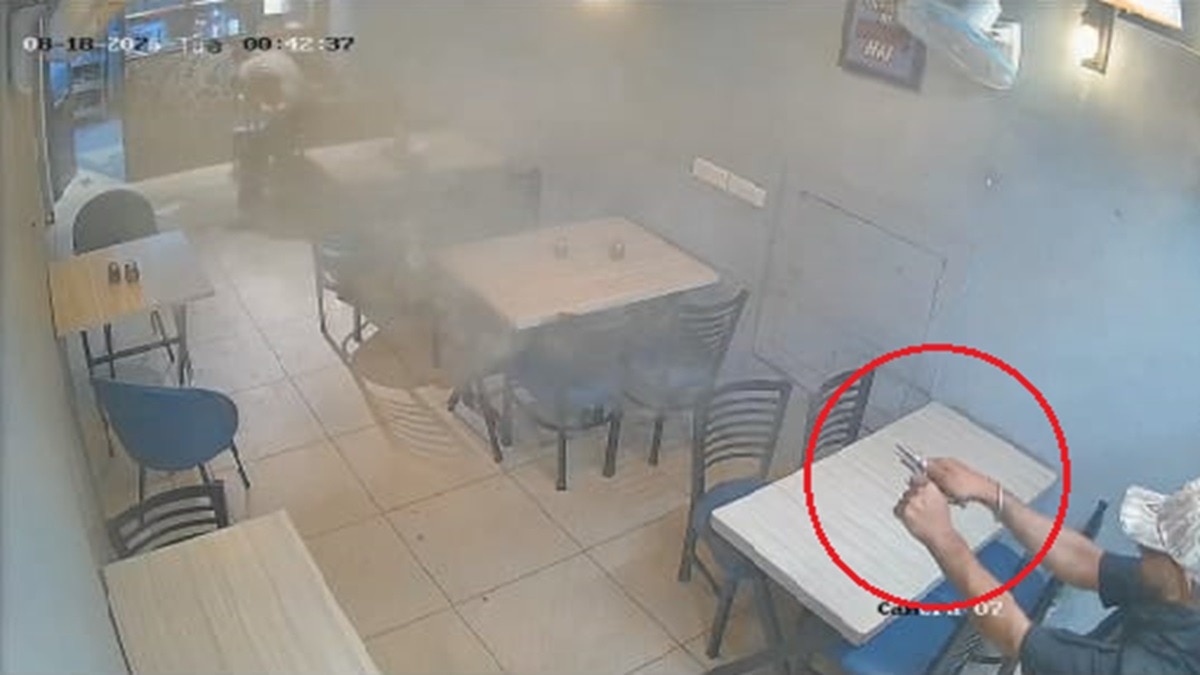
New revelations in the Twisha Sharma case shed light on her final 30 minutes, including her last calls and messages. The CBI charge sheet highlights a harrowing descent into mental despair.
- Twisha Sharma sent a heartbreaking message to her sister-in-law asking to be 'left in peace' before her death.
- The CBI charge sheet claims Twisha felt she had no other option left in life.
- Police negligence regarding the security of the terrace gate has surfaced in the investigation.
The tragic death of Twisha Sharma has sent shockwaves across the nation. Recent disclosures and the CBI charge sheet have provided a haunting glimpse into her final 30 minutes. The investigation reveals that in her last moments, Twisha was in a state of extreme emotional distress, attempting to reach out to only two specific individuals, underscoring her profound sense of isolation.
According to investigative reports, Twisha sent a devastating message to her sister-in-law, stating, 'Just let me die in peace now.' This message serves as a grim testament to the psychological torment she endured. The CBI has asserted in its charge sheet that the circumstances were so overwhelming that Twisha believed ending her life was her only remaining recourse.
Why This Matters
BozokMedia analysis shows that this case transcends personal tragedy; it is a stark indicator of the rising instances of 'mental cruelty' within marriages. Legal experts suggest that as judicial understanding of psychological abuse evolves, cases like Twisha's will become pivotal in defining the boundaries of domestic violence and the necessity of mental health support within the family structure.
Mental cruelty is often invisible, but its consequences can be far more lethal than physical violence.
Another alarming aspect involves the initial police response. As reported by Dainik Bhaskar, while the police sealed Twisha's room, the terrace gate was secured only with a simple latch, which was found open the following day. This lapse in protocol has raised serious questions regarding the integrity of the crime scene and the diligence of the local authorities.
Twisha's family, particularly her mother Giribala, has consistently accused the in-laws of severe harassment. Following a traumatic abortion, the relationship had deteriorated significantly, leading her mother to refer to the family as 'killers.' The case now hinges on proving the extent of mental cruelty through the evidence presented in court.
Historical Background
In the Indian legal context, the concept of 'Matrimonial Cruelty' has undergone significant evolution. Historically, physical assault was the primary metric for cruelty. However, through landmark Supreme Court judgments, mental agony, emotional manipulation, and social isolation are now legally recognized as valid grounds for matrimonial relief and domestic violence protection.
Frequently Asked Questions
1. What is the core claim of the CBI charge sheet?
The CBI claims that Twisha Sharma was under extreme mental pressure and felt that she had no other alternative but to end her life.
2. What negligence has been attributed to the police?
The police are accused of negligence regarding the security of the terrace gate, which was not properly fastened after the incident.