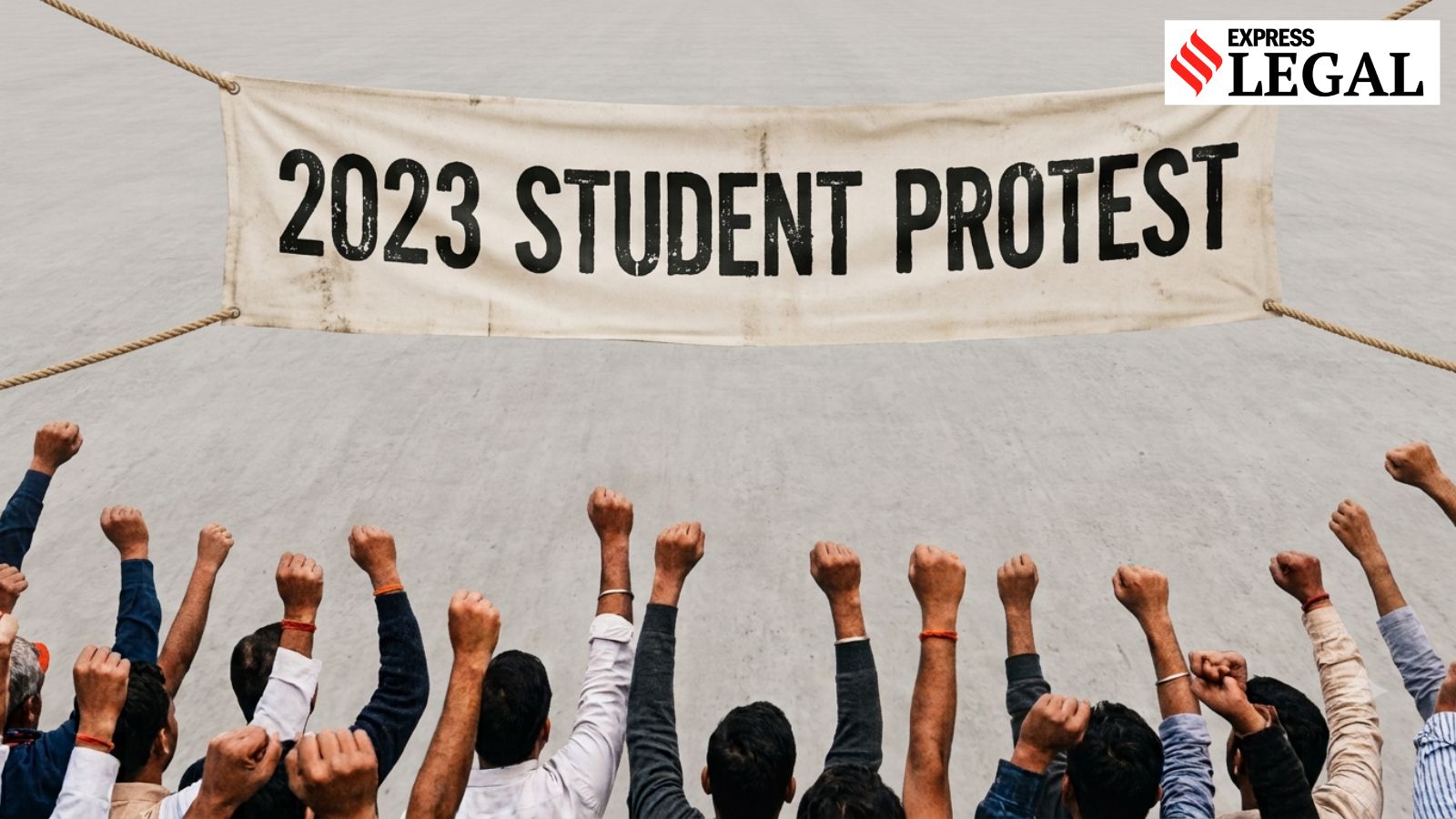
The Allahabad High Court has reinstated a plea by All-India Students Association (AISA) leader Vivek Kumar seeking an FIR against former Allahabad University Chief Proctor Rakesh Singh for alleged caste abuse and assault during 2023 student protests. The court set aside the special judge's order, citing a "manifest error of law" and lack of proper analysis, remanding the matter for fresh consideration and potential action under the SC/ST Act.
- Allahabad High Court restores AISA leader Vivek Kumar's FIR plea.
- Special judge's order rejecting the plea over caste abuse allegations set aside.
- Matter remanded for fresh consideration, including examination of SC/ST Act Section 4.
- Former Chief Proctor Rakesh Singh accused of assault and caste slurs during 2023 student protests.
The Allahabad High Court recently set aside a special court order rejecting a plea by All-India Students Association (AISA) student leader Vivek Kumar seeking the registration of an FIR against former Allahabad University Chief Proctor Rakesh Singh over allegations of caste abuse and assault during a student protest in 2023.
Observing that the special judge cursorily rejected the complaint without undertaking any meaningful analysis of the allegations, Justice Jai Prakash Tiwari remanded the matter back to the special judge for fresh consideration. The court directed it to pass a reasoned and speaking order, assigning cogent reasons for its conclusions.
“The learned court shall also examine the applicability of Section 4 of the Scheduled Castes and the Scheduled Tribes (Prevention of Atrocities) Act, 1989, and, if the facts and circumstances so warrant, proceed in accordance with law against the concerned public servants who have failed to discharge their statutory duties as contemplated thereunder,” the high court said, emphasizing the need for accountability.
According to the appellant, a member of the Scheduled Caste community and who held the position of Unit President of the Allahabad Unit of the All India Students Association (AISA), he was participating in a ‘peaceful’ protest outside the University of Allahabad on October 17, 2023. The protest demanded the opening of the University library for 24 hours, reinstatement of suspended students, and provision of clean sanitation facilities. During the protest, the University’s Chief Proctor, Rakesh Singh, allegedly abused him using caste-based slurs and assaulted him with a wooden stick, causing injuries.
The appellant claimed that despite lodging complaints with the police and submitting representations to higher authorities, no FIR was registered. It was further stated that the special judge, SC/ST Act, summarily rejected the application seeking registration of FIR by ‘merely terming the incident as “suspicious,” without conducting any proper inquiry.’
The High Court held that the Special Judge had committed a “manifest error of law” by failing to discuss the facts and prima facie evidence before rejecting the application. It noted that no sufficient reasons had been given for dismissing the plea and that the court had also failed to consider action against police officials under Section 4 of the SC/ST Act.
Student activism has a rich and often tumultuous history in India, with universities frequently serving as crucibles for social and political change. Allahabad University, a venerable institution, has seen its share of student movements demanding various reforms. The Scheduled Castes and the Scheduled Tribes (Prevention of Atrocities) Act, 1989, is a landmark legislation designed to protect members of marginalized communities from discrimination and violence, aiming to ensure swift justice for such offenses.
Why This Matters
BozokMedia analysis shows that the Allahabad High Court’s ruling is not merely a procedural victory for Vivek Kumar but serves as a significant precedent for judicial accountability and the protection of rights for marginalized communities across the nation. It underscores the imperative for lower courts to exercise greater diligence and provide reasoned justifications in their orders, particularly in sensitive cases where social justice and fundamental rights are at stake. This decision reinforces the principle that public officials can be held accountable for failing to discharge their statutory duties.
Legal experts believe this ruling not only offers hope for justice to the victim but also emphatically reiterates that judicial orders must be reasoned and transparent to uphold public faith in the judiciary.
Frequently Asked Questions
- What were the allegations made by Vivek Kumar?
Vivek Kumar alleged that during a student protest on October 17, 2023, former Chief Proctor Rakesh Singh used caste-based slurs to abuse him and assaulted him with a wooden stick. - Why did the Allahabad High Court set aside the special judge's order?
The High Court found that the special judge had rejected the plea cursorily, without any meaningful analysis of the allegations or providing sufficient reasons, deeming it a 'manifest error of law'.