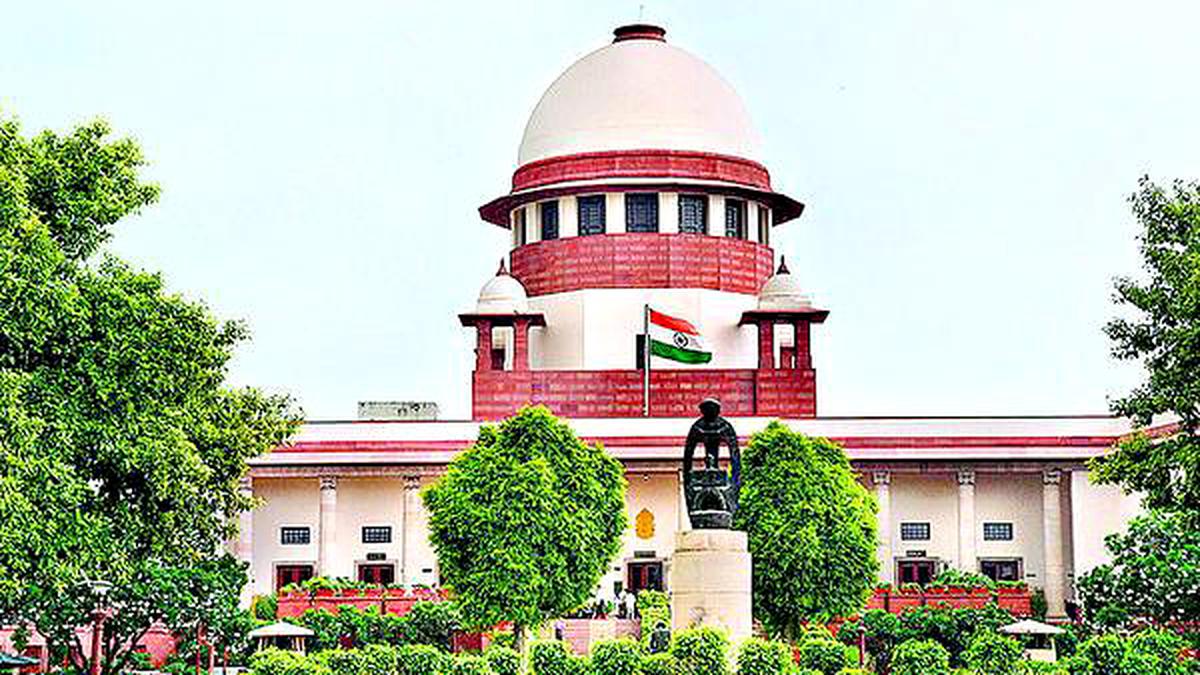
A nine-judge Bench of the Supreme Court is set to decide the legal boundaries of the term 'industry'. The verdict will determine whether state-run welfare schemes and enterprises fall under industrial law.
- A 9-judge Supreme Court Bench will pronounce a verdict on the definition of 'industry'.
- The case challenges the expansive 1978 'Bangalore Water Supply' judgment.
- States like UP, Maharashtra, and Punjab seek a narrower definition.
- The ruling will impact labor rights and state administrative autonomy.
In a move that could reshape India's industrial and labor landscape, a nine-judge Constitution Bench of the Supreme Court, headed by Chief Justice of India Surya Kant, is scheduled to deliver a verdict on the exact ambit of the term 'industry' under the Industrial Disputes Act.
The legal reference centers on the landmark 1978 judgment in Bangalore Water Supply and Sewerage Board v. A. Rajappa. Authored by Justice V.R. Krishna Iyer, that seven-judge bench provided an incredibly broad definition of 'industry', which included hospitals, educational institutions, and municipalities. The only activities exempted were 'core sovereign functions' such as defense, judiciary, and law and order.
Why This Matters
BozokMedia analysis shows that this verdict is not merely a semantic debate but a fundamental struggle between state sovereignty and workers' rights. A decision to narrow the definition could strip millions of workers in state-run enterprises of their right to collective bargaining and grievance redressal, while a broad definition might impose significant administrative and financial burdens on state governments.
The definition of 'industry' is the gateway to social security and labor justice in a developing economy.
Representing states like Uttar Pradesh, Maharashtra, and Punjab, legal counsel argued that the 1978 judgment's expansive view needs a re-examination. They contend that government-led social welfare schemes should not be classified as industrial activities, as this interferes with the state's functional autonomy. Conversely, senior advocates like Indira Jaising argued that a broad definition is essential to ensure that workmen have a judicial forum to fight for fair wages, safety, and protection against unfair dismissal.
Historical Context: The 1978 Precedent vs. Modern Reality
| Aspect | 1978 Bangalore Water Case | Current Legal Challenge |
|---|---|---|
| Scope of 'Industry' | Extremely Broad (includes schools/hospitals) | Should welfare schemes be included? |
| Sovereign Exemption | Strictly limited to core functions | How to define 'sovereign' in a modern state? |
| Worker Impact | High protection and legal recourse | Potential impact on state-run sector rights |
Attorney-General R. Venkataramani noted that the nature of sovereign functions is not static and evolves with the changing role of the state. As the government moves from being a mere regulator to a provider of various services, the legal distinction between a 'sovereign function' and an 'industrial activity' becomes increasingly blurred.
Frequently Asked Questions
1. What happens if the definition of 'industry' is narrowed?
A narrower definition would mean that many employees in government-run sectors might no longer be able to use the Industrial Disputes Act to resolve grievances.
2. Why are the states opposing the broad definition?
States argue that classifying welfare schemes as industries creates legal complexities and financial liabilities that hinder their ability to govern effectively.