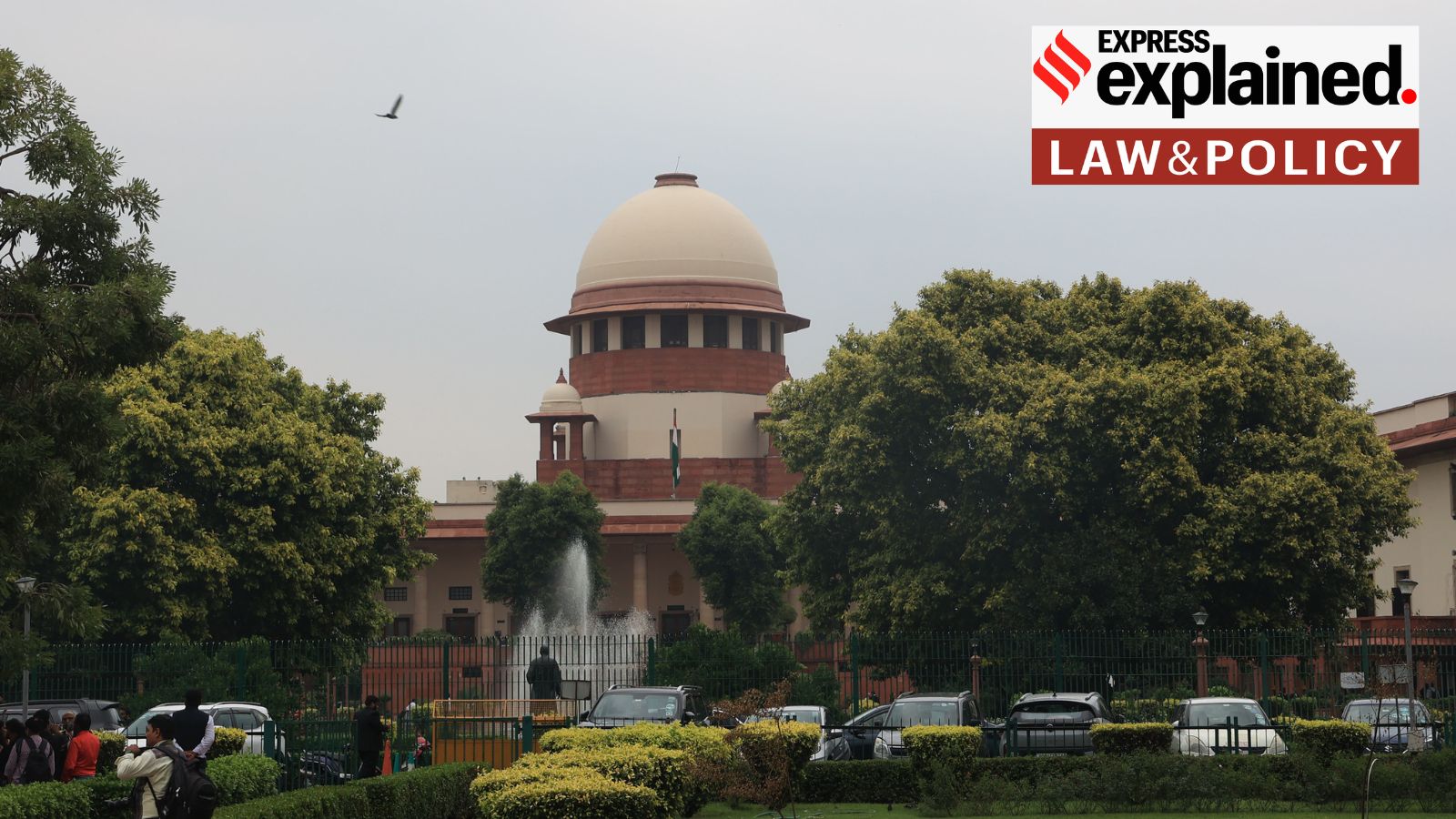
The Supreme Court has dismissed a PIL challenging hanging, ruling that the method does not violate the right to dignity under Article 21.
- The Supreme Court upheld hanging as a constitutionally valid mode of execution.
- The court ruled that hanging does not violate the right to dignity under Article 21.
- The bench dismissed a PIL claiming the method is scientifically unreliable.
- The court relied on the 1983 Deena vs UOI precedent and recent BNSS enactments.
In a landmark ruling, the Supreme Court of India has affirmed the constitutional validity of hanging as a method for executing death sentences. A bench comprising Justices Vikram Nath and Sandeep Mehta dismissed a Public Interest Litigation (PIL) that contended the method is scientifically unpredictable and violates the right to a dignified death guaranteed under Article 21 of the Constitution.
Legal Precedents and Legislative Intent
The Court's decision was anchored in two primary legal pillars. First, the 1983 precedent set in Deena vs UOI, where a three-judge bench had already upheld the method. Second, the Court noted that the Parliament, while enacting the Bharatiya Nagarik Suraksha Sanhita (BNSS), explicitly chose to retain hanging, signifying a legislative reaffirmation of the existing framework.
Why This Matters
BozokMedia analysis shows that this judgment settles a long-standing debate regarding the intersection of colonial-era execution methods and modern constitutional morality. While petitioners argued that scientific understanding has evolved, the court maintained that the current method satisfies the state's obligation to carry out executions with decency and without unnecessary brutality.
The court held that constitutional protection does not cease to exist at the gallows; it must apply with equal emphasis to prisoners on death row.
The petitioners had presented significant scientific challenges, citing a 1992 study of skeletal remains which suggested that the 'hangman’s fracture'—intended to cause instant unconsciousness—was not always achieved, sometimes leading to death by asphyxiation instead. They argued this inherent unpredictability constitutes 'intense physical torture.'
Comparison of Execution Arguments
| Feature | Petitioners' Argument | Union Government's Stance |
|---|---|---|
| Scientific Reliability | Unpredictable; risk of strangulation or decapitation. | Proven record; no botched executions in India since 2003. |
| Dignity (Art. 21) | Violates the right to a dignified death. | Method avoids barbarity and degradation when properly administered. |
| Alternative | Recommended 'Lethal Injection' via Law Commission. | Lethal injection has a high failure rate in the US. |
The Union government countered by pointing out that since 2003, only eight executions have taken place in India, with no recorded instances of a botched execution. This stood in stark contrast to the documented history of failures associated with lethal injection in the United States.
Frequently Asked Questions
1. Does the Law Commission support hanging?
The 187th Law Commission report actually recommended exploring lethal injection as an alternative, but its suggestions are merely recommendatory.
2. Why was the Deena vs UOI case cited?
It served as a binding precedent where the Supreme Court had previously examined medical evidence and upheld the method.