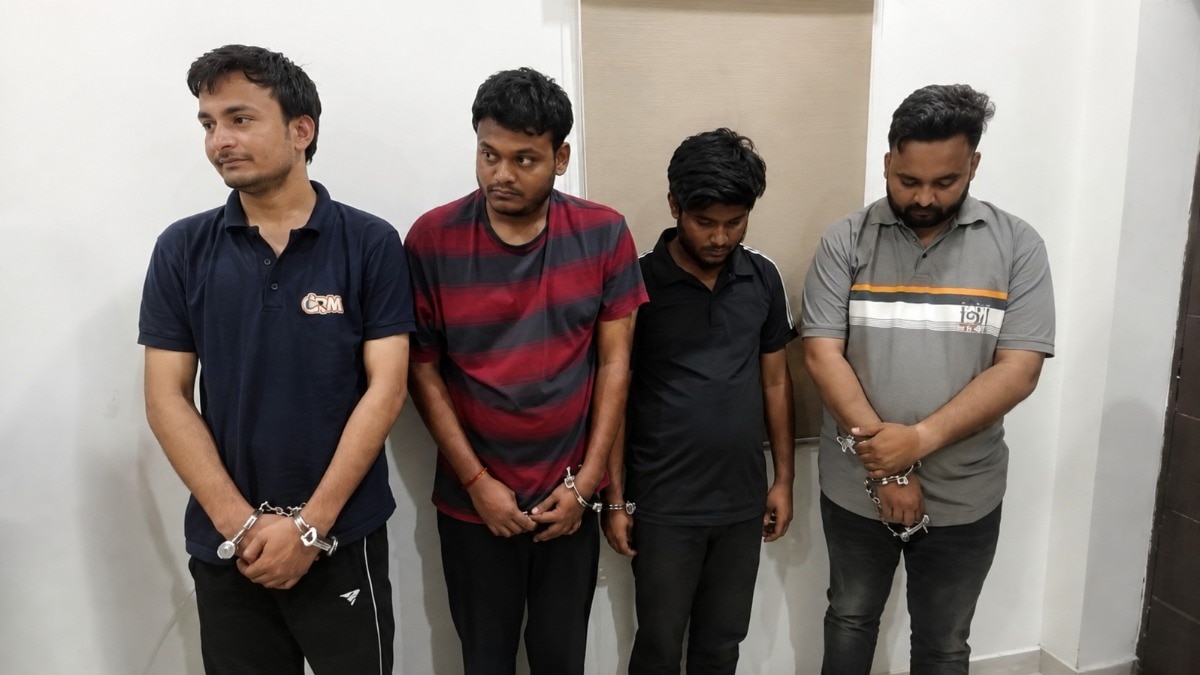
A sensational case of counterfeit currency has been unearthed in Vijapur, Mehsana, after 26 fake 500 rupee notes were found in an HDFC Bank cash deposit machine. Four individuals have been arrested, confessing to downloading designs from Google and printing notes using a color printer.
- 26 fake 500 rupee notes were discovered in an HDFC Bank cash deposit machine in Vijapur, Mehsana.
- Four accused have been arrested, with the main culprit admitting to downloading note designs from Google.
- The counterfeit notes were printed using a color printer and an attempt was made to circulate them by mixing them with genuine currency bundles.
Mehsana: A large counterfeit currency racket has been busted in Vijapur, Mehsana district of Gujarat. The sensational case came to light after 26 fake 500 rupee notes were found in a Cash Deposit Machine (CDM) of HDFC Bank. Police have arrested four youths involved in this racket, who have made shocking revelations during interrogation. The main accused allegedly downloaded the design of a 500 rupee note from Google and then printed counterfeit notes using a color printer.
How Was the Counterfeit Note Operation Uncovered?
The entire incident surfaced on August 14, 2026, when a youth named Patel Dhruv from Vijapur used the HDFC Bank CDM to deposit fifty thousand rupees into his wife's bank account. He inserted 100 notes of 500 rupees into the machine, but only received a message for thirty-seven thousand rupees credited. Upon noticing the discrepancy, he informed the bank staff. Later in the evening, when bank employees opened the machine and checked the deposited notes, 26 of the 500 rupee notes were found to be fake.
Racket Busted and Supply Chain Revealed
Following the bank's notification to the police, an investigation was launched. It was discovered that Dhruv received these fake notes from his cousin Fenil, who had obtained them from his friend Avi Bhakhariya. Avi was heavily indebted and had arranged 1.5 million rupees by mortgaging his grandfather's house. During this time, his friend Jay Goswami tempted him with savings and proposed a plan to mix counterfeit notes with genuine ones. According to the police, Jay Goswami had purchased fake notes worth 30,000 rupees from Adil Kumhar for just 7,000 rupees. Subsequently, Jay and his associate Radhe Patel mixed 26 fake 500 rupee notes into a bundle of 50,000 rupees worth of genuine notes received from Avi, which eventually reached the bank's CDM.
From Design to Printing: How Were the Fake Notes Made?
The most startling revelation during the interrogation came regarding Adil Kumhar. According to the police, Adil, residing in the Kajiwada area of Visnagar, had downloaded the design ('forma') of a 500 rupee note from Google onto his laptop in 2025. He then began printing counterfeit notes using this design with a color printer. He allegedly printed fake notes worth approximately 1.25 lakh rupees and circulated them in the market. These counterfeit notes were being sold at a price of 7,000 rupees for notes worth 30,000 rupees.
Attempt to Destroy Evidence and Arrests
Upon receiving the complaint, the accused also attempted to destroy evidence. During the investigation, it was revealed that the accused had taken the remaining fake notes to Rajasthan and burned them there to prevent the police from finding concrete evidence. However, the police's thorough investigation and interrogation led to the exposure of the entire supply chain of counterfeit notes. The police have arrested Adil Kumhar, Jay Goswami, Avi Patel, and Radhe Patel.
Young Gang and Future Investigations
According to the police, all the accused involved in this case are under 25 years of age. Among the arrested, Radhe is involved in vehicle trading, Jaimin recently enrolled in MCA, Avi is pursuing a degree in Automobile engineering, and Adil is a college student. Deputy SP Dinesh Singh Chauhan stated that the police are now interrogating the accused to identify others involved in the printing, supply, and circulation of counterfeit notes. The police are also investigating how counterfeit notes exceeding 1.25 lakh rupees reached various individuals.
Why This Matters
BozokMedia analysis shows that the increasing sophistication in counterfeit currency operations, leveraging readily available technology like Google searches and color printers, poses a significant threat to financial stability. The involvement of young individuals highlights the urgent need for targeted awareness campaigns and stricter enforcement.
"This incident demonstrates how easily accessible technology can be misused for serious criminal activities, posing a significant challenge to financial systems." - Expert Insight
Did You Know?
Frequently Asked Questions
- How many people have been arrested in connection with printing fake currency?
- What tools did the main accused use to print the counterfeit notes?