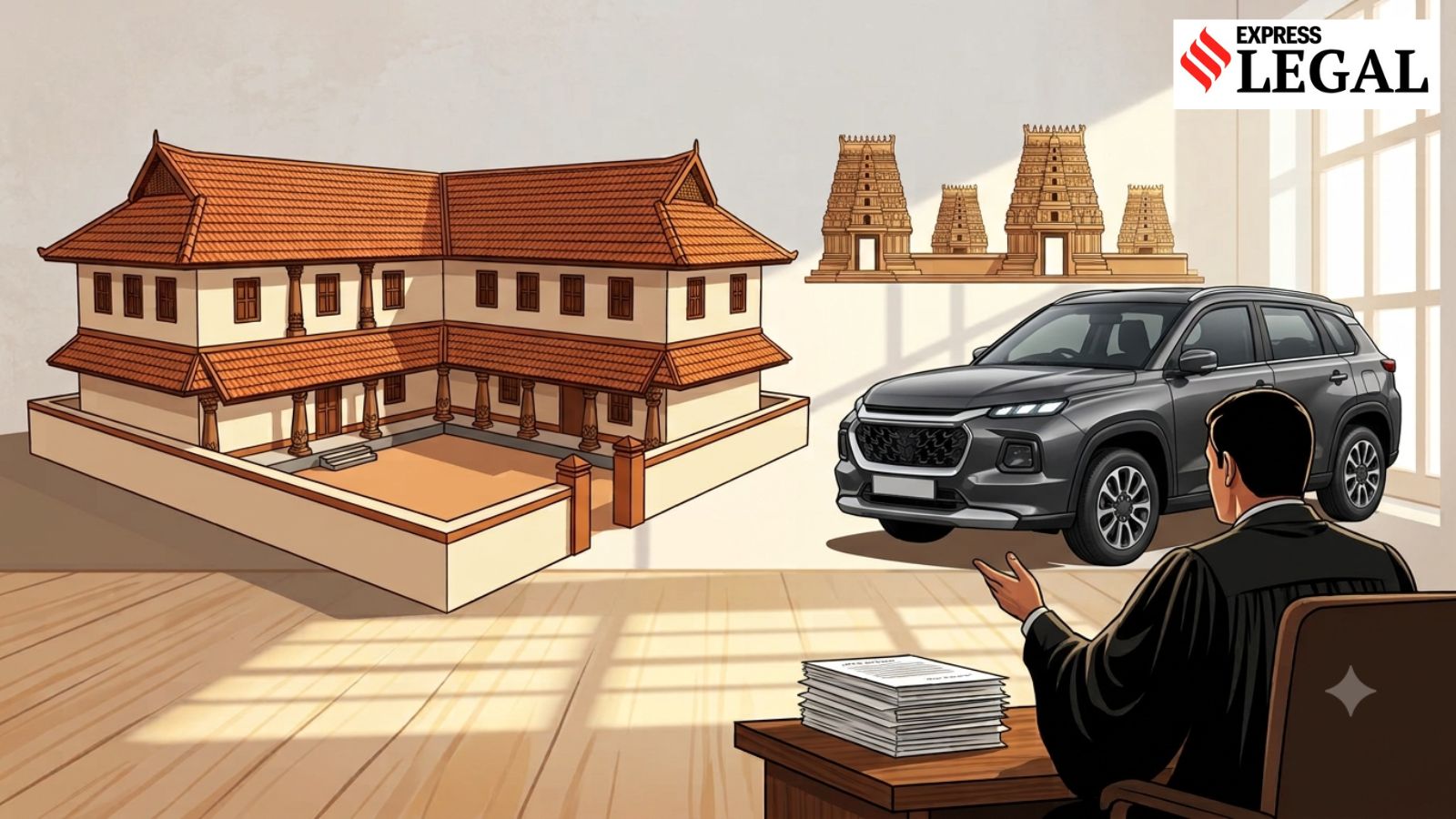
The Kerala High Court has expressed 'shock and dismay' over the Cochin Devaswom Board's expenditure of over ₹28 lakh on an officer's luxury residence and a new vehicle, violating established norms.
- Cochin Devaswom Board spent ₹28,44,313 on an official's residence and car.
- The purchase of a Maruti Grand Vitara violated government vehicle replacement norms.
- The court criticized the use of temple funds for the 'luxuries and comforts' of officers.
- The Board has been ordered to resolve audit objections within three months.
The Kerala High Court has delivered a stinging rebuke to the Cochin Devaswom Board, expressing "shock and dismay" regarding the expenditure of ₹28.44 lakh on the residential quarters and a new vehicle for an officer. The bench, comprising Justices Raja Vijayaraghavan V and K V Jayakumar, criticized the board for using funds meant for temple management to fund the personal comforts of an official on deputation.
The legal proceedings arose from a plea by K B Sumod and suo motu actions following complaints that funds from the Devaswom—which manages several prominent Hindu temples—were being misused for the official accommodation and vehicle of Commissioner S R Udayakumar.
Why This Matters
BozokMedia analysis shows that this ruling sets a critical precedent for the financial governance of religious institutions in India. It reinforces the principle that funds collected through religious offerings are intended for the upliftment of institutions and services for devotees, rather than the personal enrichment or luxury of administrative staff.
"We strongly disapprove and deprecate the actions of the Board and its top officials for incurring expenditure for luxuries and comforts of the officers, violating the norms, Rules and Regulations," the Court remarked.
According to an affidavit filed by the Kerala State Audit Department, the total expenditure amounted to ₹28,44,313. This included ₹8,24,738 for civil repairs to a B1 residential quarter, ₹1,32,324 for electrical work, ₹4,23,950 for household items and furniture, and ₹14,63,301 for the purchase of a new vehicle. The household items included high-end electronics such as an LED TV, washing machine, refrigerator, and air conditioners.
The Vehicle Replacement Controversy
A significant portion of the controversy centered on the purchase of a new Maruti Grand Vitara. The Board justified the ₹14.63 lakh expenditure by citing safety concerns with the old Ford EcoSport. However, the court noted that revised government guidelines from 2019 stipulate that a light motor vehicle can only be replaced after completing 300,000 kilometers or 10 years of service. The existing vehicle had covered only 86,419 kilometers, making the replacement a direct violation of the rules.
| Expenditure Category | Amount (INR) | Details |
|---|---|---|
| Residential Repairs | ₹8,24,738 | Civil work for B1 Quarter |
| Household Items | ₹4,23,950 | Furniture & Electronics |
| New Vehicle | ₹14,63,301 | Maruti Grand Vitara |
| Electrical & Misc | ₹1,32,324 | Electrical works |
The court further noted that while the Commissioner was eligible for a quarter, there were no legal provisions for providing a fully furnished residence. Referring to Section 73A of the Travancore-Cochin Hindu Religious Institutions Act, 1950, the court emphasized the Board's duty to maintain religious institutions and provide facilities for devotees, rather than catering to officer luxuries.
Frequently Asked Questions
1. Why did the High Court criticize the Board?
The Court criticized the Board for violating government norms and using temple funds for the luxury items and expensive vehicle of an officer.
2. What was the violation regarding the new car?
The new car was purchased despite the old vehicle having only completed 86,419 km, whereas rules require 300,000 km or 10 years of service before replacement.