The Supreme Court revisited the 1978 BWSSB decision, raising fresh questions about the definition of “industry” and leaving labour protection in a state of uncertainty. Although the Industrial Disputes Act has been repealed, the ruling leaves a complex legal legacy for future disputes.
- The Court treated the BWSSB test as hypothetical
- Industrial Disputes Act 1947 repealed, but its impact lingers
- Future labour disputes will be interpreted under IRC 2020
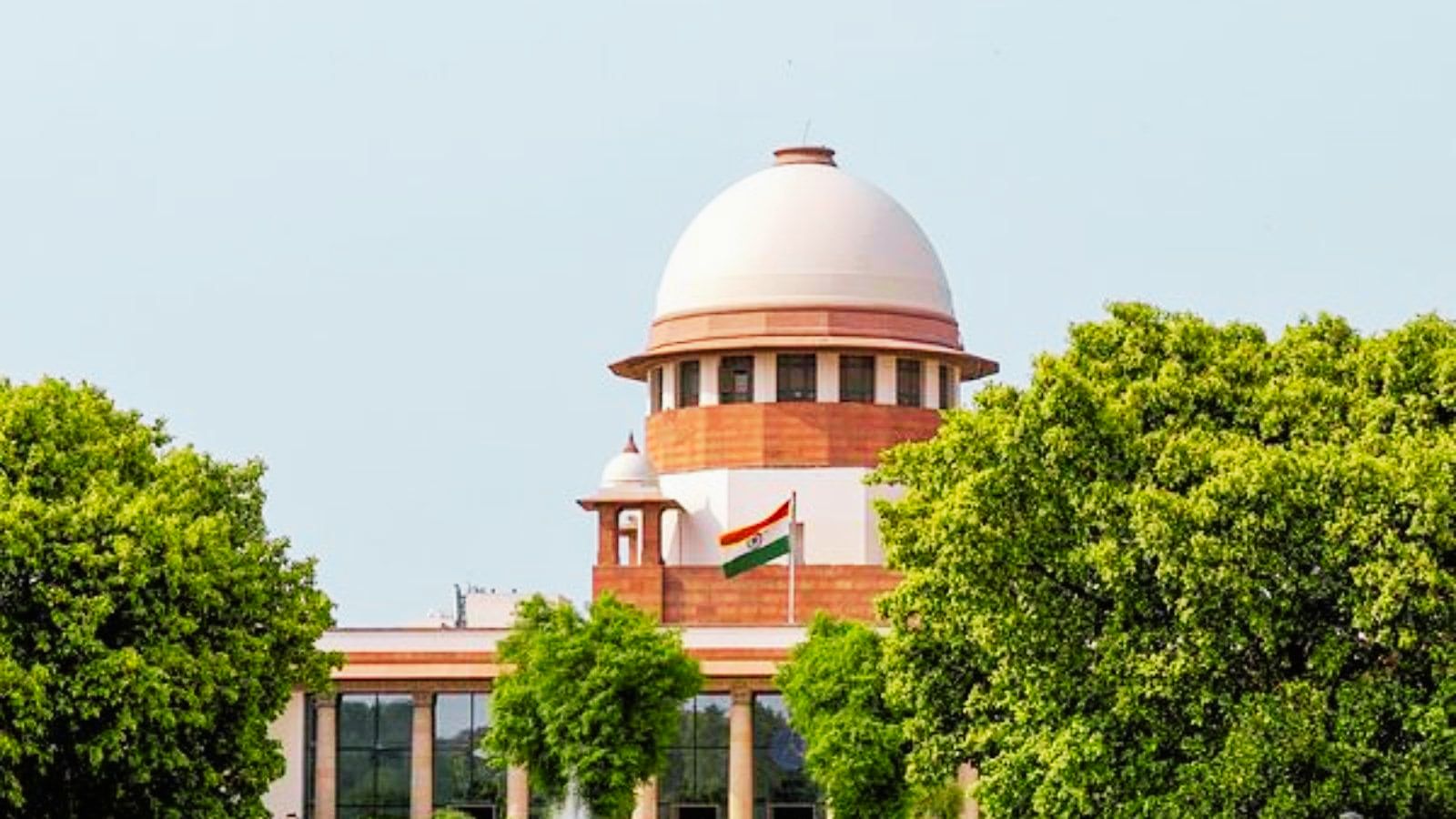
On August 20, 2026, the Supreme Court of India delivered its judgment on the reference concerning the correctness of the 1978 Bangalore Water Supply and Sewerage Board vs A. Rajappa (BWSSB) decision, which hinged on the definition of “industry” under Section 2(j) of the Industrial Disputes (ID) Act, 1947.
The matter resurfaced after the 2005 State of U.P. vs Jai Bir Singh case, where a five‑judge bench referred the BWSSB precedent for reconsideration. A seven‑judge bench was formed, and by a January 2, 2017 order, the issue was escalated to a nine‑judge bench, which on February 16, 2026 framed four pivotal questions about the BWSSB test, the 1982 amendment, the Industrial Relations Code (IRC) 2020, and the status of government welfare activities.
With the IRC 2020 coming into force on November 21, 2025 and simultaneously repealing the ID Act, the reference technically became moot. Nevertheless, the nine‑judge bench proceeded with oral arguments, underscoring the lasting relevance of the BWSSB jurisprudence.
Among the nine judges, Justice D. Datta and Justice U. Bhuyan declared that “the reference requires no answer.” Justice B.V. Nagarathna called the exercise “unnecessary and only academic.” The Chief Justice, writing for four judges, labelled their own reformulated “Triple Test” as “hypothetical” and expressly stated it would not apply to any pending or future case.
The CJI emphasized that the IRC is a standalone statute that must be interpreted on its own terms, yet warned that the BWSSB precedent should not become the “sheet anchor” for future IRC interpretations. This paradoxical stance both distances the new code from old jurisprudence and subtly shapes the interpretive toolbox available to courts.
Historical Background: The original 1978 BWSSB judgment introduced a “Triple Test” to determine whether an activity fell within the industrial sphere. Over the decades, that test guided countless labour disputes, but the advent of IRC 2020 demands a fresh textual analysis of Section 2(p) to replace the legacy framework.
Why This Matters
BozokMedia analysis shows that the decision will redefine the boundary between public‑welfare functions and private industry, directly impacting the scope of labour protection in India. A broader IRC definition could extend safeguards to millions of gig‑economy workers, while a narrower reading may grant employers greater flexibility.
"The Supreme Court’s approach here offers a rare chance to modernise labour law for today’s complex economic landscape," says labour law scholar Prof. Anjali Singh.
Frequently Asked Questions
Q1: Can new cases now be filed under the Industrial Disputes Act?
A: No. The Act has been repealed; all future disputes will be governed by the IRC 2020.
Q2: Do government welfare schemes automatically qualify as industrial activities?
A: Not automatically. Their classification will depend on the interpretation of Section 2(p) of the IRC, which remains unsettled.