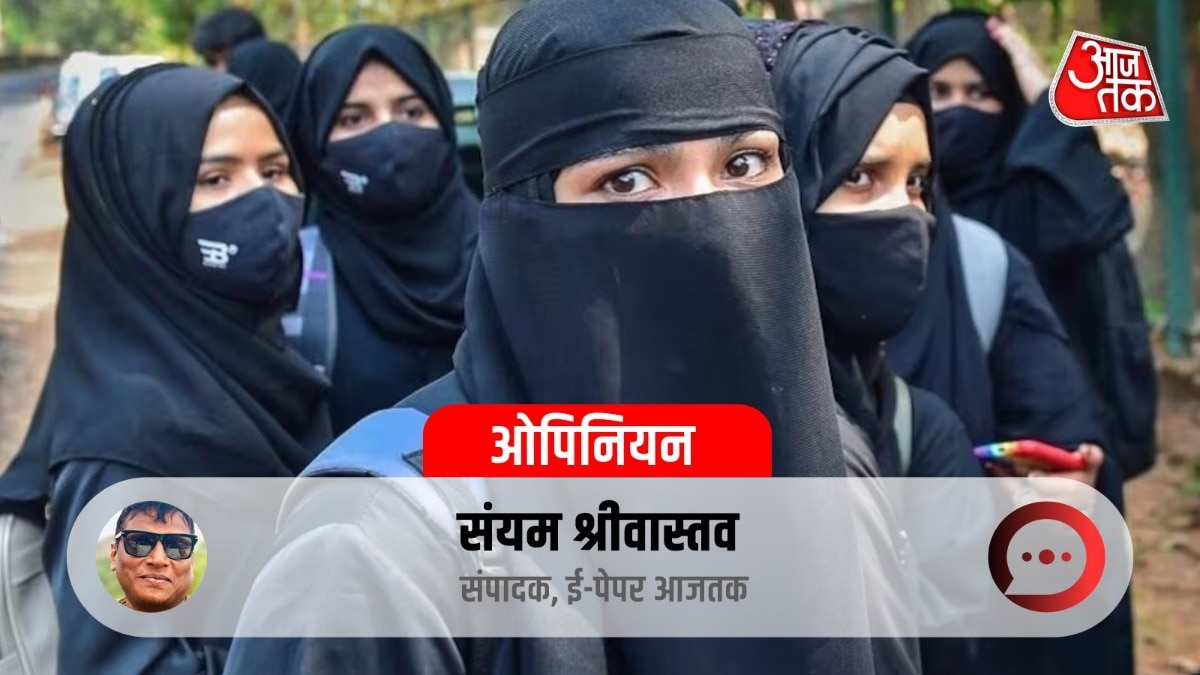
The Allahabad High Court has dismissed a plea seeking permission to wear a hijab in school, ruling that religious claims must be backed by solid evidence and that institutional discipline prevails in secular education.
- The Allahabad High Court dismissed a petition from a Class 11 student of Tagore Public School, Prayagraj.
- The court ruled that wearing a hijab is not an essential religious practice in Islam.
- Justice J.J. Munir and Justice Indrajit Shukla emphasized that institutional rules take precedence over individual claims.
- The verdict reinforces the importance of secularism and equality in educational settings.
In a landmark judgment delivered on August 21, 2026, the Allahabad High Court dismissed a petition filed by a Class 11 Muslim student of Tagore Public School in Prayagraj. The student had sought permission to wear a hijab or headscarf along with the prescribed school uniform. A division bench comprising Justice J.J. Munir and Justice Indrajit Shukla categorically stated that wearing a hijab is not an essential part of the Islamic faith.
The court noted that the petitioner failed to produce any religious scripture, evidence, or substantial basis to prove that not wearing a hijab would adversely affect her religious beliefs. Under Article 25 of the Indian Constitution, religious freedom is subject to public order, morality, and health; the court clarified that mere claims without empirical proof cannot grant special relief against established institutional norms.
Why This Matters
BozokMedia analysis shows that this verdict is crucial for maintaining the secular fabric of Indian educational institutions. By prioritizing uniform codes, the court aims to prevent the classroom from becoming a space for religious demonstration, which could lead to fragmentation and loss of discipline. The ruling ensures that schools remain neutral grounds where students are judged by their academic merit rather than their religious or socio-economic identities.
The purpose of education is the cultivation of knowledge and character, not the display of religious symbols within the classroom.
The case also addressed the issue of administrative consistency. The student had attended the same school from Class 6 to 10, during which she occasionally wore a headscarf without objection. However, the court ruled that previous administrative leniency or oversight does not create a permanent legal right. Institutions have the authority to enforce discipline and uniform codes at any time, provided they are non-discriminatory and aimed at maintaining order.
This decision aligns with previous rulings by the Karnataka High Court and other judicial bodies, which have consistently held that the hijab is not an obligatory religious requirement. The legal discourse surrounding this issue has been intense across India, with similar tensions reported in states like Uttar Pradesh, Kerala, and Jharkhand, highlighting the delicate balance between individual rights and institutional regulations.
Frequently Asked Questions
1. Why did the court reject the plea?
The court rejected it because the petitioner could not provide concrete evidence that the hijab is an essential religious requirement in Islam.
2. Can schools mandate uniforms?
Yes, private and non-aided educational institutions have the right to set their own dress codes to ensure discipline and equality.