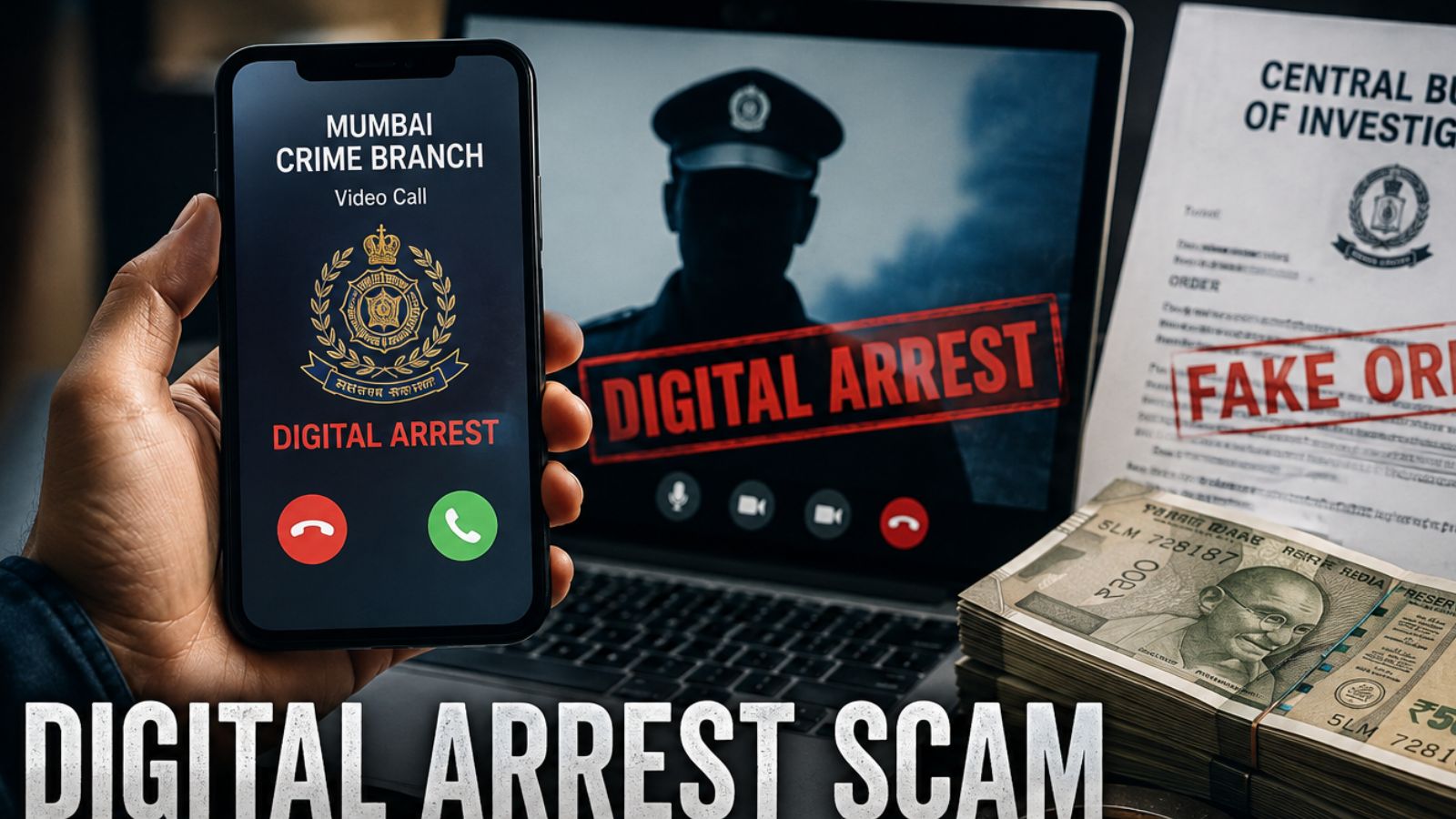
A retired physician in Kalaburagi was swindled out of Rs 1.79 crore after fraudsters posing as NIA and ED officials accused him of funding the banned PFI. The victim was coerced into a 'digital arrest' via video calls, leading to massive financial loss.
- A 67-year-old retired doctor lost Rs 1.79 crore to a sophisticated 'digital arrest' fraud.
- Scammers impersonated officials from the NIA, ED, and the Cyber Crime Control Board of India.
- The victims were intimidated with false allegations of terror financing linked to the banned Popular Front of India (PFI).
In a chilling instance of cybercrime, a 67-year-old retired doctor from Kalaburagi, Karnataka, has been cheated of a staggering Rs 1.79 crore. The fraud, which utilized the psychological tactic of 'digital arrest,' began with a deceptive phone call and escalated into a weeks-long campaign of intimidation and financial extortion.
The ordeal started on July 14, when the doctor's wife received a call from individuals claiming to represent a courier company. The callers alleged that an illegal package addressed to her was being intercepted in Mumbai. This initial hook led to the couple being connected to a man identifying himself as Aman Kumar Sharma, who claimed to be a senior officer with the 'Cyber Crime Control Board of India'.
The scammers then pivoted to a more severe accusation, claiming the couple's Aadhaar card had been used to open bank accounts involved in money laundering and terror financing specifically linked to the banned Popular Front of India (PFI). To 'clear their names,' the fraudsters demanded 10% of an alleged illicit fund of Rs 2.5 crore, starting with an initial demand of Rs 20 lakh.
Why This Matters
BozokMedia analysis shows that 'digital arrest' scams are evolving from simple phishing to high-pressure psychological warfare. By invoking national security agencies like the NIA and ED, and using banned organizations like the PFI as a trigger, criminals exploit the fear of legal repercussions and social stigma to bypass the victim's rational thinking. This case highlights a dangerous trend where retirees, often possessing significant savings but less familiarity with cyber-tactics, are targeted.
The intimidation continued through WhatsApp video calls, where a fraudster posing as Sub-Inspector Vishwas Rao warned the couple against disclosing the matter to anyone, citing 'national security.' Under this extreme pressure, the doctor disclosed sensitive details of his bank accounts, fixed deposits, LIC policies, and gold holdings.
Digital arrest is a psychological trap; no legitimate law enforcement agency in India conducts arrests or financial settlements via WhatsApp video calls.
Driven by fear, the doctor liquidated his life savings, closed fixed deposits, withdrew LIC funds, and even took a personal loan of Rs 50 lakh against his property. The fraud only came to light on August 21, when his son, a software engineer based in Bengaluru, visited and alerted him to the existence of such scams.
Modus Operandi Analysis
| Phase | Action Taken by Scammer | Psychological Trigger |
|---|---|---|
| Initiation | Fake Courier Call | Curiosity/Panic |
| Escalation | Impersonating NIA/ED | Fear of Authority |
| Isolation | 'National Security' Warning | Isolation from Family |
| Extraction | Demand for 'Clearance Fee' | Desperation for Resolution |
Frequently Asked Questions
Q1: Can the NIA or ED conduct arrests via video call?
No. Law enforcement agencies always follow physical legal procedures and official summons for arrests or investigations.
Q2: What should you do if you receive a 'digital arrest' call?
Immediately hang up and report the incident to the National Cyber Crime Reporting Portal at cybercrime.gov.in or call 1930.