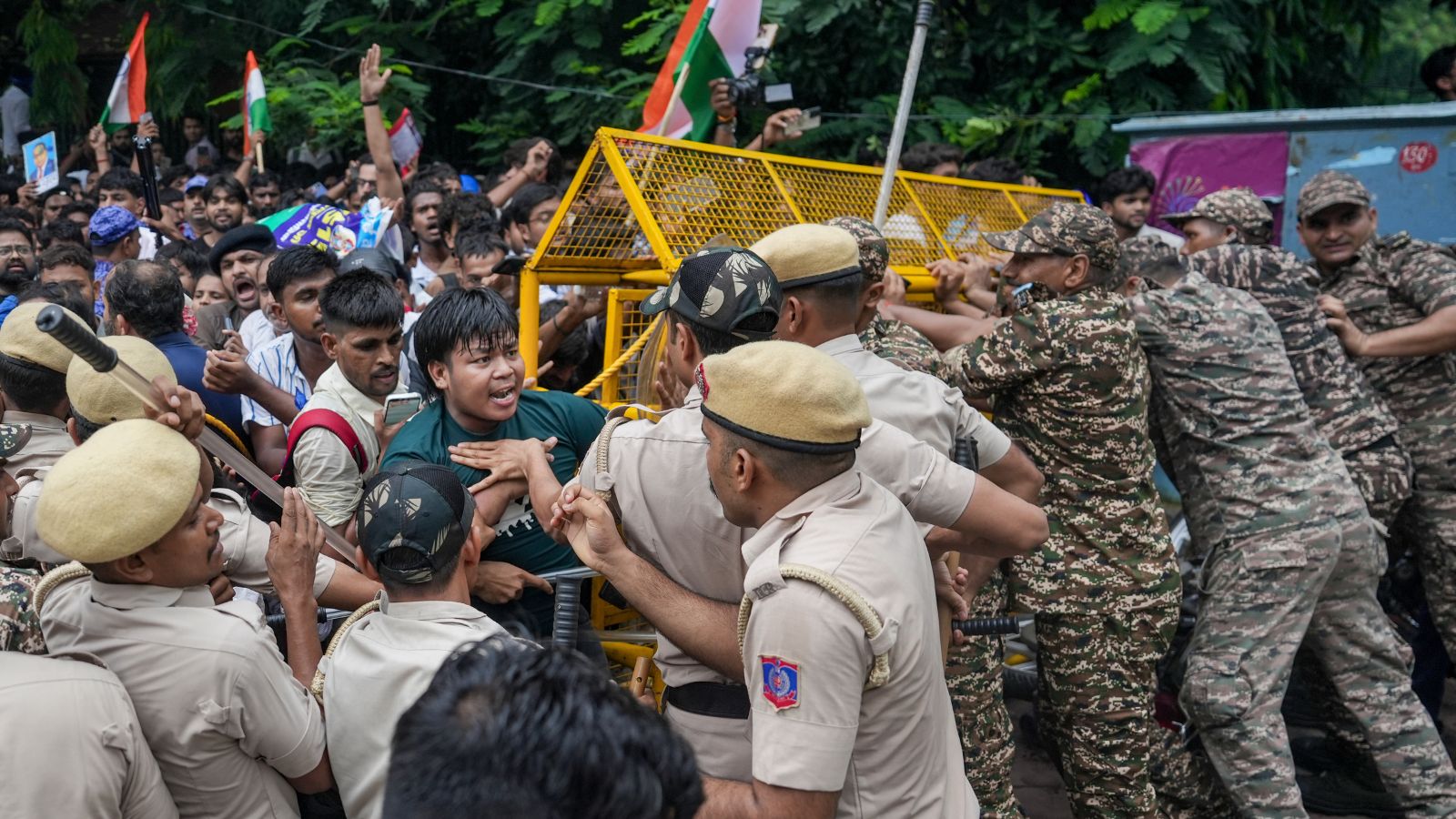
In a significant legal shift, four state governments and the Delhi Police have petitioned the Supreme Court to quash FIRs against students involved in the July paper leak protests. The move comes amid rising tensions as the Cockroach Janta Party (CJP) prepares for a fresh march on September 5.
- Four state governments and Delhi Police seek the quashing of FIRs against students.
- The Supreme Court bench led by CJI Surya Kant is presiding over the petitions.
- The request is based on the Centre's July 25 decision to drop charges against protesters.
- The Cockroach Janta Party (CJP) has called for a protest march on September 5.
The legal landscape surrounding the Cockroach Janta Party (CJP) protests has seen a dramatic turn. On Tuesday, the Centre informed the Supreme Court that not only the Delhi Police but four other state governments have filed applications seeking the quashing of criminal cases against students who participated in the July protests over widespread paper leaks.
Solicitor General Tushar Mehta presented these developments before a three-judge bench headed by Chief Justice of India Surya Kant, alongside Justice Joymalya Bagchi and Justice V Mohana. The bench accepted the request for an urgent hearing, acknowledging the sensitivity of the matter and the volume of filings submitted on Tuesday morning.
The Legal Basis for Quashing
The Delhi Police have specifically urged the court to exercise its extraordinary powers under Article 142 of the Constitution to nullify the FIRs. This article allows the Supreme Court to pass any order necessary for doing complete justice in any cause or matter pending before it. The police stated that in the interest of "public and national interest," they no longer wish to pursue investigations into the protests that occurred between July 20th and 25th, 2026.
The invocation of Article 142 suggests the government is seeking a comprehensive judicial seal of approval to wipe the slate clean for thousands of students to prevent further civil unrest.
Why This Matters
BozokMedia analysis shows that this move is likely a strategic attempt to defuse a volatile political situation. By involving four other states, the Centre is attempting to create a unified legal precedent to resolve the unrest nationwide rather than dealing with piecemeal litigation across different high courts. The timing is critical, as it coincides with the CJP's accusations that the government has failed to honor its promises regarding the withdrawal of cases.
Historical Context of the Unrest
The protests were triggered by systemic failures in examination processes, leading to massive paper leaks that jeopardized the careers of millions of aspirants. The CJP emerged as a catalyst for these students, organizing demonstrations that turned violent in several pockets, leading to the registration of numerous FIRs. The government's decision on July 25 to drop these cases was seen as a peace offering, though the legal mechanism to actually remove the FIRs from police records requires judicial intervention.
Legal Status Comparison
| Entity | Initial Action | Current Position |
|---|---|---|
| Delhi Police | Filed multiple FIRs | Seeking quashing under Art 142 |
| 4 State Govts | Registered cases | Filed for quashing of FIRs |
| CJP Protesters | Demonstrated/Protested | Demanding full case withdrawal |
Frequently Asked Questions
Q1: Why is the Supreme Court involved instead of local courts?
The use of Article 142 allows the Supreme Court to provide a sweeping, nationwide solution that ensures consistency across different states, which local courts cannot do.
Q2: What happens if the court rejects the petition?
The FIRs would remain active, and the students would have to fight individual legal battles in trial courts, likely escalating the protests planned for September 5.