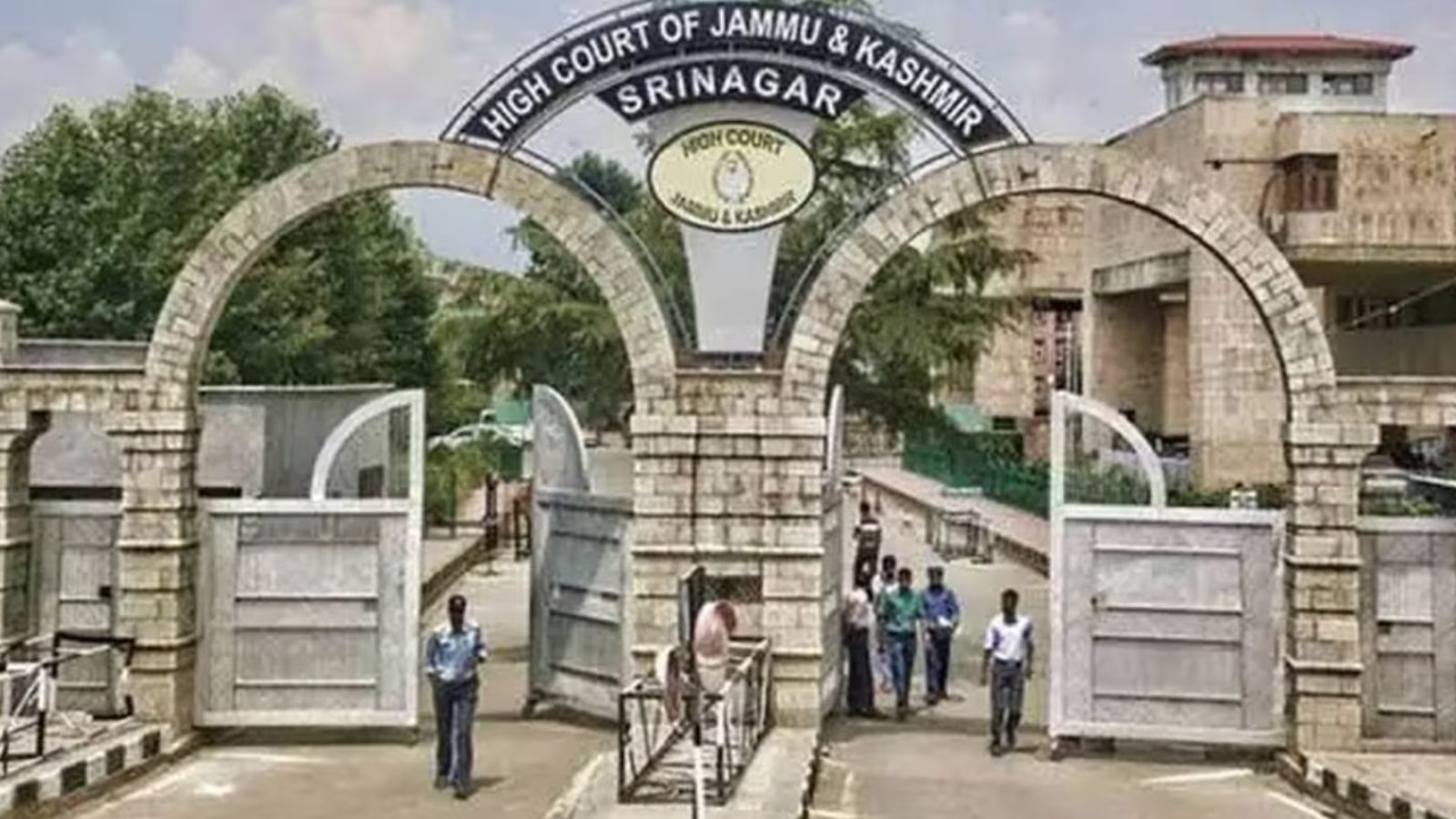
The J&K High Court has overturned the dismissal of a senior bank official, ruling that termination without a proper inquiry is a 'drastic step' that cannot be taken based solely on intelligence reports without a formal investigation.
- J&K High Court quashed the termination of Deputy GM Saadut Hussain Pampori.
- Court ruled that termination without inquiry is only permissible in rare, strictly defined cases.
- Intelligence reports alone do not constitute a legal 'investigation' for dismissal.
- The bank is permitted to initiate a fresh, legal departmental inquiry.
In a significant ruling on employee rights and administrative law, the Jammu and Kashmir High Court has quashed the termination order of a senior bank officer who was dismissed for his alleged involvement in "terrorist and anti-national activities." Justice Sanjay Dhar emphasized that removing an employee from service without a formal inquiry is an extreme measure that must be reserved for rare and appropriate circumstances.
The case centers around Saadut Hussain Pampori, a Deputy General Manager at J&K Bank, who was dismissed on July 15, 2024, under Clause 12.29 of the Officers Service Manual (OSM). The bank's Managing Director and CEO had issued the order based on "credible reports" from intelligence agencies, following a suspension that began in April 2024. Pampori challenged this move, arguing that no FIR had been registered and no formal investigation had been conducted by state or central agencies.
Why This Matters
BozokMedia analysis shows that this judgment establishes a critical precedent regarding the balance between national security concerns and the right to due process. While the state often relies on "sensitive sources" for rapid action, the court has clarified that corporate or semi-government entities cannot bypass the principles of natural justice simply by citing intelligence reports. This prevents the potential misuse of "anti-national" labels to arbitrarily terminate employees.
During the proceedings, the bank attempted to draw a parallel between Clause 12.29 of its manual and Article 311(2)(C) of the Indian Constitution, which allows the President or Governor to dismiss government employees without inquiry if they are deemed a threat to state security. However, the court rejected this comparison, noting a "stark distinction" between the constitutional powers of the Head of State and the administrative powers of a bank's CEO.
The judiciary is sending a clear signal that 'intelligence inputs' are a starting point for investigation, not a final verdict for termination.
Justice Dhar observed that for a process to qualify as an "investigation," an agency must collect material, record statements, and establish involvement before advising dismissal. In this case, the court found that the reports—which included mentions of the hashtag campaign #TortureKashmir—did not meet the legal threshold of a formal investigation.
Frequently Asked Questions
Q1: Can the bank still fire the officer?
Yes, the court has granted the bank liberty to follow the prescribed procedure in the OSM or hold a regular departmental inquiry to pass a fresh order.
Q2: What was the court's view on intelligence reports?
The court stated that while intelligence reports are valuable, they do not replace the requirement for a formal investigation involving evidence collection and statement recording.