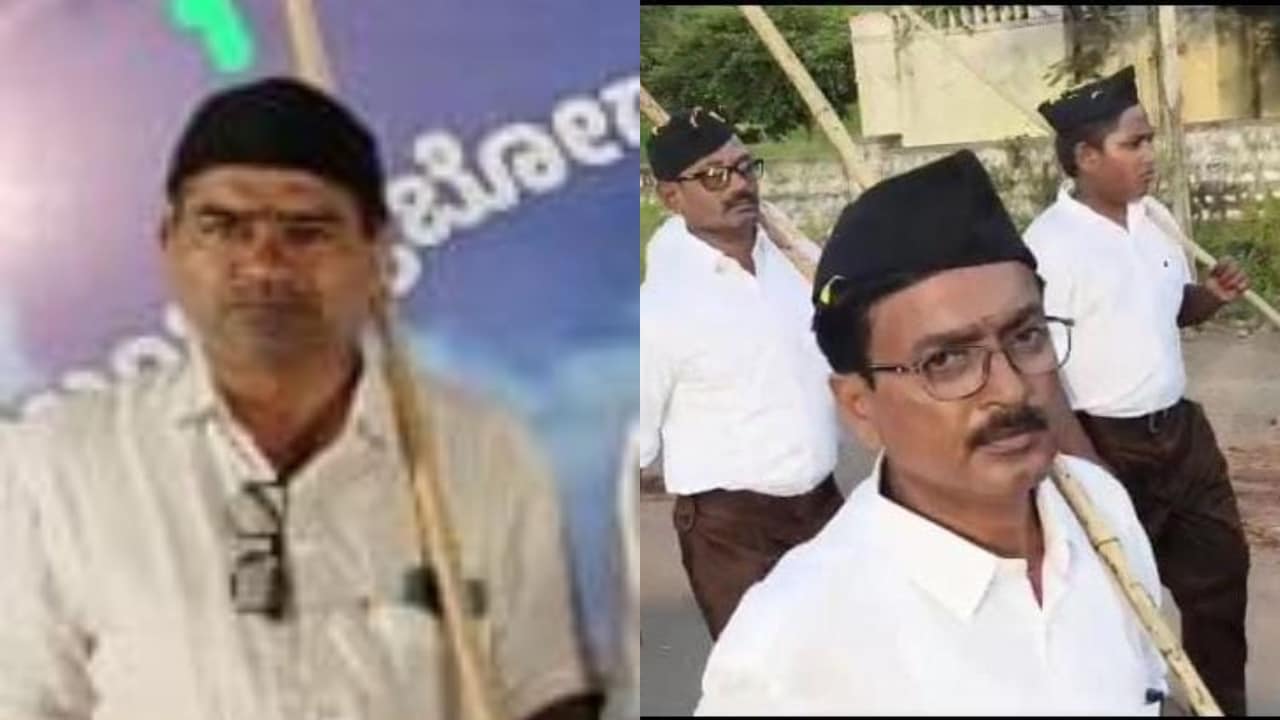
Two teachers from Karnataka's Yadgir district, Gururaj Joshi and Anna Saheb Deshmukh, who were suspended for participating in a Rashtriya Swayamsevak Sangh (RSS) march, have received major relief. Their suspension orders have been revoked, reigniting debate over government employees' involvement in political activities.
- The suspension of Gururaj Joshi and Anna Saheb Deshmukh has been revoked.
- The teachers were originally suspended for participating in an RSS march.
- This incident raises questions about government employee conduct rules regarding political affiliations.
In a significant administrative development, two teachers from Hunasagi taluk in Karnataka's Yadgir district, Gururaj Joshi and Anna Saheb Deshmukh, have received major relief. The teachers, who were suspended for allegedly participating in a march organized by the Rashtriya Swayamsevak Sangh (RSS), have had their suspension orders revoked. This decision reignites the long-standing debate concerning the delicate balance between government service rules and individual freedom of association.
The original suspension orders stated that government employees cannot be members of political parties or actively participate in organizations deemed to have political affiliations. These rules are typically in place to ensure the impartiality and neutrality expected of public servants. However, the interpretation and enforcement of such rules have often been contentious, particularly when it comes to the 'political' nature of an organization.
The decision to revoke the suspensions came after a review, and possibly an appeal lodged by the teachers. While the exact process and rationale behind the revocation have not been fully disclosed, it indicates that the government has re-evaluated its initial stance. This move likely follows a reconsideration of whether participation in RSS activities directly violates the service rules binding government employees to maintain political neutrality.
Historical Background
The issue of government employees associating with political organizations or those with perceived political leanings has a long and complex history in India. For decades, both central and state governments have, through various circulars and rules, restricted government employees from joining or participating in activities of certain organizations, especially if they are deemed 'political' or 'communal.' The RSS, in particular, has seen varying stances adopted by different governments over time, with some considering it a cultural organization while others have viewed it as political, especially given its ideological ties to the Bharatiya Janata Party (BJP). This case brings to the forefront this historical debate on whether participation in a cultural-nationalist organization should be considered a 'political activity' under government service rules.
Why This Matters
BozokMedia analysis shows that this incident underscores the complex interplay between fundamental rights, such as freedom of association, and the political neutrality expected in public services. The case is not merely a personal victory for the suspended teachers but also initiates a broader discussion about the rights and duties of government employees in India. It could set a significant precedent for how governments interpret service rules and handle employees' affiliations with organizations perceived as politically sensitive. This event tests the boundaries between democratic principles and administrative authority, establishing an important context for similar cases in the future.
A constitutional law expert stated, "This case highlights the enduring tension between a public servant's constitutional right to freedom of association and the state's legitimate interest in maintaining a neutral and efficient administration. Striking the right balance is crucial for a healthy democracy."
The implications of this decision could be far-reaching in Karnataka and potentially extend to other states. It may prompt state governments to re-examine their service conduct rules and ensure they align harmoniously with the fundamental rights enshrined in the constitution. This incident also emphasizes the need for clearer guidelines regarding government employees' affiliations with associations, to avoid ambiguity and administrative disputes in the future.
Frequently Asked Questions
- What are the general rules for Indian government employees regarding political participation?
- Is the RSS officially considered a political organization by the Indian government for service rule purposes?