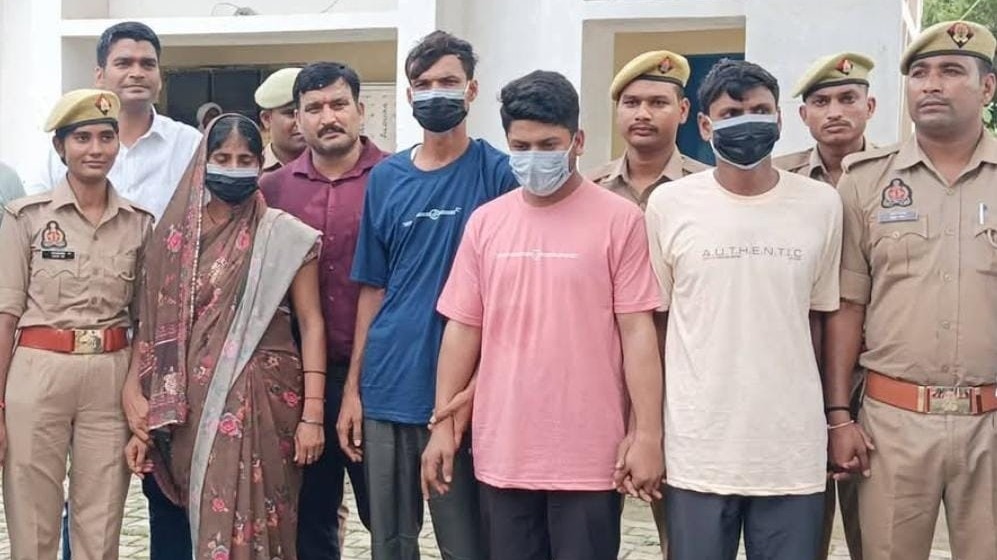
Shamli police have arrested two individuals and booked nine others following allegations that a 30-year-old man was illegally converted to Islam through forgery and deception.
- Two arrests made in Shamli, UP, including Chandni Qureshi and her father Islam Qureshi.
- Case involves allegations of religious conversion under the pretext of marriage using forged documents.
- Nine individuals, including a maulvi, have been booked under BNS and the UP Prohibition of Unlawful Conversion of Religion Act.
In a significant legal crackdown in Uttar Pradesh, the Shamli police have arrested a woman and her father in connection with the alleged illegal religious conversion of a 30-year-old man. The arrests, conducted on Sunday, June 7, 2026, follow a formal complaint lodged by a local medicine trader, Devraj Malik, who claims his son, Ayush Malik, was coerced into converting to Islam.
According to the police report, the primary accused, Chandni Qureshi and her father Islam Qureshi, allegedly orchestrated a scheme to convert Ayush Malik under the guise of marriage. The complainant alleges that his son was taken to Delhi, where a nikah (Islamic marriage ceremony) was performed. Crucially, the investigation suggests that this ceremony was facilitated through the use of forged documents to bypass legal requirements and conceal the true identity of the groom.
The legal repercussions of this case are extensive. Superintendent of Police of Shamli, N.P. Singh, confirmed that the police have registered a case against nine individuals, including a maulvi. The charges filed fall under several sections of the Bharatiya Nyaya Sanhita (BNS), including Section 308 (extortion), Section 318 (cheating), Section 336 (forgery), Section 338 (forgery of valuable security), and Section 351 (criminal intimidation), alongside the stringent Uttar Pradesh Prohibition of Unlawful Conversion of Religion Act.
Why This Matters
BozokMedia analysis shows that this case highlights the increasing volatility and strict enforcement of anti-conversion laws in Northern India. The intersection of matrimonial disputes and religious identity often leads to high-profile legal battles that reflect broader societal tensions. The involvement of forged documents suggests a premeditated attempt to circumvent the state's rigorous verification processes for interfaith unions.
The application of BNS sections alongside anti-conversion laws indicates a shift toward treating religious conversion cases as organized criminal conspiracies rather than simple personal disputes.
The incident has already sparked regional unrest. Hindu activists, led by Swami Yashveer Maharaj, have issued threats of widespread agitation if the culprits are not dealt with severely. This adds a layer of communal sensitivity to the police operation as they continue their efforts to locate and apprehend the remaining seven accused individuals.
Historical Background: Uttar Pradesh has consistently tightened its laws regarding religious conversions over the last few years. The state's Prohibition of Unlawful Conversion of Religion Act was amended to make the process of conversion more transparent, requiring prior notice to the District Magistrate and imposing harsher penalties for conversions obtained through force, fraud, or inducement.
Frequently Asked Questions
Q1: Who are the primary accused in the Shamli conversion case?
The primary accused are Chandni Qureshi and her father, Islam Qureshi, who have already been arrested by the police.
Q2: What specific laws were invoked in this case?
The accused were booked under the Bharatiya Nyaya Sanhita (BNS) for cheating and forgery, as well as the Uttar Pradesh Prohibition of Unlawful Conversion of Religion Act.