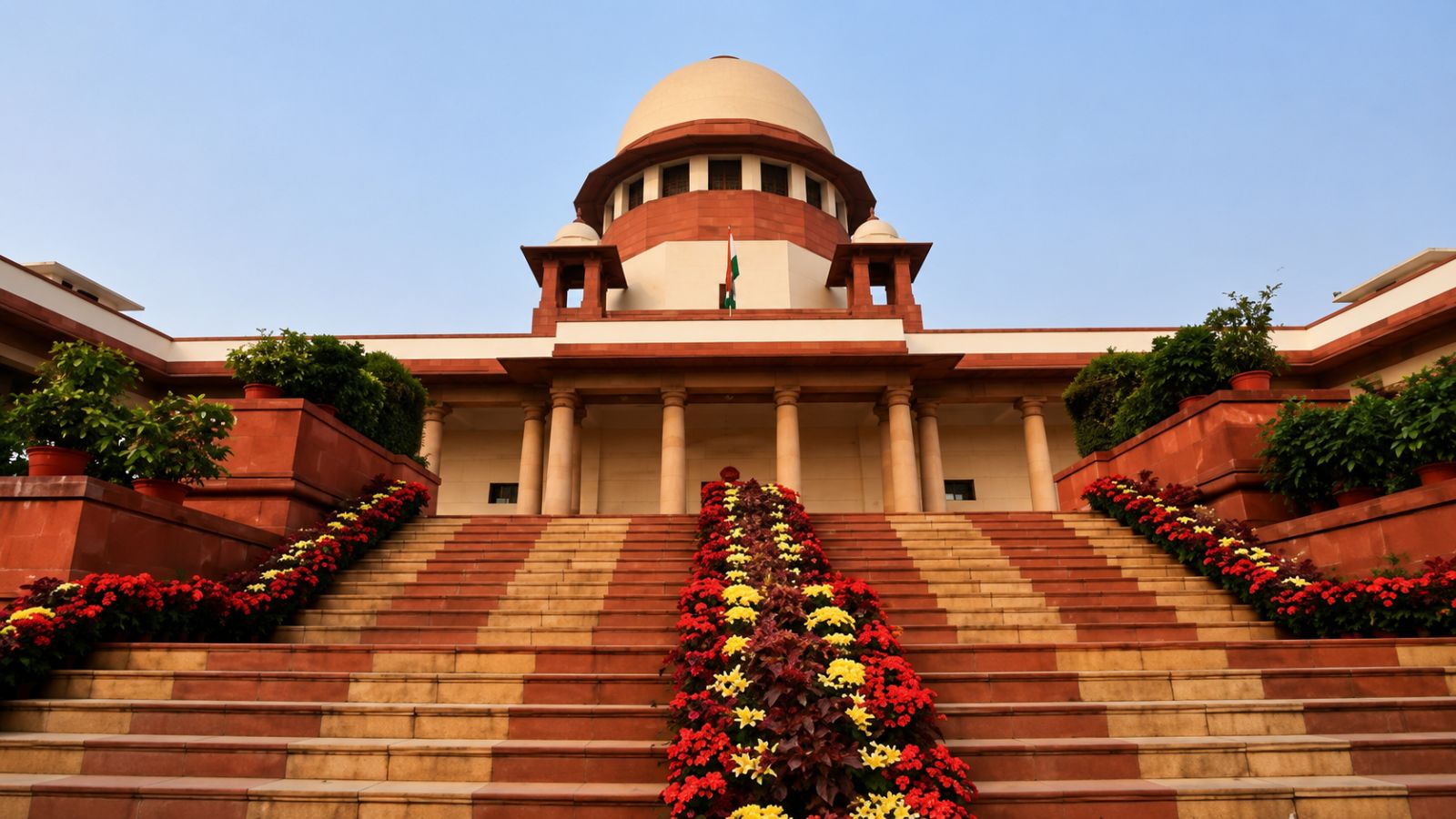
The Supreme Court of India has expressed severe displeasure over a Greater Noida magistrate's attempt to impose a ₹5 lakh bond on a student, calling it a potential contempt of court after previous protections were granted to protesters.
- Supreme Court questioned the audacity of the Greater Noida Executive Magistrate for issuing a notice to a student.
- The notice demanded a ₹5 lakh personal bond from Akshat Tripathi, a Gautam Buddha University student.
- The action contradicts a September 1 order quashing cases against CJP protest participants.
- The Court has ordered the District Magistrate to provide a formal explanation for the lapse.
In a stern rebuke to administrative overreach, the Supreme Court of India on Wednesday questioned the audacity of the Greater Noida Executive Magistrate for issuing a legal notice to a university student. The notice was issued to Akshat Tripathi, a second-year student at Gautam Buddha University, who was allegedly involved in the Cockroach Janta Party (CJP) protests in July.
The bench, led by Chief Justice of India Surya Kant and comprising Justice Joymalya Bagchi and Justice V Mohana, expressed shock after a lawyer highlighted that the magistrate had asked the student to sign a personal bond of ₹5 lakh to ensure the maintenance of peace. This action occurred despite a clear judicial mandate issued on September 1, which annulled FIRs and prohibited penal action against students protesting against paper leaks.
Why This Matters
BozokMedia analysis shows that this incident highlights a dangerous friction between judicial directives and executive implementation. When local magistrates ignore apex court rulings, it creates a 'fear psychosis' among the youth, potentially stifling democratic dissent and academic freedom. The insistence on a ₹5 lakh bond—a massive sum for a student—suggests an attempt to use financial intimidation as a tool for social control.
"The issuance of such a notice after a clear judicial quashing is not merely an administrative error, but a prima facie act of contempt against the majesty of the highest court."
The court noted that the language of the September 1 order was plain and understandable even to a layman. The Chief Justice remarked, "How could they commit contempt of that order?" While the notice was eventually revoked, the court refused to let the matter slide, stating that the withdrawal of the notice does not purge the initial act of contempt.
Akshat Tripathi has vehemently denied the police allegations that he was provoking students to disrupt public peace. He clarified that during the period in question, he was not even present at the university, as classes had shifted online and he was working at the Allahabad High Court.
To ensure accountability, Justice Bagchi suggested placing the facts on record. The Chief Justice concluded that the court would demand a formal explanation from the District Magistrate to understand how such a blatant violation of a Supreme Court order occurred.
Frequently Asked Questions
Q1: Why was the Supreme Court angry with the magistrate?
The Court was angry because the magistrate issued a notice and demanded a bond from a student after the Supreme Court had already ordered that no penal action be taken against the protesters.
Q2: What was the specific demand made in the notice to Akshat Tripathi?
The Executive Magistrate asked the student why he should not be bound by a personal bond of ₹5 lakh to ensure he kept the peace.