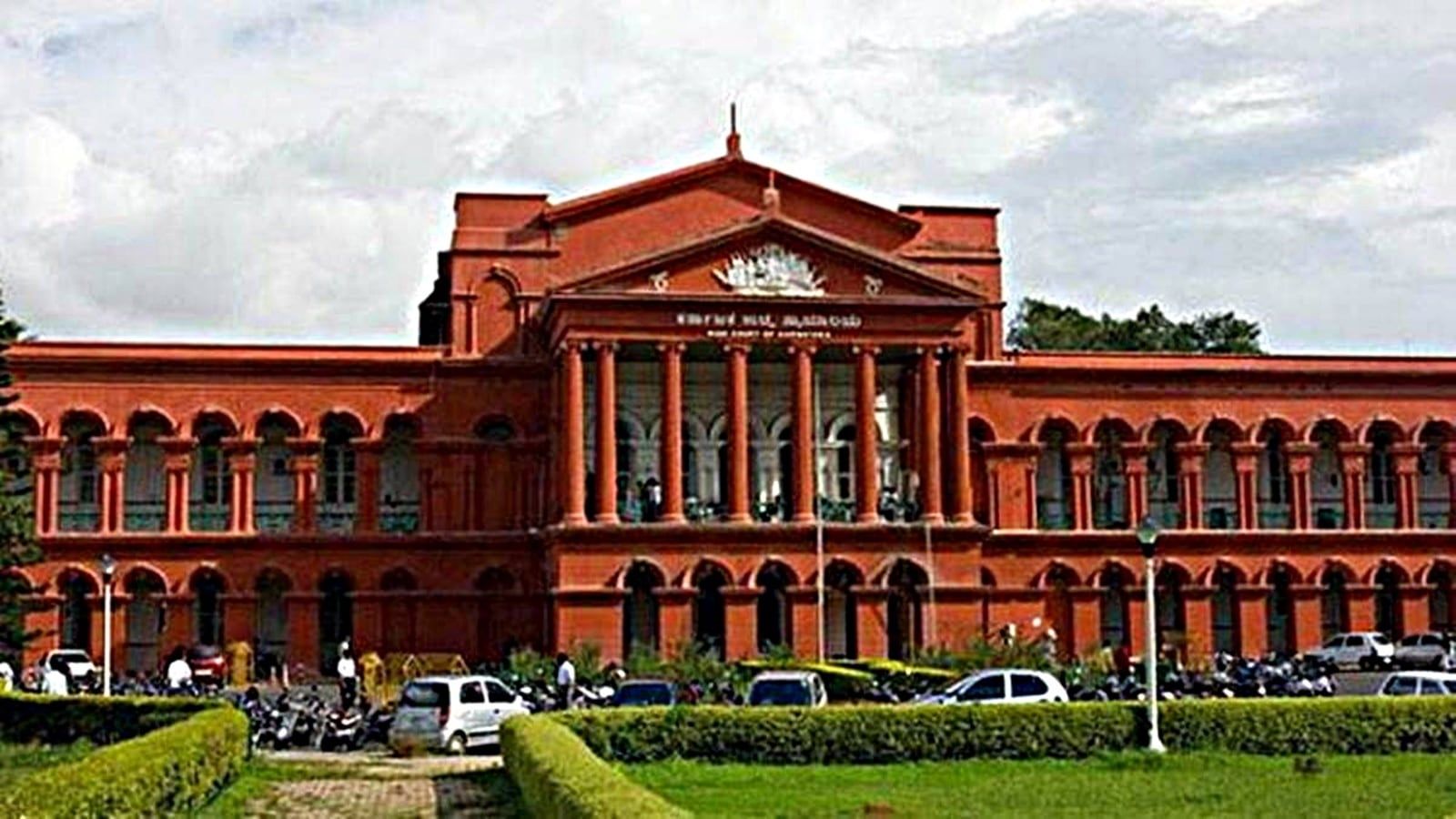
In a significant legal reversal, the Karnataka High Court has convicted Abdul Sharief for the 2013 arson attack that claimed six lives in a doctor's household, overturning a previous acquittal by the trial court.
- Karnataka High Court reversed the trial court's acquittal of Abdul Sharief.
- The convict was sentenced to life imprisonment for murder, attempted murder, and arson.
- The 2013 attack resulted in the deaths of six family members, including a prominent doctor.
Bengaluru: The Karnataka High Court has delivered a stern verdict in a decade-old case of extreme brutality, sentencing a former KSRTC conductor, Abdul Sharief (alias Ameer Jan), to life imprisonment. The conviction comes after the court found that the trial court had fundamentally misread the evidence in the 2013 arson attack that wiped out six members of a doctor's family in Mysuru.
The prosecution detailed a chilling sequence of events from April 12, 2013. Driven by a long-standing financial and personal feud, Sharief allegedly poured petrol into the residence of Dr. Mohammed Amir Jaan while the inhabitants were asleep. A surviving daughter testified that she witnessed Sharief lighting a match and throwing it into the house before escaping on a motorcycle.
Why This Matters
BozokMedia analysis suggests that this case highlights a critical failure in the initial judicial scrutiny. The trial court's decision to acquit based on 'investigative gaps' despite ocular and forensic evidence points to a systemic issue where technicalities often overshadow truth. The High Court's intervention restores faith in the principle that evidence-based conviction outweighs procedural shortcomings.
The tragedy claimed the lives of Dr. Amir Jaan, his wife Afroz Begum, two daughters, and two grandchildren. Only one daughter, Reshma Banu, survived the inferno. Despite the gravity of the crime, the Mysuru sessions court had acquitted Sharief in 2018, claiming the prosecution failed to prove the fire was intentional.
"The trial court's approach was erroneous and perverse, failing to account for the physical injuries on the accused and the corroborating testimony of the survivor."
Justices H P Sandesh and B Pramod observed that the trial court ignored the petroleum residue found at the scene and the burn marks on Sharief's face and hair at the time of his arrest. Furthermore, the testimony of the convict's own wife—confirming he was not at home during the crime—was largely disregarded by the lower court.
| Aspect | Trial Court Verdict (2018) | High Court Verdict (2026) |
|---|---|---|
| Outcome | Acquittal (Not Guilty) | Conviction (Life Imprisonment) |
| Evidence View | Cited gaps in forensics | Found evidence of petrol & burns |
| Witness Weight | Insufficient material | Credited the survivor's testimony |
Frequently Asked Questions
1. Who were the victims of the 2013 arson attack?
The victims included Dr. Mohammed Amir Jaan, his wife Afroz Begum, daughters Rizwana Banu and Parveen Taaj, and grandchildren Harbia Fathima and Mohammed Arahan.
2. Why did the High Court describe the trial court's approach as 'perverse'?
The court used this term because the trial court ignored direct evidence, such as the burn marks on the accused's body and the survivor's categorical identification of the perpetrator.