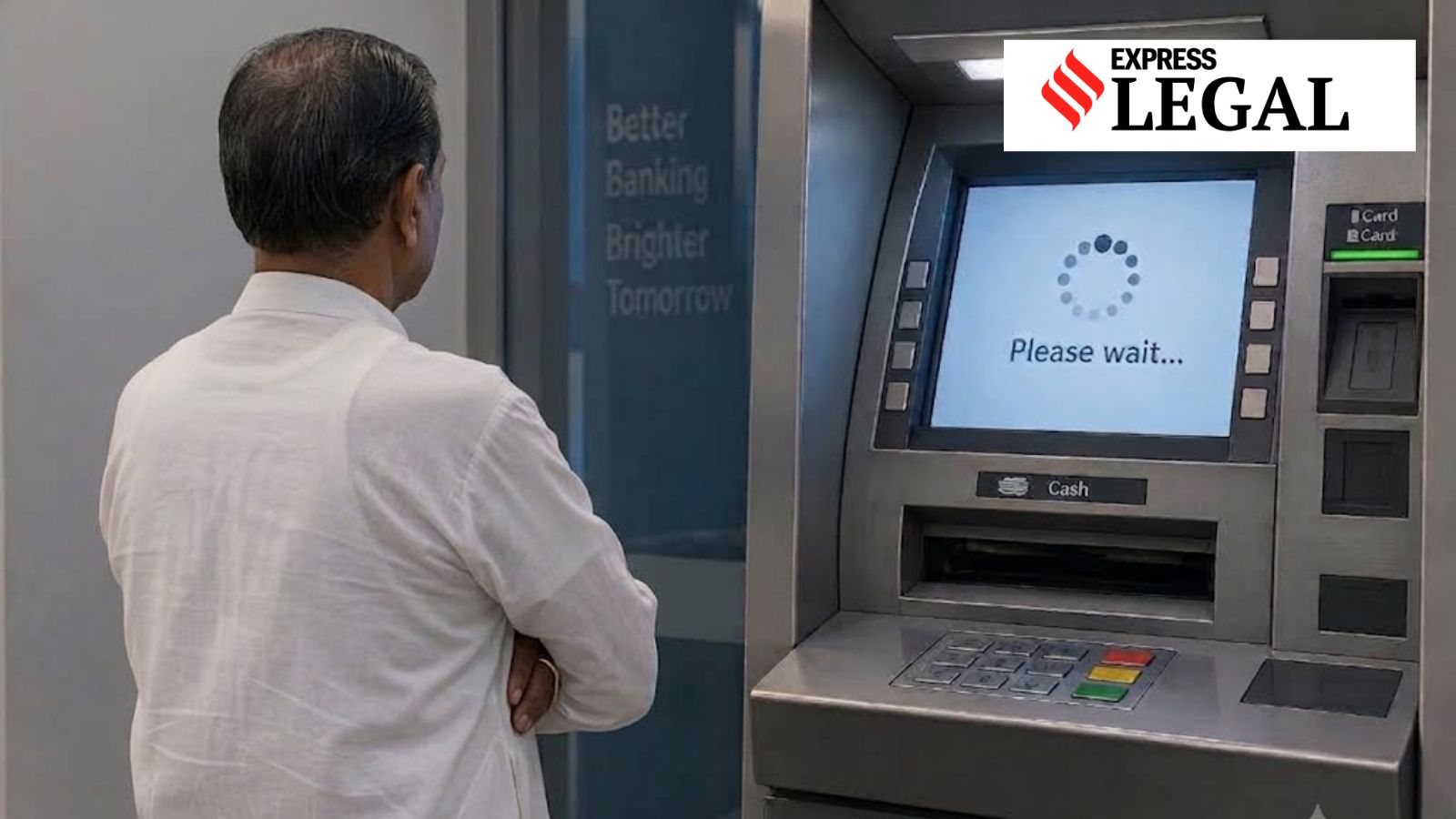
The Thrissur District Consumer Commission has penalized a bank for failing to resolve a decade-old grievance where a customer was debited ₹10,000 without receiving the cash.
- Bank ordered to pay ₹10,000 refund plus ₹60,000 in compensation and costs.
- Ruling establishes that the home bank is responsible for resolving inter-bank ATM disputes.
- The commission highlighted a severe deficiency in service due to the bank's failure to provide evidence of cash dispensation.
In a landmark ruling for consumer protection, the Thrissur District Consumer Commission in Kerala has ordered a banking institution to pay a total of ₹70,000 to a customer. The case dates back to March 1, 2014, when the complainant attempted to withdraw ₹10,000 from an ATM. Despite the machine failing to dispense the cash, the amount was debited from his account.
The bench, comprising President C T Sabu and members Sreeja S and Ram Mohan R, observed that the bank had acted with negligence by rejecting the customer's claim without providing convincing evidence. The commission noted that the bank's own electronic records failed to support the claim that the transaction was successful.
Why This Matters
BozokMedia analysis shows that this verdict addresses a common loophole used by financial institutions. Banks frequently deflect responsibility by blaming the operator of a third-party ATM. By ruling that the 'privity of contract' remains between the customer and their own bank, the commission has shifted the burden of proof and coordination from the consumer to the corporation.
This judgment reinforces the principle that banking transparency is non-negotiable; a system-generated 'success' message is not a substitute for the actual delivery of funds.
During the proceedings, the complainant's lawyer, A D Benny, argued that the bank's failure to rectify the error caused significant mental agony and financial hardship. In contrast, the bank's representative, K N Santhosh, maintained that internal investigations showed the cash had been dispensed. However, the commission dismissed this, stating that a consumer cannot be expected to prove technical failures within a complex inter-bank network.
The commission ultimately directed the bank to pay ₹10,000 as the original debited amount, ₹50,000 as compensation for mental agony, and ₹10,000 toward litigation costs, to be paid within one month.
| Aspect | Bank's Position | Commission's Verdict |
|---|---|---|
| Transaction Status | Claimed as Successful | Unproven by electronic records |
| Liability | Blamed ATM operator bank | Home bank is primarily liable |
| Outcome | Rejected Complaint | Ordered ₹70,000 Payout |
Frequently Asked Questions
Q1: What should a customer do if an ATM fails to dispense cash but debits the account?
A: Immediately notify the home bank in writing, keep a record of the transaction ID, and if unresolved, approach the Banking Ombudsman or Consumer Court.
Q2: Is the bank where you hold your account responsible for errors in another bank's ATM?
A: Yes, the legal precedent suggests that your primary bank must coordinate with the ATM operator to ensure the customer is not penalized for technical glitches.