The visionary special-effects maestro and surrealist artist Screaming Mad George has passed away at 69. From 'Predator' to 'Resident Evil', his grotesque genius redefined the visual language of horror.
- Screaming Mad George (Joji Tani) passed away at 69 due to cardiac arrest.
- He was a pivotal figure in practical effects for films like Predator, A Nightmare on Elm Street, and Society.
- His versatility spanned music videos for Nine Inch Nails and Slipknot, and the cult PlayStation game ParaNoiascape.
The world of surrealism and cinematic horror has lost one of its most eccentric and influential architects. Screaming Mad George, born Joji Tani in Osaka, Japan, has passed away at the age of 69 following a cardiac arrest. A polymath of the macabre, George was not merely a technician but a "god-like weirdo" whose career pierced the boundaries of fine art, cinema, music, and interactive entertainment.
George's journey began in Osaka before he relocated to New York as a teenager to immerse himself in fine arts. His early foray into the punk scene saw him adopt a pseudonym inspired by Screamin’ Jay Hawkins and MAD Magazine. This rebellious spirit translated into a visceral style of gore that caught the attention of practical effects legend Rick Baker, leading to high-profile contributions to iconic films such as Predator and A Nightmare on Elm Street.
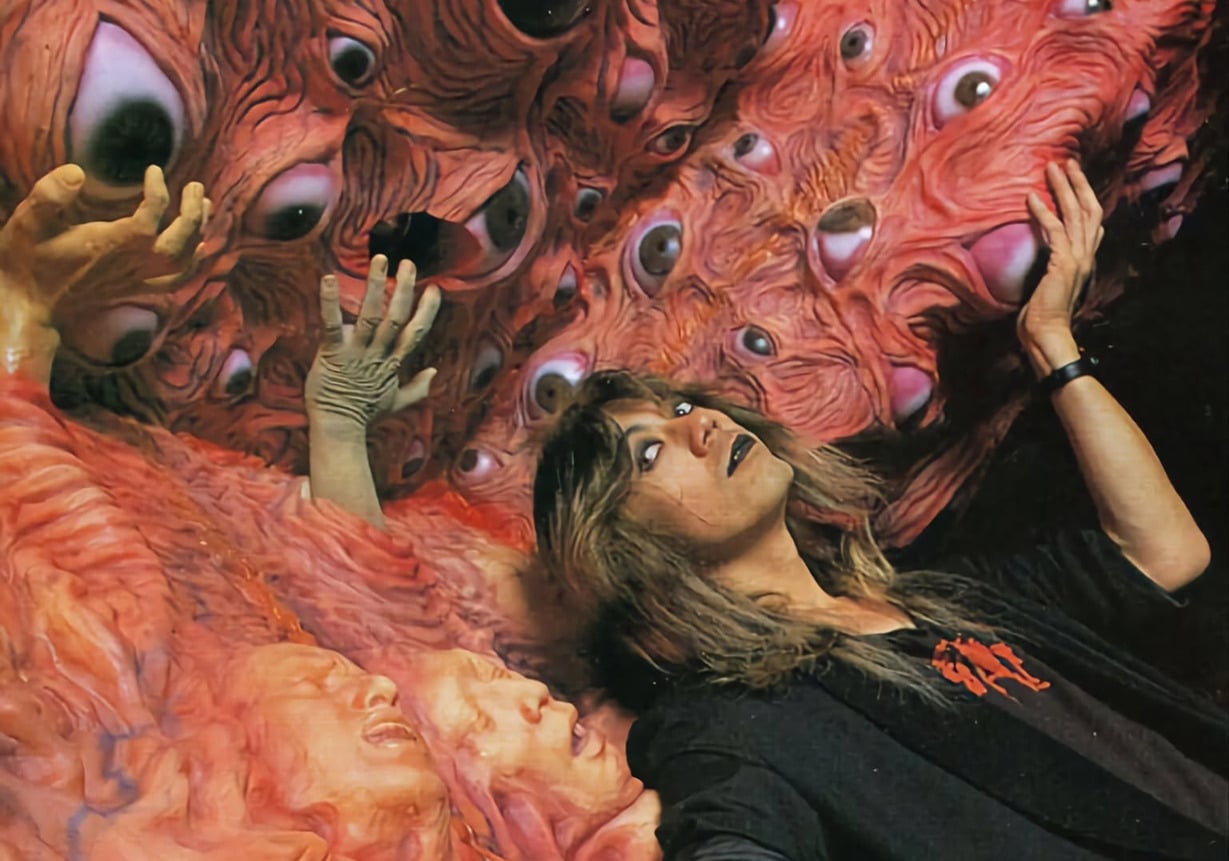
However, it was his collaboration with director Brian Yuzna that truly cemented his status as a cult icon. The film Society, known for its shocking climax involving a distorted, oozing orgy of flesh, served as a masterclass in George's ability to manipulate organic textures into nightmare fuel. His portfolio further expanded through work with industry titans like James Cameron, John Carpenter, and George Romero, including specialized work for Resident Evil promotional spots in Japan.
Why This Matters
BozokMedia analysis shows that Screaming Mad George was instrumental in bridging the gap between traditional fine art and the "splatter" aesthetic of the 80s and 90s. By treating the human anatomy as a malleable canvas—much like an Al Jaffee fold-in gag—he paved the way for the modern body-horror genre. His influence extends beyond film; he designed the haunting rubber masks for the band Slipknot and directed the mutation-heavy 1991 film The Guyver.
George didn't just create monsters; he reimagined the human form as a surrealist sculpture of flesh and fluid.
Even the gaming world was not spared from his touch. In 1998, he developed ParaNoiascape for the PlayStation. This surreal pinball game tasked players with guiding a burning brain through corridors of grotesqueries. While the game remained a Japanese exclusive, it remains a testament to his desire to "splotch" every possible medium with his unique brand of absurdity.
In his later years, George's health declined around 2024, leaving him wheelchair-bound, though he continued to share his passion through gallery receptions. His family kept his passing in February private until recently. A public memorial is scheduled for February of next year to honor a man who turned the repulsive into the sublime.
Frequently Asked Questions
What were Screaming Mad George's most famous film contributions?
He is best known for his work on 'Society', 'Predator', 'A Nightmare on Elm Street', and directing 'The Guyver'.
What was ParaNoiascape?
It was a surrealist pinball game released for the PlayStation in Japan, featuring George's signature grotesque creature designs.