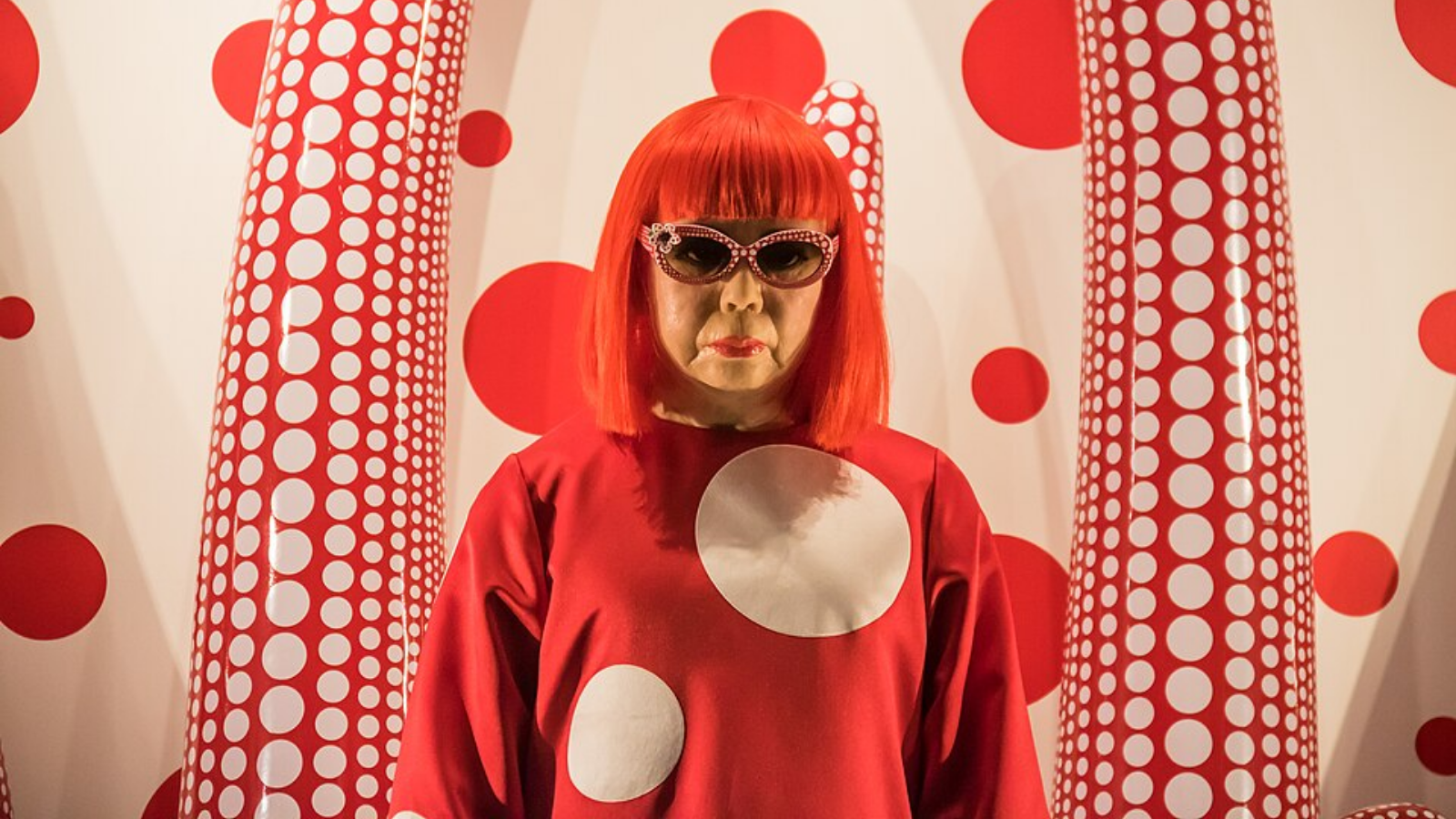
Following the passing of the legendary Yayoi Kusama, we analyze the poignant conflict between her philosophy of dissolving the ego and the modern obsession with digital self-assertion.
- Yayoi Kusama's core philosophy centered on 'self-obliteration'—dissolving the individual into the infinite.
- Her iconic polka dots and 'infinity nets' were born from childhood hallucinations and mental health struggles.
- There is a stark irony in how her art, intended to erase the self, has become a premier backdrop for social media selfies.
The passing of Yayoi Kusama marks the end of an era for contemporary art. Kusama was not merely an artist; she was a visionary who spent eight decades exploring the boundaries between the conscious mind and the infinite universe. Her practice was never about the assertion of the 'I', but rather about the surrender of the self.
Kusama's journey was rooted in trauma and psychological struggle. Since the age of ten, she experienced vivid hallucinations where the world was consumed by repetitive patterns and dots. To cope with these visions, she began painting the 'infinity net'—a meditative, obsessive act of repetition that eventually became her signature style. When she moved to New York in the late 1950s, her work stood in quiet, meditative contrast to the aggressive, hyper-masculine energy of abstract expressionists like Jackson Pollock.
One of her most profound installations features female mannequins at a dining table, all covered in a singular, hypnotic grid pattern. This work effectively flattens the scene, blurring the lines between the objects and the people, transforming a mundane social gathering into a porous expanse of infinity.
Why This Matters
BozokMedia analysis shows a disturbing shift in how art is consumed in the 21st century. Kusama's 'Infinity Mirrored Rooms' were designed to make the viewer feel small, a single dot among millions. However, in the age of the selfie, these spaces have been repurposed as stages for hyper-individualism. The irony is palpable: an artwork created to facilitate the disappearance of the ego has become the ultimate tool for ego-validation on platforms like Instagram.
Kusama's genius lay in her ability to turn personal suffering into a universal language of surrender.
Throughout her life, Kusama remained humble, often citing the pumpkin as her muse for its "generous unpretentiousness." A telling moment occurred in 2021 when a typhoon swept away her pumpkin sculpture on Naoshima island. The sculpture did not sink; it floated with the tide. This serves as a metaphor for Kusama's own existence—a life lived in a psychiatric hospital by choice, finding freedom not in control, but in letting go.
Frequently Asked Questions
Q1: What did Kusama mean by 'self-obliteration'?
It refers to the process of erasing one's individual identity and ego to become one with the infinite universe.
Q2: Why are pumpkins so central to her work?
Kusama viewed pumpkins as symbols of warmth, humility, and unpretentious generosity.