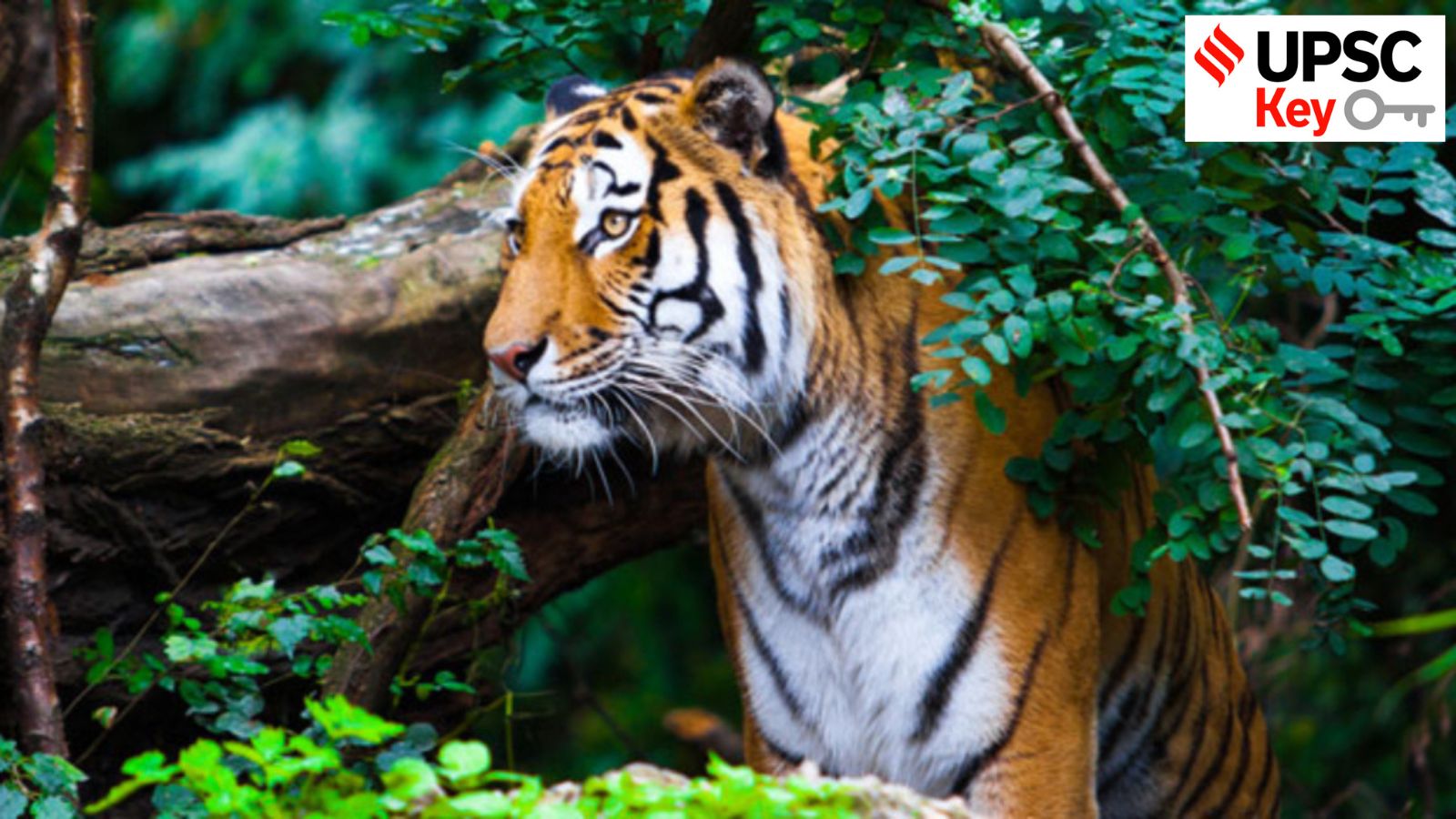
A proposed railway expansion through the Satpura-Melghat tiger corridor has sparked debate over wildlife conservation. This analysis breaks down the environmental impact and its relevance for UPSC aspirants.
Key Takeaways
- The proposed railway line between Jujharpur and Chichonda will traverse two notified tiger corridors and an eco-sensitive zone.
- The Standing Committee of the National Board for Wildlife (SC-NBWL) has given in-principle approval, contingent on scientific mitigation structures.
- Tiger corridors are vital for genetic flow and the movement of species like leopards and sloth bears.
- The project involves the use of 206.09 hectares of land, including significant forest areas.
The proposed third railway line between Jujharpur and Chichonda in Madhya Pradesh has emerged as a critical point of contention for environmentalists and policymakers. The Standing Committee of the National Board for Wildlife (SC-NBWL) has recommended in-principle clearance, but with strict conditions regarding wildlife safety.
The Conflict: Infrastructure vs. Ecology
The 160.6-km stretch is part of a larger 290-km project on the busy Itarsi-Nagpur route. According to official documents, the alignment cuts through the Satpura-Melghat landscape, which serves as a vital lifeline for wildlife. The project requires 74.69 hectares of forest land, raising alarms about habitat fragmentation.
Why This Matters
BozokMedia analysis shows that this issue transcends simple infrastructure development. It touches upon the core of India's commitment to the Wildlife Protection Act, 1972. Tigers act as an 'umbrella species'; by protecting their corridors, we inherently protect the entire biodiversity of the Satpura and Melghat landscapes. Fragmentation of these corridors can lead to isolated populations and reduced genetic health.
Effective wildlife mitigation, such as engineered overpasses, is not optional but a necessity for sustainable development in eco-sensitive zones.
Historical Context: Project Tiger
To combat the declining tiger population, the Government of India launched 'Project Tiger' in 1973. This initiative has led to the creation of numerous tiger reserves across the country. Under the Wildlife Protection Act, tigers are listed under Schedule I, providing them the highest level of legal protection in India.
Frequently Asked Questions
1. What is an umbrella species?
An umbrella species is a species whose conservation indirectly protects many other species in the same ecosystem.
2. What are the risks of railway lines in forests?
Railway lines can cause habitat fragmentation, increase wildlife-vehicle collisions, and disrupt natural migratory paths.