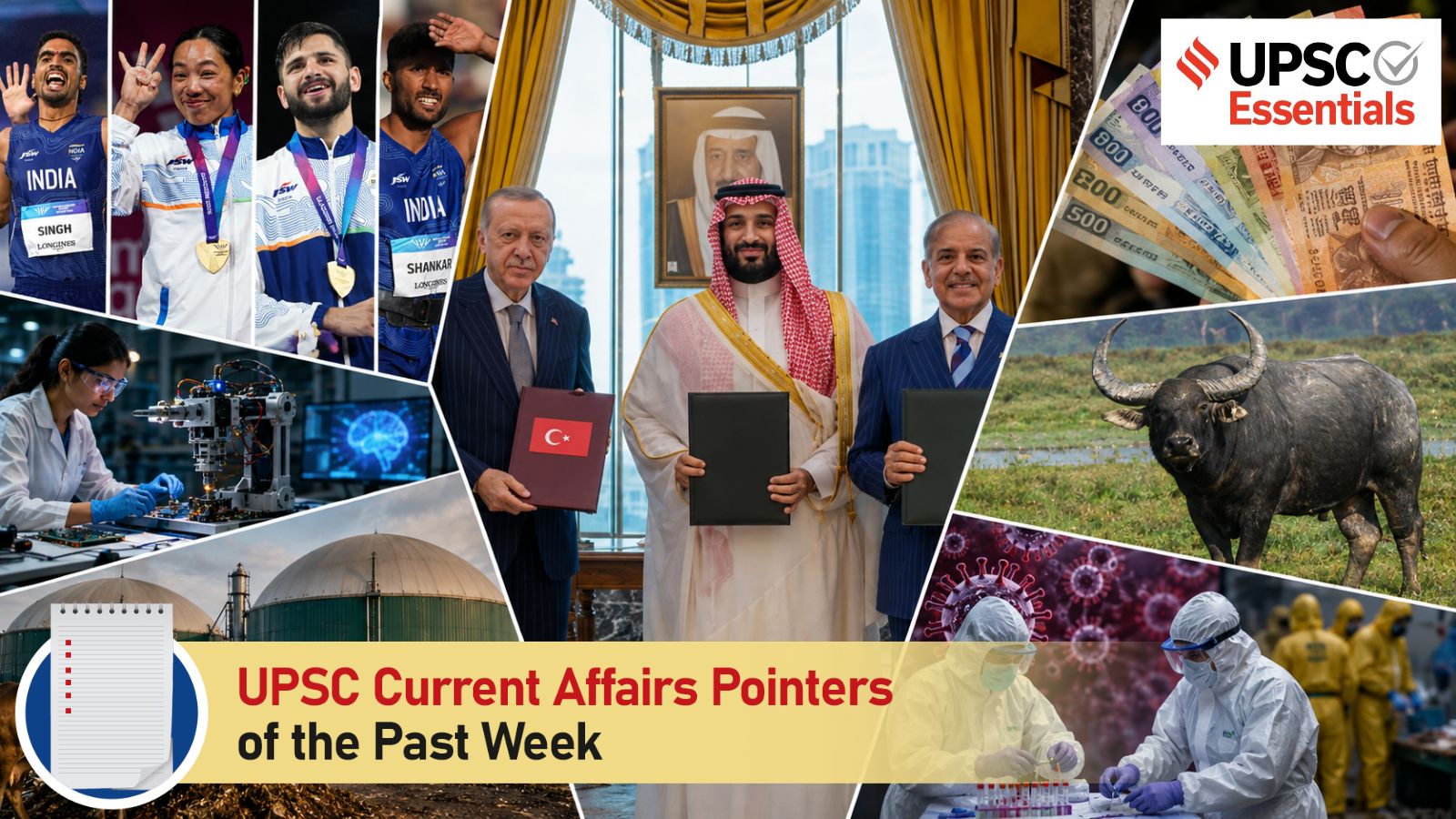
A concise roundup of the week’s most pivotal UPSC‑relevant events, from the Mecca Joint Defence Agreement to India’s new handloom initiatives and the UN Secretary‑General straw poll.
Key Takeaways
- The Mecca Joint Defence Agreement creates a new trilateral security framework.
- 12th National Handloom Day spotlights India’s traditional textile heritage.
- The UN Security Council conducts its first straw poll for the next Secretary‑General.
Key Developments of the Week
On August 7, Saudi Arabia, Turkey and Pakistan signed the Mecca Joint Defence Agreement, establishing a trilateral security pact that treats an armed attack on any one member as an attack on all three. The deal arrives amid rising West Asian tensions and mirrors collective‑defence principles found in alliances like NATO.
The same day marked the 12th National Handloom Day, celebrating India’s rich handloom heritage and the economic contribution of weavers. Since 2015, the day commemorates the 110th anniversary of the Swadeshi movement, which originally called for a boycott of foreign goods and promotion of indigenous products.
Finance Minister Nirmala Sitharaman’s 2026‑27 Union Budget reaffirmed the textile sector as a strategic growth engine, unveiling five flagship programmes – the National Fibre Scheme, Textile Expansion and Employment Scheme, consolidated Handloom and Handicraft Programme, Tex‑ECO, and the upgraded Samarth 2.0 for skill development.
The United Nations Security Council held its first “straw poll” to gauge support for the next Secretary‑General, a process that will shape the appointment slated to begin on 1 January 2027. Current non‑permanent members with terms ending in 2026 include Denmark, Greece, Pakistan, Panama and Somalia.
Other notable items covered the declaration of India’s 101st Ramsar site, the expansion of the ‘GOBARdhan’ scheme, the launch of the RDI Fund, and a review of India’s performance at the Commonwealth Games 2026.
Historical Background
The handloom movement traces back to 1905 when a proclamation at Calcutta Town Hall urged a boycott of foreign goods during the Bengal Partition protests, turning handloom production into a symbol of anti‑colonial resistance. Similarly, collective defence pacts have historic roots in European security arrangements, but the Mecca agreement emphasizes regional autonomy and strategic balance.
Why This Matters
BozokMedia analysis shows that mastering these current affairs not only boosts UPSC aspirants’ factual knowledge but also sharpens their ability to connect geopolitical shifts with domestic policy trends—an essential skill for both prelims and mains.
“These topics consistently appear in UPSC’s social‑economic and international relations papers; deep diving into them is non‑negotiable for top rankers.” – Dr. Anjali Verma, senior UPSC coach
Frequently Asked Questions
- How will the Mecca Agreement influence India’s security strategy?
- What role does India play in the UN Security Council’s straw poll process?