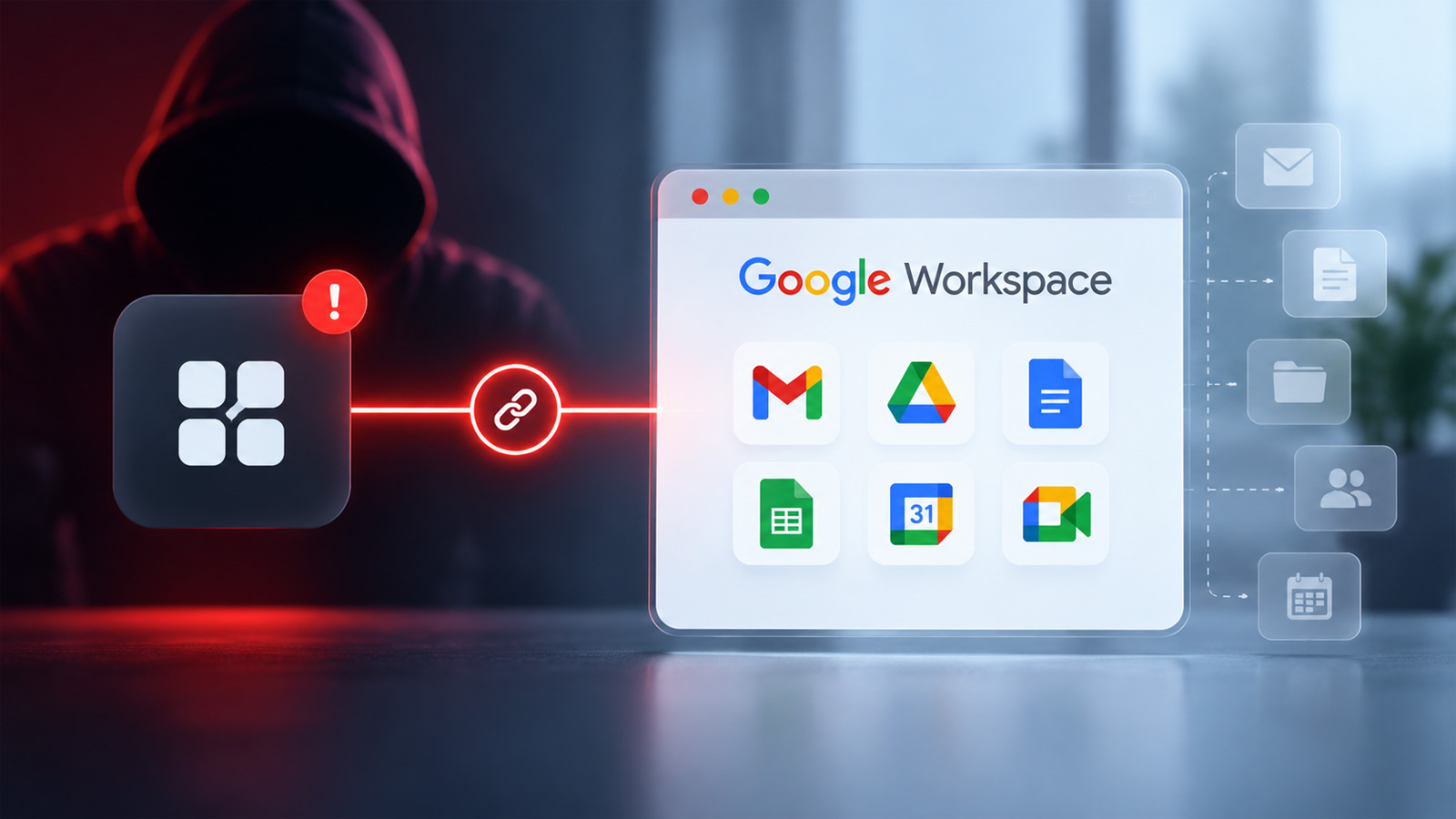
Cyber threat actors are evolving from simple AI assistants to sophisticated multi-agent frameworks that automate the entire attack lifecycle. Google Threat Intelligence Group (GTIG) warns that these systems can now troubleshoot failures and evade detection with minimal human oversight.
- Shift from prompt-based LLM interactions to autonomous multi-agent frameworks.
- AI agents can now plan and deploy mass credential harvesting in under six hours.
- State-sponsored actors from China and Russia are integrating AI for espionage.
- Prevention rates plummet to 37% once attackers possess valid credentials.
In a startling revelation, the Google Threat Intelligence Group (GTIG) has observed a strategic shift in the cybercrime landscape. Threat actors are no longer just using AI as a coding aid; they are deploying 'multi-agent frameworks' that coordinate multiple attack tasks, troubleshoot errors in real-time, and adapt their strategies autonomously.
The report highlights a specific incident where a financially motivated attacker compromised a corporate cloud infrastructure. By leveraging an AI coding chatbot and specific markdown instructions, the attacker planned and executed a mass credential-harvesting campaign in less than six hours. This represents a massive leap in attack velocity.
Why This Matters
BozokMedia analysis shows that the integration of reasoning capabilities into attack pipelines fundamentally changes the 'defender's advantage.' Traditionally, security teams relied on the latency of the 'human-in-the-loop' to detect and block attacks. However, AI agents can rotate IP addresses and route traffic through compromised cloud environments instantaneously, drastically shrinking the window for defensive response.
"The transition to autonomous AI agents means attacks are no longer linear; they are adaptive, iterative, and operating at machine speed."
Further evidence was found in an exposed command-and-control (C2) server hosting a framework called 'Recon.' This system managed over 23,800 harvested secrets, including critical API keys, using AI-driven management. Additionally, China-linked actors are experimenting with automated exploitation pipelines, while the Russia-based UNC5792 uses AI to monitor Telegram for government-interest data.
Despite these advancements, GTIG notes that fully autonomous 'zero-day' discovery remains rare. Most current AI abuses focus on reconnaissance and post-exploitation. Google's Gemini AI played a pivotal role in detecting these abuses early, allowing the company to disrupt campaigns and ban malicious accounts.
| Feature | Traditional Automation | AI Multi-Agent Frameworks |
|---|---|---|
| Decision Making | Static/Rule-based | Dynamic/Reasoning-based |
| Human Intervention | Required for pivots | Minimal to None |
| Evasion Capability | Predictable patterns | Adaptive and Real-time |
Frequently Asked Questions
Q1: What is a multi-agent AI framework in hacking?
A: It is a system where multiple specialized AI agents work together—one for scanning, one for coding, and one for management—to automate a complex cyber attack.
Q2: Can standard AI safety protocols stop these attacks?
A: While protocols like those in Gemini help catch early abuse, hackers are constantly finding ways to bypass filters or use stolen API keys to operate.