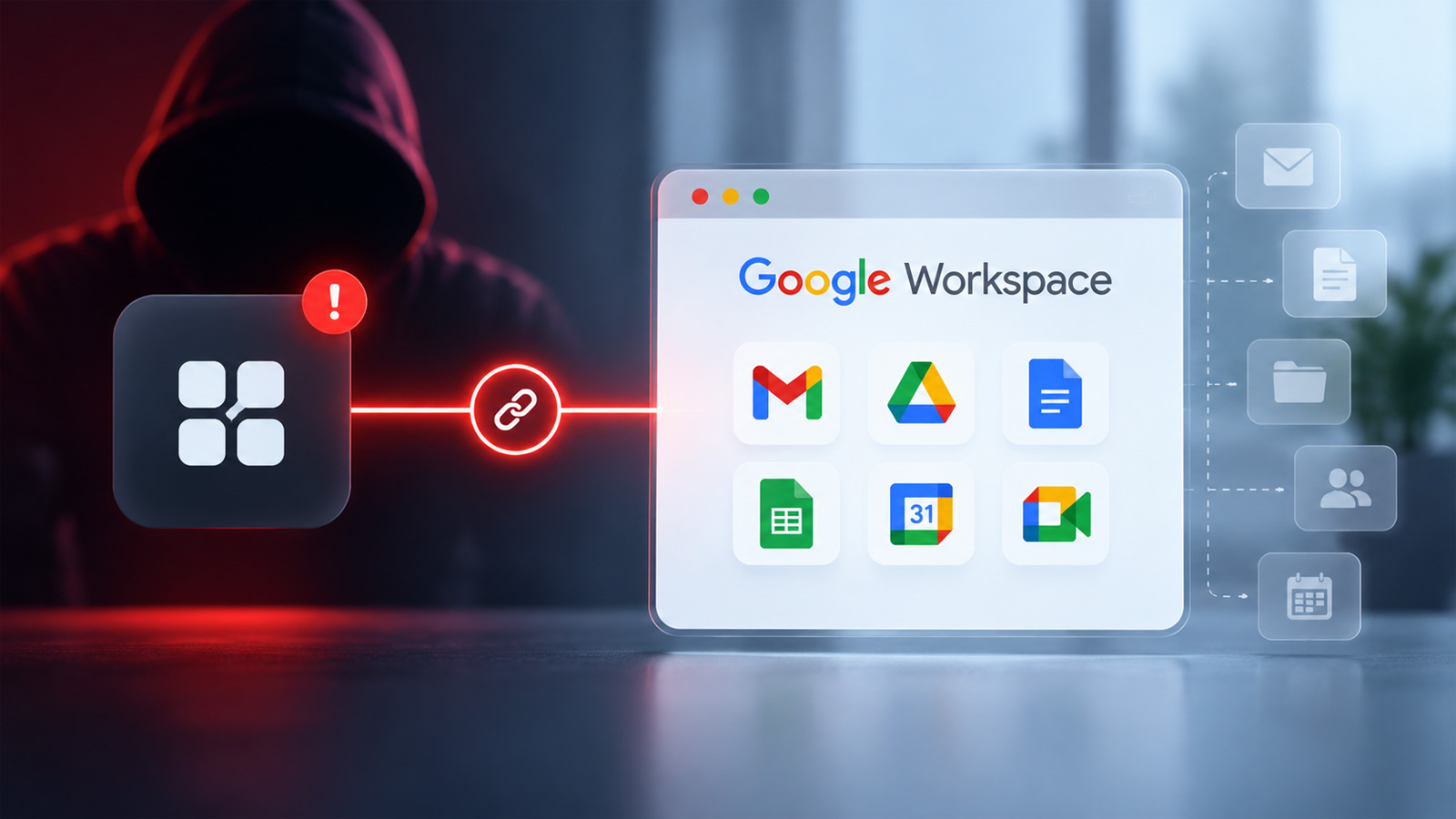
Overly permissive third-party integrations in Google Workspace are creating invisible backdoors for attackers. Experts from BleepingComputer and Material Security will dissect these vulnerabilities in an upcoming webinar.
- Legacy third-party integrations often retain access long after their utility expires.
- Rapidly growing companies are most vulnerable due to lean security oversight.
- Over-privileged OAuth tokens create hidden paths for unauthorized data exfiltration.
In the pursuit of operational efficiency, many organizations integrate a multitude of third-party applications into their Google Workspace environments. While these tools automate workflows and boost productivity, they often introduce a silent security liability: the 'forgotten access.' Permissions granted to an app years ago may still be active, even if the app is no longer used or the employee who authorized it has long since departed the company.
To address this critical vulnerability, BleepingComputer is partnering with Material Security for a live webinar on September 23, 2026. Titled "Breach Autopsy: How fast-growing companies are breached through Google Workspace," the session will feature Rajan Kapoor (VP of Security at Material Security) and Rick Fitzgerald (President of Fireside Consulting LLC). They will analyze publicly documented breaches to extract actionable intelligence for security teams.
Why This Matters
BozokMedia analysis shows that the gap between 'feature adoption' and 'security auditing' is widening in the SaaS era. In fast-growing firms, the priority is often speed over stability. When an employee grants a third-party tool access to their emails or files, they are essentially creating a persistent tunnel into the corporate data lake. If that third-party provider is compromised, or if the app's permissions were too broad to begin with, attackers can bypass traditional perimeter defenses entirely.
"The most dangerous access is the one you've forgotten exists; you cannot defend a perimeter that you no longer map."
The webinar will dive deep into the 'golden hour'—the critical first few hours following a breach—and how specific decision-making processes can either contain the threat or inadvertently escalate the damage. For lean security teams, identifying high-impact, low-effort controls is the only way to manage this sprawling attack surface.
Historical Background
The shift toward API-driven ecosystems has fundamentally changed the threat landscape. Historically, attackers relied on phishing for credentials. Today, they increasingly target OAuth tokens. Unlike passwords, these tokens do not expire frequently and do not require multi-factor authentication (MFA) once issued, making them a prime target for session hijacking and persistence within a network.
| Access Type | Risk Level | Potential Impact |
|---|---|---|
| Read-Only Access | Medium | Information Leakage |
| Read/Write Access | High | Data Manipulation |
| Admin/Full Access | Critical | Complete Tenant Takeover |
Frequently Asked Questions
Q1: How can I identify which third-party apps have access to my Workspace?
A: Administrators can use the Google Admin Console under 'Security' > 'API Controls' to view and manage third-party app access across the entire organization.
Q2: Does changing my password revoke third-party app access?
A: Generally, no. OAuth tokens are independent of passwords. You must explicitly revoke the app's permission in your account settings to terminate access.