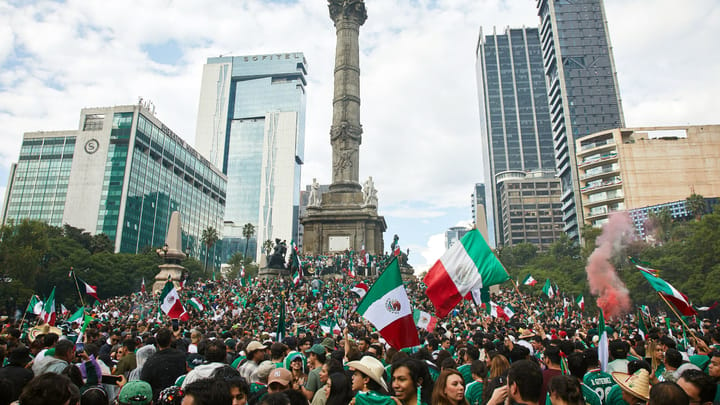
Mexico's National Cybersecurity Plan, rolled out just seven months ago, is being put to its first real trial during the 2026 FIFA World Cup. Experts warn that the tournament will amplify cyber threats and expose any gaps in the government's strategy.
The 2026 FIFA World Cup, featuring three stadiums in Mexico, has become the inaugural stress test for the country's National Cybersecurity Plan (Plan Nacional de Ciberseguridad 2025‑2030). Drafted by the Digital Transformation and Telecommunications Agency (ATDT) just seven months earlier, the plan seeks to modernise federal legislation, embed cybersecurity capabilities across ministries and tighten public‑private‑academic collaboration.
Key Milestones of the Plan
According to a June 25 analysis by threat‑intelligence firm Recorded Future, the 2026 agenda includes three critical deliverables: a draft National Cybersecurity Strategy by the end of Q3, the establishment of a National Cybersecurity Center to monitor threats, and a formalised framework for cooperation between government, industry and academia. The strategy is still described as being in its "expansion phase," meaning many operational details remain to be fleshed out.
World Cup as a Cyber‑Risk Amplifier
Large‑scale sporting events create a "target‑rich" environment for ransomware gangs, hacktivists, fraudsters and disinformation networks seeking financial gain or disruption. Recorded Future warns that any cyber incident during the tournament could dominate public debate, drawing international scrutiny to perceived weaknesses in Mexico's cyber‑defence posture.
The Kukulkán Plan: A Parallel Shield
To protect the three host cities, the government launched the "Kukulkán Plan," which integrates cross‑border information sharing with the United States, Canada and FIFA, as well as specialised training for officials. Risk‑management exercises were conducted around stadiums and high‑traffic visitor zones, and additional physical and logical security layers were layered on critical infrastructure.
Structural Gaps Highlighted by Experts
NYU adjunct professor José Felipe Otero, an authority on Latin American telecom infrastructure, notes that the national plan lacks concrete measures for operational‑technology (OT) and supply‑chain security. He also points out that the focus on small‑ and medium‑sized enterprises (SMEs) is limited, even though SMEs represent the bulk of the Mexican economy and are integral to global supply chains.
Legislative Landscape and the Need for a Unified Law
Mexican financial consultancy Nader Hayaux & Goebel observes that current federal regulations are a patchwork of disparate statutes and jurisdictions. Several cybersecurity law proposals have been tabled in Congress, yet none have been enacted. The firm stresses that a comprehensive cyber‑law, with clear penalties and enforcement mechanisms, is essential given the rising frequency and sophistication of attacks.
In sum, the World Cup could serve as a watershed moment for Mexico's digital transformation. Successful mitigation would validate the new plan and boost confidence in the country's cyber‑resilience. Conversely, a high‑profile breach could expose systemic weaknesses and accelerate legislative and operational reforms.