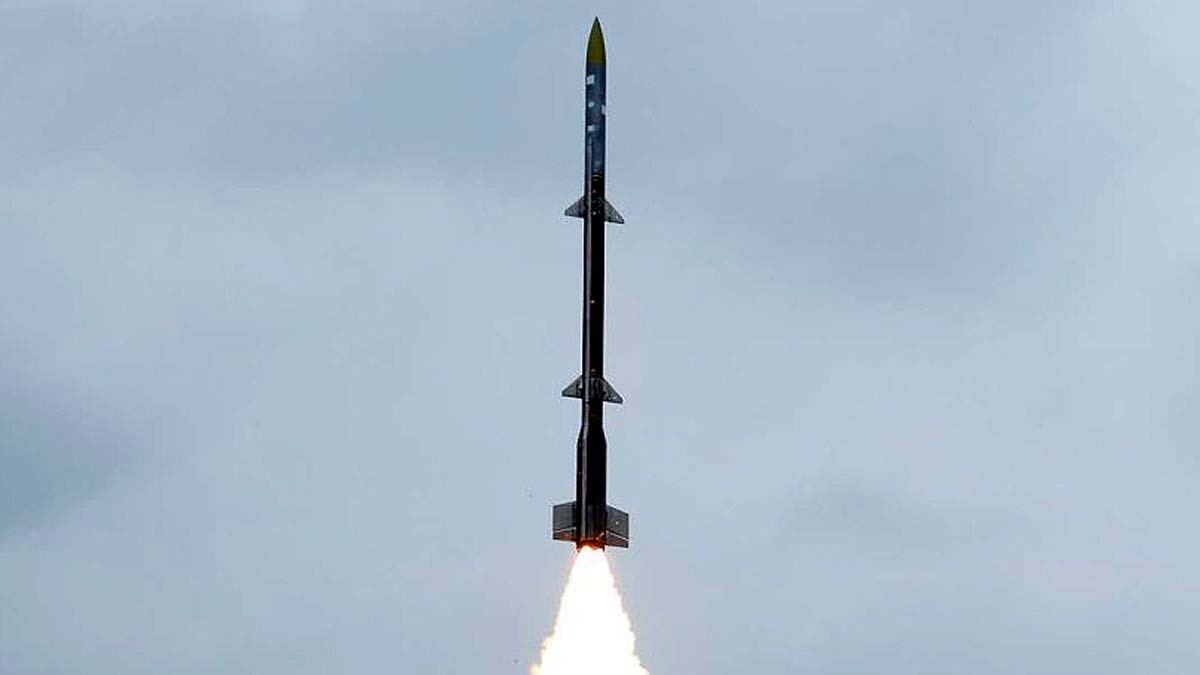
India’s defence scientists have achieved a breakthrough with the first successful test of the ‘Kusha’ anti‑aircraft missile, capable of intercepting enemy bombs mid‑air. The test underscores India’s push for indigenous defence technology.
Key Takeaways
- First successful test of the ‘Kusha’ missile completed.
- The missile can destroy enemy air‑strike munitions at high altitude.
- Project showcases India’s growing indigenous defence capability.
New Delhi – The Defence Research and Development Organisation (DRDO) announced today that the ‘Kusha’ anti‑aircraft missile achieved a flawless test, detonating a simulated enemy bomb at 15 km altitude and proving its interception capability.
Designed specifically to counter high‑speed, low‑altitude air attacks, ‘Kusha’ boasts a 30 km range and utilizes radar‑guided interception technology for pinpoint accuracy.
Why This Matters
BozokMedia analysis shows that the successful test of ‘Kusha’ marks a strategic shift for India, reducing its reliance on foreign air‑defence systems and enhancing deterrence against regional adversaries.
“Indigenous systems like ‘Kusha’ are critical for India’s strategic autonomy,” says defence analyst Prof. Ajay Singh.
Historically, India entered the missile age in the 1990s with projects like ‘Trishul’ and ‘Agni’. ‘Kusha’ builds on that legacy, introducing modern air‑defence capabilities that could reshape the sub‑continent’s security dynamics.
Frequently Asked Questions
Question 1: What types of aerial threats can the ‘Kusha’ missile neutralise?
Answer: It is effective against high‑altitude bombs, unmanned drones, and low‑altitude aircraft.
Question 2: Will the missile be deployed beyond the Indian Air Force?
Answer: Plans are underway to integrate ‘Kusha’ with both the Air Force and border security forces.
