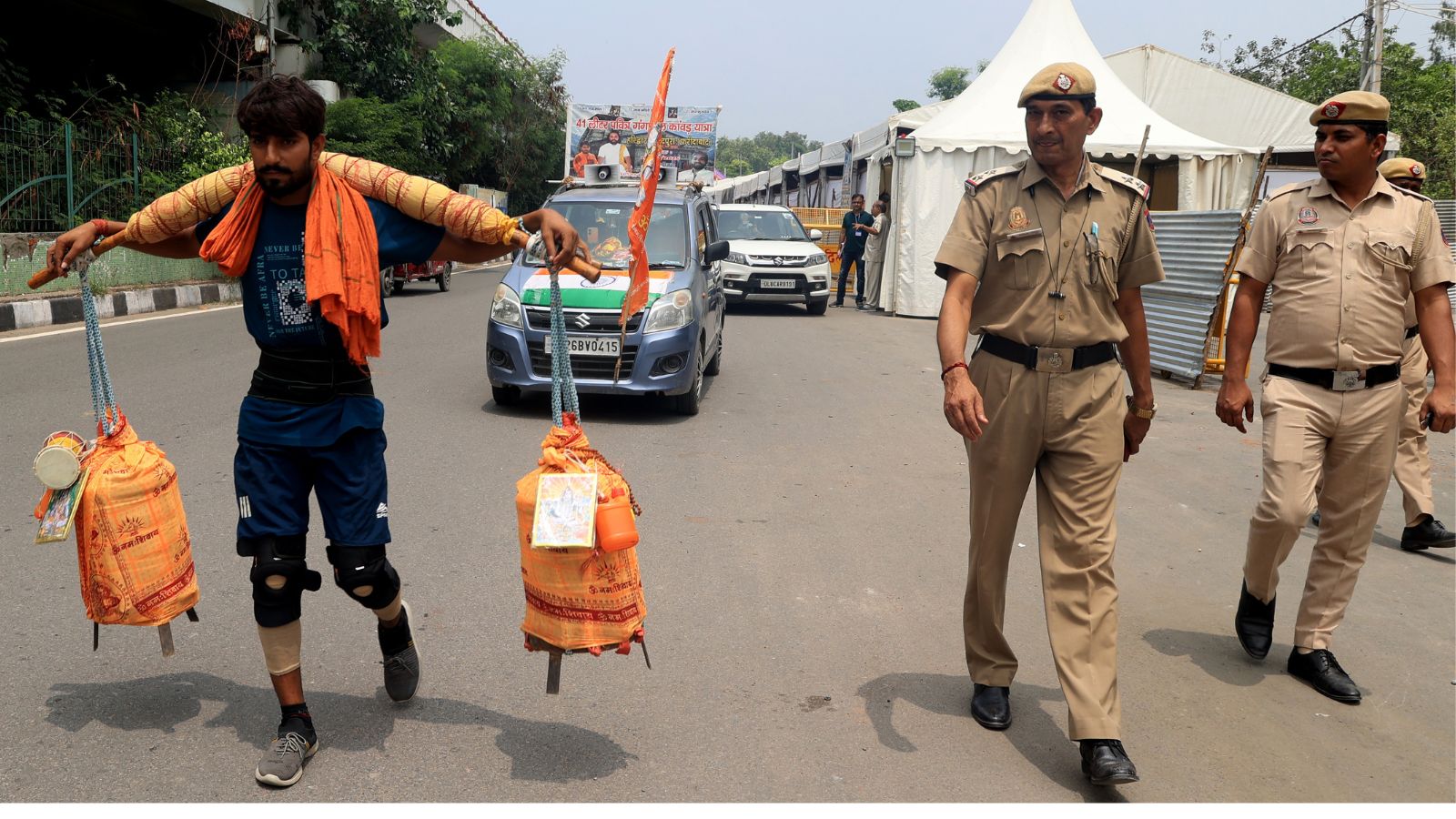
This analysis explores how the state's over-facilitation of the Kanwar Yatra serves as a dangerous precedent for exclusion and the erosion of secular governance in India.
Key Takeaways
- The Kanwar Yatra itself is not the issue; the issue is the state's patronizing approach.
- Mandatory name displays and meat bans are seen as 'dog whistles' targeting minority businesses.
- Floral welcomes by high-ranking officials signal a departure from constitutional neutrality.
- Reducing believers to political instruments undermines their identity as rational citizens.
The conclusion of this year's Kanwar Yatra has left behind a trail of questions that transcend spirituality. While thousands of young men undertake this arduous journey as an act of faith, the state's role has shifted from mere administration to active patronage. The discourse has moved beyond traffic jams and public safety to a more sinister pattern of state-sponsored exclusion.
Since 2014, and more acutely since 2023, the governments of Uttar Pradesh and Uttarakhand have implemented policies that go beyond facilitating pilgrims. The mandate for shopkeepers to display their names and the curbing of non-vegetarian food along the routes are not measures of convenience, but tools of segregation. Recent incidents in Bareilly, where shops were razed, highlight how these policies can be weaponized against minority communities.
Why This Matters
BozokMedia analysis shows that when the state aligns itself so closely with a specific religious identity, it compromises the secular foundation of the Republic. By 'deifying' the pilgrims through floral showers and special privileges, the government is not respecting faith; it is instrumentalizing it. This creates a hierarchy of citizenship where devotion is used as a license for impunity or a tool for exclusion.
"The danger lies not in the act of worship, but in the state's attempt to define who is a 'preferred' citizen based on their religious practice."
Historically, the Indian state was designed to be equidistant from all faiths. However, the current trend of pandering to the pious suggests a shift toward an instrumentalist approach to religion. A Kanwar Yatri is a citizen with rights and rationalities; treating them as a monolith that only understands the politics of pandering is a disservice to the believers themselves.
Frequently Asked Questions
Q1: Is the article criticizing the religious practice of the Kanwar Yatra?
No, the critique is directed at the state's administrative actions and the use of the Yatra to justify discriminatory policies.
Q2: Why is the 'name display' order controversial?
It is viewed as a way to identify and boycott Muslim-owned businesses under the guise of transparency, promoting communal segregation.