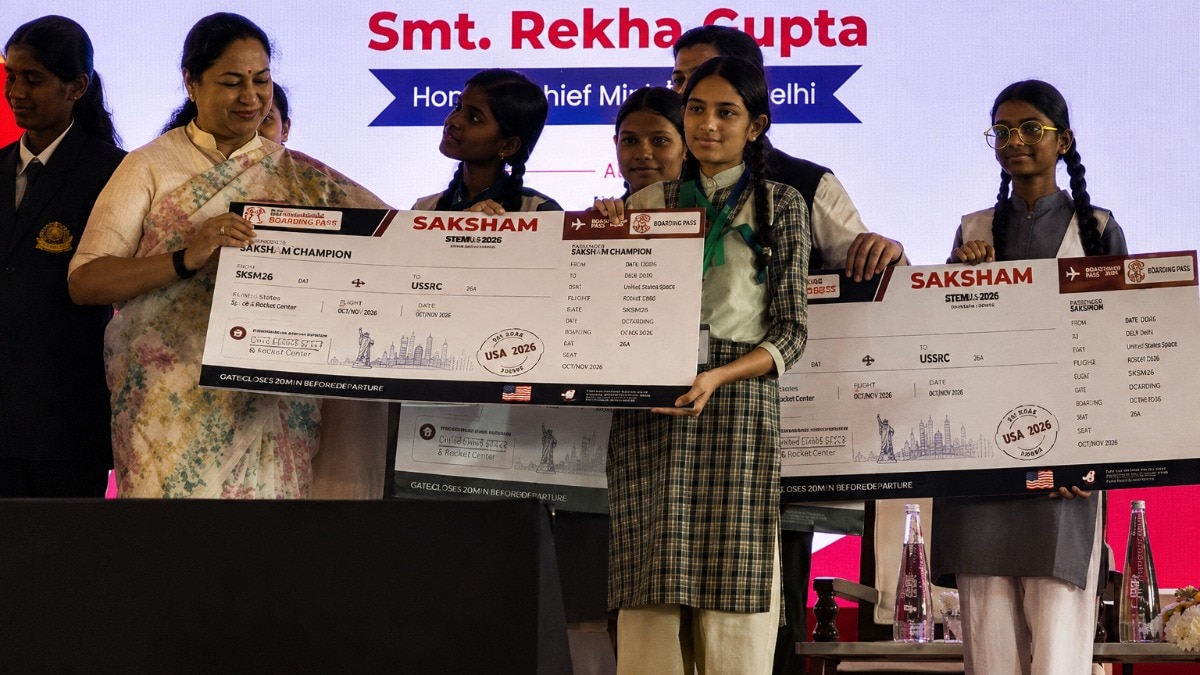
Five girls from Delhi government schools have been selected to attend a prestigious space science workshop at the US Space and Rocket Center. The selection came after a rigorous two‑stage process that evaluated over 400 applicants.
Key Takeaways
- Five Delhi government school students will attend a workshop at the US Space and Rocket Center.
- Selection was made after a two‑stage process involving more than 400 applicants.
- The initiative aims to boost female talent in STEM and provide international exposure.
New Delhi – As part of the Delhi government’s Saksham initiative, five girls from different government‑aided schools have been chosen to participate in a high‑profile space science workshop at the U.S. Space and Rocket Center (SSRC). Chief Minister Rekha Gupta personally handed over the tickets, underscoring the administration’s commitment to advancing STEM education in the capital.
Selection Process and Competition
More than 400 students applied for the program. In the first round, 130 candidates were shortlisted based on a preliminary STEM assessment and a detailed Statement of Purpose (SOP), which measured scientific curiosity, analytical thinking, and passion for STEM subjects. Those shortlisted then attended a regional workshop where they designed hands‑on science projects. In the final evaluation, the top five project ideas were selected, and the students behind them earned the coveted spot at the US workshop.
Workshop Format and Expected Benefits
The week‑long workshop, scheduled for October‑November 2026, will expose the girls to practical learning sessions, space‑science activities, and interactive seminars with international experts. This immersion is expected to deepen their STEM knowledge and acquaint them with global standards in space education, potentially increasing the pipeline of Indian women scientists in the aerospace sector.
Future Outlook
Saksham, in partnership with Honeywell Technologies, aims to reach 12,000 students across 12 government and aided schools by 2029. While Delhi remains the primary focus, parallel programs are rolling out in Pune, Bengaluru, and Gurugram, ensuring broader access to STEM opportunities for girls nationwide. The broader objective is to balance gender representation in India’s space endeavors and to cultivate a generation of young innovators ready for global challenges.