AI chatbots are becoming ubiquitous study partners, prompting schools to rethink the purpose of homework. This article examines the benefits, risks, and future directions of AI integration in education.
Key Takeaways
- AI supplies information instantly, but cannot replace critical thinking.
- Schools are shifting focus to creativity, analysis, and original expression.
- Unequal access to AI tools may widen educational gaps if not addressed.
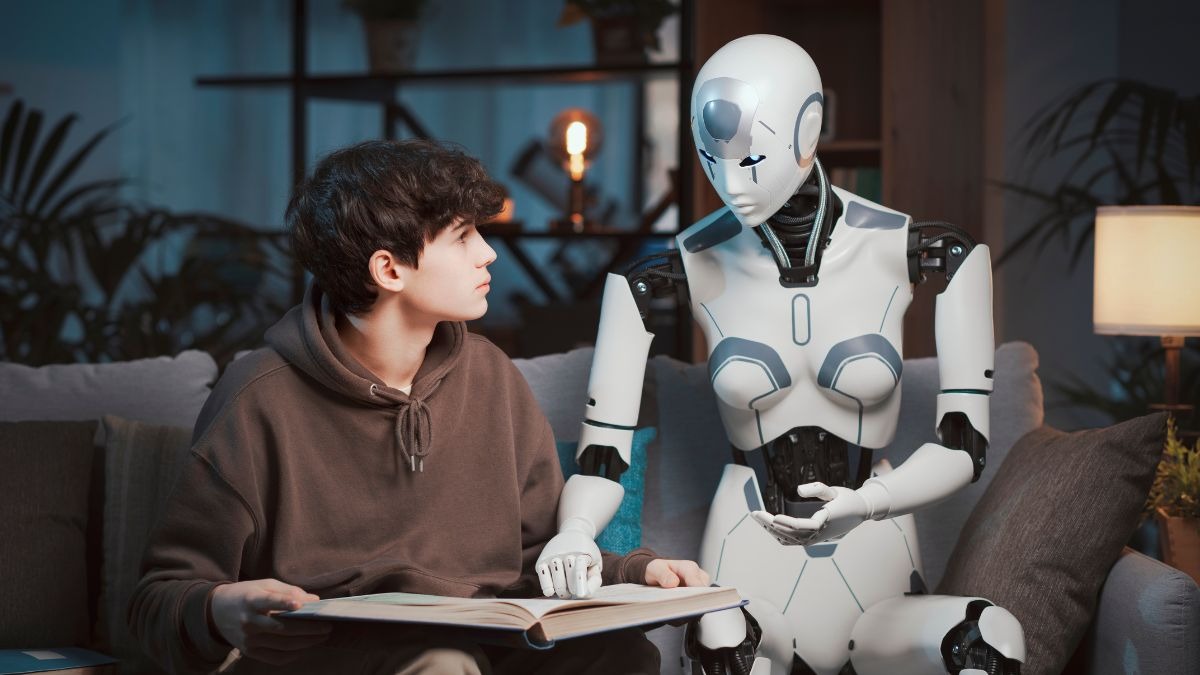
AI‑driven chatbots have turned into an always‑available study companion for millions of students. Need a tricky maths problem solved, a history chapter summarised, or a quick essay drafted? One click, and an answer appears. This effortless access blurs the line between classroom and home, raising the pivotal question: should AI be allowed to do school homework?
Homework’s Evolving Goal
According to Manisha Malhotra, director‑principal of Satya School in Gurugram, “Three years ago, homework mainly tested whether students could locate the right information.” Today, that information is at their fingertips; teachers now seek to assess whether students truly understand and can articulate what they have found. This shift has forced a dramatic redesign of assignments—away from rote worksheets toward project‑based, inquiry‑driven, and interdisciplinary tasks that value original thought.
How AI Enhances Learning
When used wisely, AI can personalise education. A student struggling with algebra can receive step‑by‑step explanations, while a visual learner can request diagrams instead of dense text. Immediate feedback eliminates the waiting period between class and clarification, keeping motivation high. For children lacking expensive tuition, AI‑driven tutoring can be a game‑changer, offering tailored support that would otherwise be inaccessible.
The Perils of Over‑Reliance and Parental Role
Convenience becomes a problem when it morphs into dependence. “If students start treating AI as their only source of knowledge, that’s when we have a problem,” warns Malhotra. At Satya School, teachers routinely ask learners to re‑explain an answer in their own words or describe the reasoning behind a conclusion. The aim isn’t to police AI use but to ensure genuine learning hasn’t vanished behind polished submissions. Parents, too, should shift their queries—from “Did you finish your homework?” to “Can you explain how you solved it?” Such dialogue quickly reveals whether a child truly grasped a concept or merely copied an answer.
Digital Divide and Ethical Concerns
India faces a paradox: AI can make education more inclusive, yet access remains uneven. Students with smartphones, reliable internet, and digital literacy experiment with AI daily; those without risk being left behind. Without school‑driven initiatives—shared devices, local‑language tools—the technology could exacerbate existing inequalities. Moreover, AI often exudes confidence even when wrong, raising issues of plagiarism, privacy, and academic honesty. Responsible AI usage must become a staple of digital‑safety curricula, not a one‑off orientation.
Imagining the Homework of Tomorrow
Future assignments may look nothing like today’s repetitive worksheets. Imagine students interviewing grandparents, documenting neighbourhood changes, producing podcasts, conducting simple experiments, or tackling interdisciplinary projects that blend science, geography, and maths. Such tasks invite observation, curiosity, and conversation—skills AI cannot replicate.
As Malhotra concludes, “The future isn’t about competing with AI; it’s about helping students know when to use it, when to question it, and when to rely on their own judgment.” If AI pushes educators to rediscover homework’s original purpose—making sense of the world—then the biggest transformation may be philosophical rather than technological.