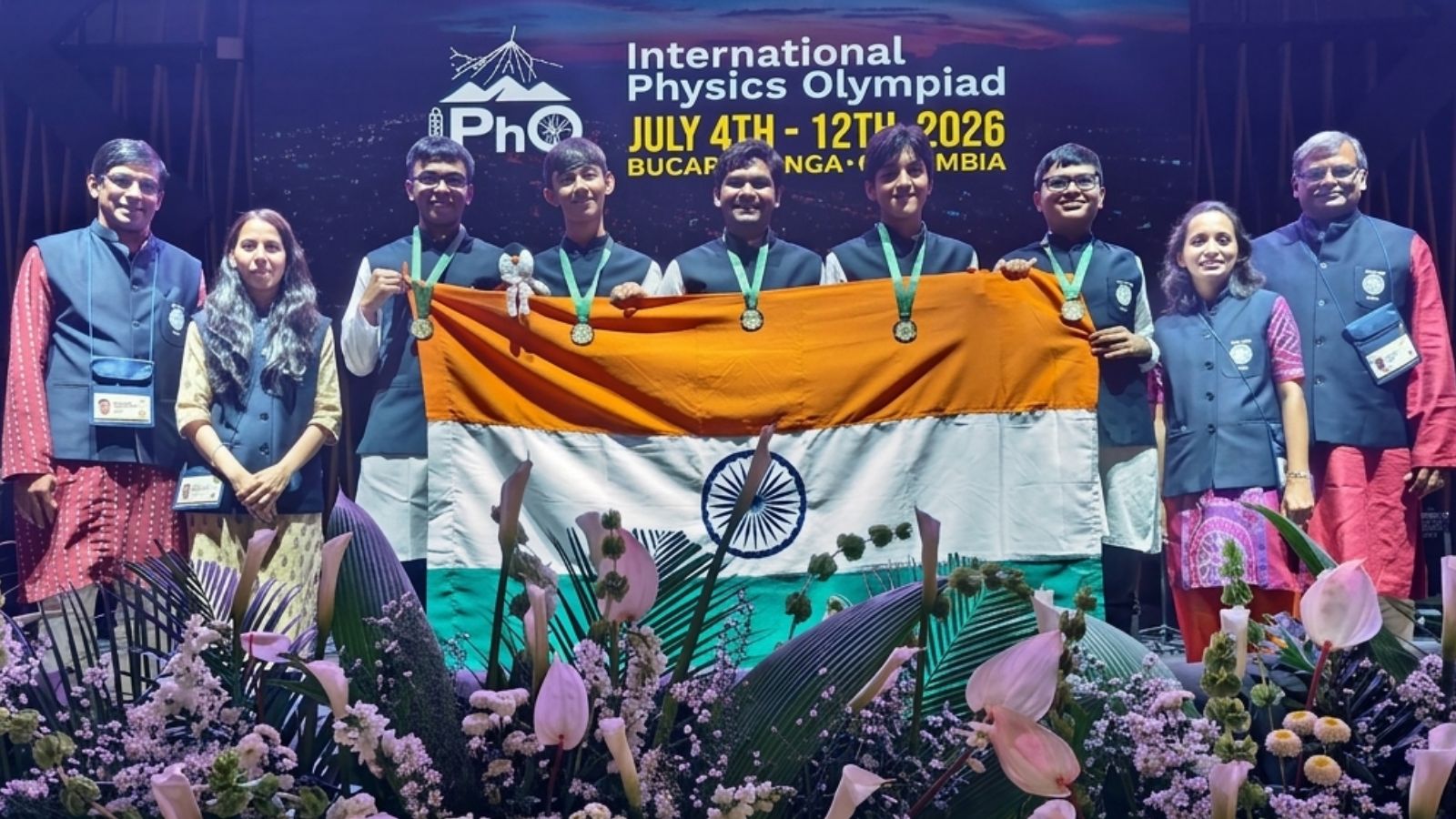
Five Indian students clinched gold medals at the International Physics Olympiad in Colombia, tying India for the top spot worldwide. Prime Minister Narendra Modi hailed the feat as proof of the limitless potential of the nation’s youth.
Key Takeaways
- Five Indian students secured gold medals at the International Physics Olympiad
- India shares the world No. 1 rank with China, Kazakhstan, Russia, South Korea and Taiwan
- The achievement underscores the strength of India’s youth talent and its training ecosystem
At the 56th International Physics Olympiad (IPhO) held in Bucaramanga, Colombia, India emerged as a joint world‑leader after five of its delegates captured gold medals. The medalists – Kanishk Jain of Pune, Shresth Suraiya of Mumbai, Riddhesh Bendale of Indore, Rishit Garg of New Delhi and Svarit Joshi of Ahmedabad – topped a field of more than 300 competitors from 86 nations, reaffirming India’s growing dominance in elite science competitions.
Background and Preparation
Since first entering the Physics Olympiad in 1998, India has fielded 482 students across physics, chemistry, biology and astronomy Olympiads, with 176 gold medals to date. The current team was selected by the Homi Bhabha Centre for Science Education (HBCSE) under the Department of Atomic Energy after a rigorous two‑stage screening. Out of 66,514 aspirants who sat for the November 2025 entry‑level exam, 26 were shortlisted for an intensive two‑week training camp, from which the final five were chosen.
Prime Minister Narendra Modi’s Remarks
Prime Minister Narendra Modi praised the achievement as “an outstanding performance by our youngsters” and highlighted it as “another example of the limitless potential of our Yuva Shakti.” He stressed that the past decade has seen Indian students consistently earn gold or silver medals, reflecting the success of the nation’s science education policies.
Official Reactions
DAE Secretary Ajit Kumar Mohanty called the feat “a matter of immense pride for the nation,” emphasizing the dedication of the students, their mentors, and the HBCSE‑TIFR Olympiad programme. He urged continued investment in scientific training to inspire future generations and cement India’s leadership in scientific innovation.
Looking ahead, experts argue that sustained funding for laboratory infrastructure, greater international collaboration, and early‑stage talent identification will be crucial to maintaining this momentum. The five gold medals are not merely a one‑off triumph; they signal a robust pipeline of scientific talent ready to drive India’s future in research and technology.