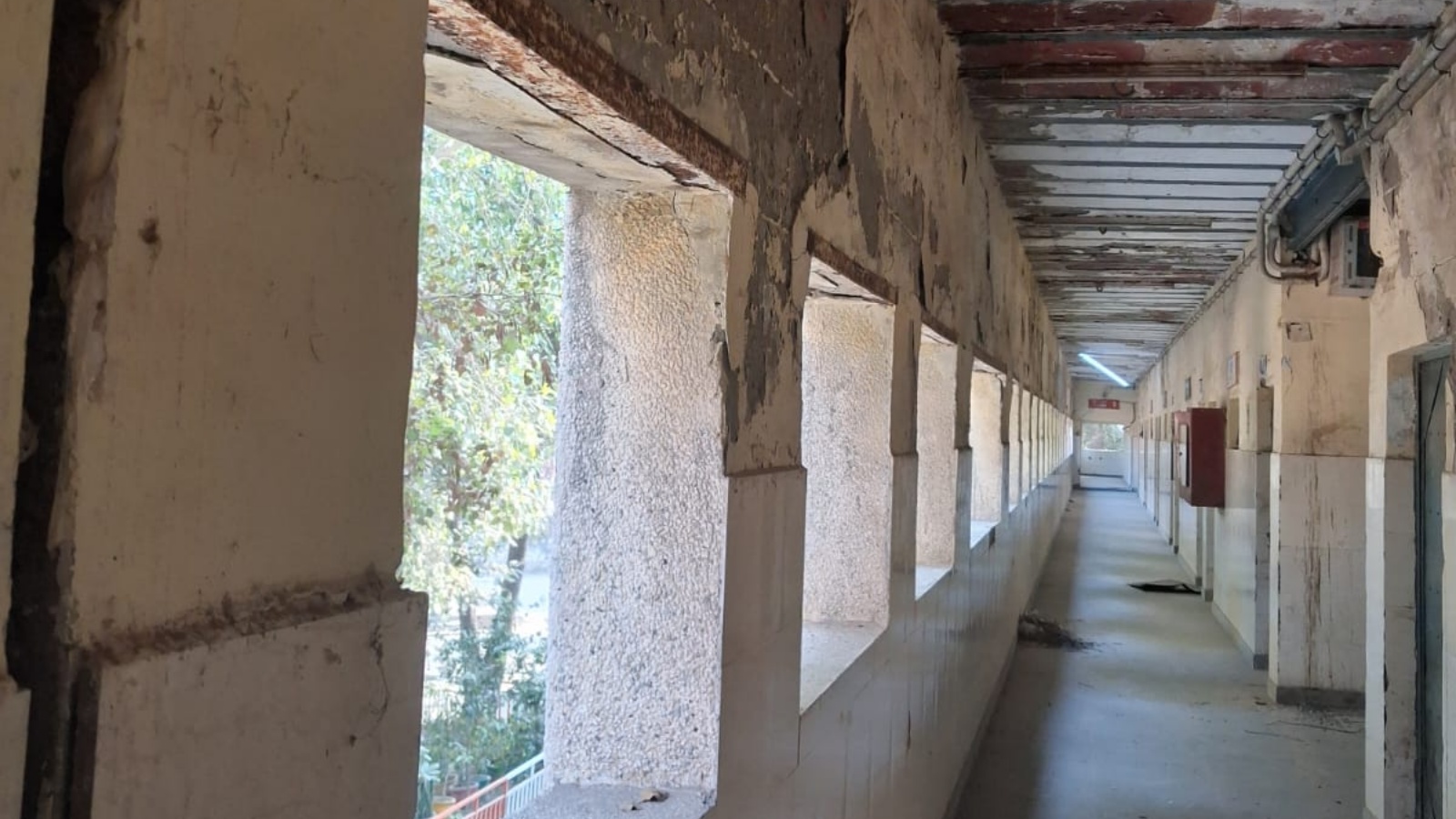
Delhi's administration has labeled 108 government school buildings as unsafe and ordered structural audits. Seven of these schools will be demolished soon, making way for modern, earthquake‑resistant G+4 structures that aim to boost both safety and learning outcomes.
मुख्य बिंदु (Key Takeaways)
- 108 Delhi government school buildings classified as unsafe
- 54 structures in very poor condition; 7 approved for demolition
- Digital profiling and structural audits drive a phased redevelopment plan
Delhi’s government has identified 108 government school buildings—roughly one‑tenth of the city’s 5,556 recognized schools—as “unsafe” and “dangerous.” Chief Minister Rekha Gupta, prioritising student safety, ordered the Education Department and the Public Works Department (PWD) to conduct immediate structural audits of every existing school facility.
Historical Context
Many of these structures were erected three to four decades ago, and even some built within the last five years are showing premature wear, cracks, and inadequate roofing. Past incidents involving school‑building collapses and fire hazards have pushed policymakers to treat structural integrity as a non‑negotiable prerequisite for continued operation.
Audit Process and Regulatory Clearance
Under a city‑wide digital profiling initiative, each school’s roof, walls, electrical wiring, plumbing, and fire‑safety systems are being catalogued. PWD engineers have flagged 54 buildings as being in “very poor condition,” while seven have received final demolition approval from the Lieutenant Governor after joint inspection and cost‑benefit analysis.
Immediate Action Plan
The seven schools slated for demolition include CM SHRI School (Chilla Village), Government Girls Senior Secondary School (Jasola), Sarvodya Kanya Vidyalaya (Karala), Government Boys Senior Secondary School (Baprola), SKV Matiala, GGSSS (Neb Sarai), and GGSSS (Shivaji Park). The government plans to dismantle these structures in phases, often at night, to minimise disruption. Affected students will be shifted to nearby schools or temporary classrooms until new buildings are ready.
Future‑Ready Infrastructure
Post‑demolition, the PWD will erect modern, G+4, earthquake‑resistant school blocks. The digital profiling database will serve as a robust foundation for evidence‑based planning, enabling optimal resource allocation, prioritised renovations, and the creation of universally accessible learning environments for children with disabilities.